
The 7 Sectors you can outsource and how they can help your company


What are the 7 sectors you can outsource?
The seven sectors you can outsource are real estate, financial services, hospitality, legal processing, telecommunications, healthcare, and transport. Each one lets you cut costs, keep quality high, and free your team to focus on core work. Here is the quick view:
- Outsourcing helps you scale during busy periods without over-hiring.
- It gives you expert help at a lower cost than full-time staff.
- It shares risk and keeps your business on task.
Outsourcing can be a great way to keep quality high as you grow. It also helps you serve customers during peak demand. So your business keeps a smooth flow overall. Still, many companies fear this fix because they are unsure how it works.
Today, we will show how outsourcing can help seven sectors of business. Your company may fit just one of these groups. Even so, you may find useful tips in every sector.
Real estate
Outsourcing real estate means giving a task to someone outside your firm. These tasks are usually on a contract basis and serve many needs. In general, there are five main reasons to outsource real estate.
Reduce staffing costs
Do you go through patches of high demand? You might hire more people to cover that peak. However, if the peak lasts only a couple of months, you end up overstaffed the rest of the year. So instead of hiring new staff, you can consider outsourcing the employment with a short contract. As a result, the contract matches your busy days, and you avoid extra hires.
Diversifying your workplace
Diversity helps your team solve problems and build new skills. It also keeps you from falling behind. For example, if you chase a new goal, you can hire a world-class remote team to train your staff. So outsourcing this team brings fresh skills and a new view.
The other option is to build a research team. Still, that team takes longer to gather what a specialist already knows. They also lack the experience to plan for future problems. So an outsourced team of experts saves you time and money in the long run.

Use your experts for expert work
Your business should have staff who specialize in their work. When you have skilled workers, you do not want them stuck on low-level tasks. Not only does this waste their skills, but it also leads to boredom. And a bored worker is more likely to look elsewhere. So you could lose one more expert.
To prevent high turnover, you can outsource menial tasks to other firms or contract staff. As a result, your skilled workers can focus on what they do best.
Hiring experts for the short term
Do you need to hire an experienced and skilled worker for one task only? Then you should outsource them. For example, you may need a temporary manager or a once-a-month accountant.
No matter the job, you can find the staff you need in our directory. You can hire them for one-off jobs or recurring tasks. Either way, you avoid a high full-time salary. You still pay their fee, but the shorter time frame makes it easier. So outsourcing makes expertise affordable.
Outsourcing reduces expenses
When you hire an employee, you pay more than wages. You also pay for desks, office space, expenses, and other minor costs. When you outsource, those costs go away. So you save money on wages, space, and equipment too.
Financial services
Now we reach the less generic reasons to outsource. Outsourcing your financial services means you hire an accountant or a financial management team to help your business.
In general, there are two main reasons. First, you use an accountant to keep taxes, invoices, and payments correct. Second, you need a team to fix a large-scale mistake without straining your current staff. We will explain both. For more reasons, click this link to see why outsourcing finance is a smart move. This is a core part of business process outsourcing.
Hiring an accountant without hiring them full time
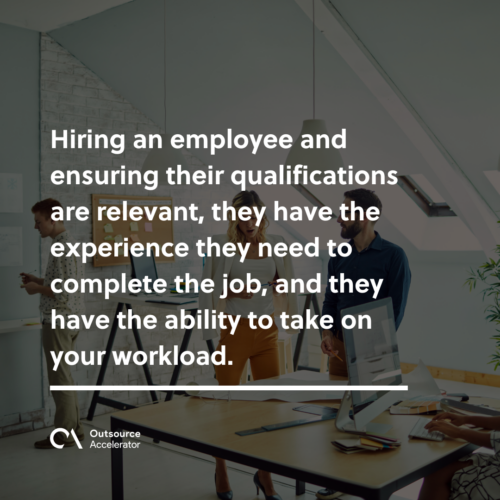
When you hire staff, you usually need to vet them. This means checking their skills, experience, and workload capacity. Once hired, you must also shadow them to catch mistakes early. So you need a trained employee to oversee the new starter.
Do you lack the time for these finer details? Then it can be easier to let another company take on this burden. With an outside firm on your financial details, you can trust that an expert handles your paperwork. They also charge less than a full-time accountant, since you need them only a few days a year.
Hiring a team to correct mistakes
Do many clients need a refund due to an error? Then you have three options. The first is to stop production and use your current staff to contact and refund them. However, that means a lot of retraining and no income while work stops. So this option rarely works for most firms.
The next option is to hire more people. Still, they must learn the issue, contact clients, and send refunds. This is better, yet the trainer must know the laws, and you stay liable for more mistakes.
The last option is the best. You hire a recovery team that specializes in your refund issue. So you pass the task to them. You can trust your process is followed and get monthly updates. Best of all, your staff can function as normal. Large-scale refunds may seem rare, but they are common in big finance. A simple computing error can add the wrong interest rate for many card users. So a recovery team is often needed to fix it.
Hospitality
Outsourcing hospitality-based tasks is very common. For example, you may hold a large meeting in a hotel and hire its catering instead of making the food yourself. In turn, this approach creates three advantages.
High quality
A hospitality business aims to make high-quality food and drinks. So if you outsource catering to a specialist, they produce high-class food. As a result, it reflects the high caliber of your business.
Risk sharing
Every sector has laws and rules. Your company knows its own rules well. Still, it may not know food safety rules. So passing this task to another team lowers your liability and keeps food standards high.
Keeps your business on task
Your employees are not chefs, waiters, or dishwashers. So outsourcing the catering keeps them on task. It also stops them from doing jobs outside their contract. It might seem cheaper to ask staff to help out. Still, that goes against their job description.
Legal processing
Legal processing outsourcing means you send the simpler parts of a legal process to another firm. So the routine tasks get done fast. In turn, your in-house team works on the complex parts once the data is clean and sorted. This is one of the fastest-rising outsourcing sectors in the industry, since more legal teams need help with routine work.

Saving money, reducing costs
In any job, there is technical work and routine work. So if you give the routine work to an outsourced team, your staff keep only the complex parts. As a result, hard work gets done faster.
Routine tasks do not need the same skills as complex ones. So you can hire more people for less money. You might think two people for one job cannot cut costs. In reality, your skilled worker now produces more complex work. This speeds the process and doubles the output for less than double the cost. In short, you will be saving more money and creating a faster turnaround time.
Telecommunications
Outsourcing telecommunication is a great idea for large firms with global ties. This is because each country has its own social norms. And those norms are hard to explain if you are not there. Many firms pair this with call center outsourcing to reach more markets.
Different cultures need different attitudes
The US, UK, Australia, and Canada all speak English. Still, each country uses the language in its own way. In the US, people expect businesses to act professionally and treat the customer as right.
In the UK, a call that is too strict feels cold. So the caller may feel misunderstood. The balance between polish and warmth is delicate. And it is best done by someone from the UK. So Outsourcing telecommunications to a firm in that culture builds stronger service.
Opening times match local area
This benefit is for the workers. You can expect the center to open during local 9-to-5 hours. However, if your workers live in another time zone, they lose that normal schedule. So their personal life gets harder to manage. And when staff cannot balance life well, turnover rises. To prevent this, place the center where they will be calling/receiving calls.
Healthcare
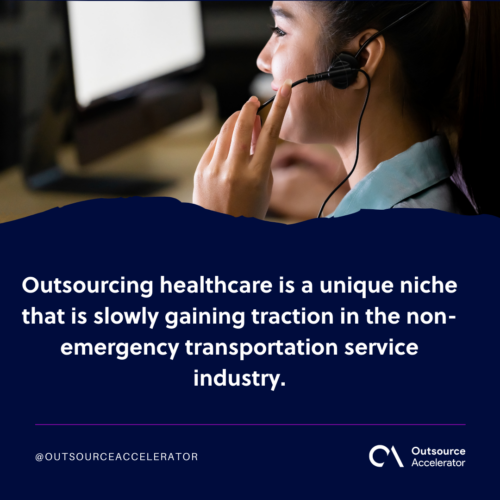
Outsourcing healthcare is a unique niche that is slowly gaining traction in non-emergency transport. For example, if you run a care home, you may outsource a NETS company of disabled-friendly taxis. So you can hire a vehicle for your clients’ needs without buying it outright.
Short-term hire of equipment
When you serve elderly or disabled patients, you may need equipment or skilled staff for a short time. So outsourcing bridges the gap between need and short-term commitment. Equipment is very costly, and a cheap version can harm your client. So instead of buying quality gear outright, you can hire it. As a result, your client gets the right tools, and you avoid owning gear used for only a couple of years.
Transport
Outsourcing transport is common in manufacturing. Small and large firms alike hire a transport company to ship goods across the country or the world.
Small businesses can focus on their products
One-person shops, such as creatives on Etsy, still need a way to send goods. So local shipping firms can take on these deliveries. In turn, the solo owner can focus on making unique items.
Medium businesses and long distances
Instead of a local postal service, a medium or large firm can sign a transport contract. So they cut the cost of long-distance shipping. If stock moves across states often, a contract secures an accurate delivery time for less.
Summary
Does your work fall within these sectors? Then you may gain from outsourcing them. Transport, hospitality, and telecommunications are the most common. This is because most firms need outside help in these areas while they focus on their core work.
With that help, your customers get their products on time and enjoy great local service. Still, you should also consider outsourcing your finances and legal work. When skilled teams work for you, your business can focus on its main task. So you avoid the cost of a full-time accountant. And with outsourced bookkeeping, your company gets more time to grow. To go deeper, explore the wider benefits of outsourcing and how back office outsourcing supports every sector.
Frequently asked questions
Which business sectors are easiest to outsource?
Transport, hospitality, and telecommunications are the easiest to outsource. Most firms need outside help here while they focus on core work.
Does outsourcing really save money?
Yes, in most cases. You skip wages, office space, and equipment costs. You also gain expert help without a full-time salary.
Can small businesses outsource too?
Yes, small firms benefit a lot. For example, a solo shop can outsource shipping. So the owner can focus on making products.
Is it safe to outsource financial and legal work?
Yes, when you choose a trusted provider. Skilled teams follow the right laws and rules. So they lower your risk and keep work accurate.
How do I start outsourcing a sector?
First, list the tasks that pull your team off core work. Next, find a provider with proven experience. Our directory is a good place to begin.
Key takeaways
- You can outsource seven sectors: real estate, finance, hospitality, legal, telecom, healthcare, and transport.
- Outsourcing helps you scale during busy periods without over-hiring.
- It gives you expert help at a lower cost than full-time staff.
- It shares risk and keeps your team on task.
- Transport, hospitality, and telecom are the most common to outsource.






 Independent





