
Tips to gain valuable telemarketing skills


What telemarketing skills do you need to succeed?
The core telemarketing skills are call handling, customer service, active listening, marketing know-how, and deep product knowledge.
- Strong telemarketing skills help you turn cold prospects into loyal customers.
- You can build these skills through practice, mentorship, and real call experience.
- Good customer service and active listening set the best telemarketers apart.
Effective telemarketing builds rapport with a prospect and turns them into a loyal customer. Despite the old stereotype about cold calls, telemarketing is still one of the best ways to stay close to your audience. So the right telemarketing skills matter more than ever.
Did you know that 82% of buyers accept meetings proactively initiated by a salesperson? This number shows one clear advantage of telemarketing, found in a study by RAIN Group. In this article, we cover the telemarketing skills you should work on to succeed.

What is telemarketing
Telemarketing means reaching out to prospective customers through phone calls. A sales rep calls a person who fits a brand’s target customer profile. First, companies get a lead’s contact details from providers. Then they sort those leads into the profiles they need.
Telemarketing happens in two main ways:
- Business-to-customer (B2C) cold calls, which are common in retail
- Business-to-business (B2B) calls for bigger deals and services
Cold, warm, and hot calls are the three types of cold calling. Mostly, they raise awareness for people who have never heard of a brand. Because a first call leaves a strong impression, you must know the skills needed for effective lead generation. For a deeper look at outbound tactics, this guide to outbound telemarketing tips is a helpful start.
Warm calls are sometimes called hot calls. They happen when the agent catches interest and sparks curiosity in the product. In addition, warm calls include follow-ups for feedback and surveys. In telemarketing, that often means a closed deal between a business and its lead.
The whole process of turning leads into sales takes time and money. As a result, many firms choose a partner to help.
SPLACE BPO offers effective telemarketing services, including outbound calls, inbound calls, and lead generation, among others. They have excellent team members trained to handle any given situation and task with professionalism and care.
Through outsourcing telemarketing services, companies can spread the cost of a presales team across other campaigns. So they free up budget for wider marketing work.
Telemarketing skills you need
Not sure where to start in your sales and lead generation career? Here are five valuable telemarketing skills you can practice today.
Telephone call handling
Good call handling is the foundation of telemarketing. Call length, routing, and the way reps deliver a pitch all shape effective telephone call handling. So this skill matters for both inbound and outbound calls.
Inbound calls can signal success, since they often carry feedback or clear interest. Outbound calls, on the other hand, must be warm and clear. In a short time, the agent must share the brand’s message and spark a lead. Unsolicited calls are rarely welcome, yet they can still open a door. Because of this, customers value an agent who can guide a call with ease.
Customer service
Customer service gives a brand the chance to deliver a good customer experience. Customers trust a company that understands their wants and needs. So empathy is a core practice here. Telemarketing is different from customer service, yet these skills help a lot when you sell over the phone.
To grow your telemarketing skills, learn different ways to approach people. As a result, prospects feel at ease even on the first call. In addition, strong service builds a lasting bond and guides buyers to the next step. Many of these habits overlap with core customer service skills that every agent should master.
Active listening
Outbound telemarketing means talking to someone who has never heard of your brand. The goal is more brand awareness, but you must also hear the customer out. Active listening is about staying aware of how the call flows. So when a prospect picks up, be fully present from the first word.
Not all prospects are the same. As a result, you must adjust your tone, language, and answers for each one. That way, every lead gets a real human experience.
Marketing techniques
Telemarketing is all about persuasion, yet leads are not easy to win. It gets harder when they hear about your business for the first time. Making the first contact is a technique on its own. Still, you can pair it with other methods to strengthen your approach.
Other useful techniques include niche targeting, conversational marketing, and pay-per-lead marketing. Niche and conversational marketing make each call feel personal, so the lead feels seen. Pay-per-lead runs customer data through a funnel and matches each lead with the right agent. These same ideas power good appointment setting, which turns interest into booked calls.
Extensive product knowledge
Influencers get PR packages so they can try a product before they review it. In the same way, a full review is hard without real product use. Telemarketing works the same way, because you can never sell what you do not know.
Deep product knowledge shows when you know your leads, your industry, and past customer stories. As a telemarketer, you find the gap between your offer and the lead’s needs. Then you work to bridge it. Once you build rapport, that knowledge helps you tie your offer to their situation. To close more often, it also helps to study proven sales closing techniques.
How to start your telemarketing career
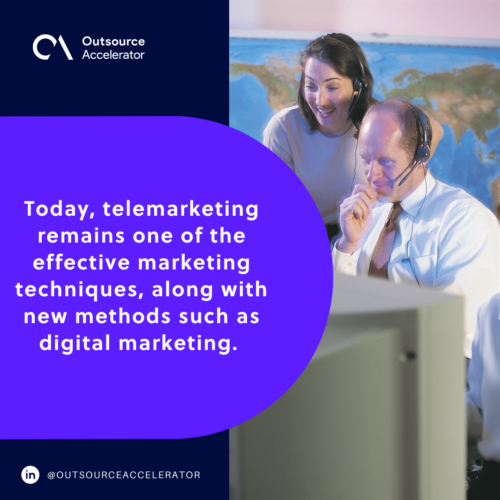
Telemarketing has been a business practice for decades. Many success stories in history came from steady contact with customers and partners. Their drive to be known made them the global leaders we know today. So the lesson still holds. Today, telemarketing remains one of the most effective techniques, along with newer methods like digital marketing.
To succeed, first weigh how much education you need. A degree in business helps, but most firms do not require one. Experience in customer service is also a big plus if you move into telemarketing. In addition, modern cold calling software can make your first weeks far easier.
You can also research how to write a great telemarketing script. Then find a style you feel confident to use. Finally, mentorships, internships, and short courses will sharpen your skills. As a result, you will engage leads better and turn them into loyal customers.
Frequently asked questions
What are the most important telemarketing skills?
Call handling, customer service, and active listening top the list. In addition, marketing know-how and product knowledge matter a lot. Together, these skills help you win and keep customers.
Do I need a degree to become a telemarketer?
No. Most firms do not require a degree. Instead, they value clear speech, patience, and service experience. So you can start with the right attitude and some training.
What is the difference between telemarketing and telesales?
Telemarketing builds awareness and gathers leads. Telesales focuses on closing the sale. Still, both rely on strong phone skills and good listening.
How can I improve my telemarketing skills quickly?
First, practice with a clear script. Next, listen back to your calls and note what worked. Finally, ask a mentor for feedback. As a result, you improve much faster.
Is telemarketing still effective today?
Yes. Phone calls still build trust in a way that ads cannot. Many buyers accept meetings from a proactive rep. So telemarketing remains a strong tool next to digital channels.






 Independent





