
Top 22 customer service skills every agent should have


What are the most important customer service skills?
The most vital customer service skill is the ability to listen, grasp a customer’s need, and solve it in a clear, kind, and timely way.
- Core skills include communication, empathy, patience, and problem-solving.
- Strong skills build trust, loyalty, and repeat business.
- You can train and grow these skills over time.
Customers give revenue to any business. In fact, no company can survive without them. If the customer does not buy, there are no sales.
So the most vital part of your business is customer service. This holds true no matter what you sell.
Your marketing will likely fall flat if you ignore the customer’s view. Because of this, your customer service skills tie closely to customer retention. As a result, strong customer satisfaction climbs when your team’s skills improve.
What is customer service?
So customer service is the help a business gives its customers before, during, and after a sale. Customer service representatives or CSRs assist people when they have questions about a product or service.
But customer service is more than answering questions. It is a key promise your company makes to its buyers. In short, it builds a bond between the customer and the business.
At its heart, good customer service means you listen to needs and give quick, useful fixes. So the goal is a positive experience through clear answers and real help.

Why are good customer service skills essential?
People who work in customer service are the face of a company. So their words shape how buyers feel. Staff who chat with warmth build loyalty and a good name.
Strong customer service skills also help you keep customers coming back. As a result, they support long-term customer retention and repeat sales.
Agents who show patience, empathy, and clear speech build trust. In turn, this leads to a happy customer experience.
Top customer service skills
Great customer service has many traits. Here is a list of the most vital customer service skills that every agent should have.
1. Job expertise
You cannot deliver good service without the right knowledge for the job. So focus and confidence grow when each agent knows their work well. Training helps, but agents must also put in time to master the trade.
2. Problem-solving
Many customers call because they cannot pinpoint their own problem. So agents must first find the issue before they offer a fix. A quick problem-solver keeps clients happy in every chat.
This is a key customer service skill. It also helps agents handle conflict and stay calm under pressure.

3. Emotional intelligence and empathy
A good agent can relate to anyone. They are also skilled at handling bad customers. Rather than take things to heart, they put themselves in the customer’s shoes.
You show empathy by paying close attention and staying kind. To build this trait, many teams work on empathy in customer service through role play. As a result, these soft skills lift your brand’s name.
4. Communication
Clear communication matters both at work and with customers. In customer service, it stops mix-ups and boosts output. So an agent must share product details and fixes in a simple, clear way.
5. Writing
Good writing is a vital customer service skill. It matters most for agents who use email and chat. Because of this, clear writing helps you share ideas well.
In addition, a great CSR has a firm grasp of grammar, tone, and the tools they use, like email and social media.

6. Resourcefulness and creativity
Resourcefulness means you solve issues with limited tools. So a creative reply can impress a caller. When creativity meets action, new ideas follow. As a result, both staff and customers stay more engaged.
7. Attentiveness
The skill to listen defines great service. It is not just about lending your ears. Being tuned in to each customer’s need is a core skill.
When you stay aware of a caller’s worry, you can give the right fix. In turn, this helps in enhancing the customer experience.
8. Positivity
Positivity is a mindset that leans on the bright side. Staying upbeat and making the best of things are perfect demonstrations of positivity.
A positive mood helps everyone, since it cuts stress. Customer service can be hard at times. So a good attitude protects your well-being. It is also catching, and it can sway how a client feels about your product.
9. Patience
Sooner or later, you will get a tough chat or an inbound call from an upset customer. Listening with patience calms them down.
Patience makes an agent look more reliable. So customers feel you will fix their problem with ease. In short, it is a must-have for any service career.
10. Product knowledge
Every rep must know the products and services well. Only then can they give sound advice. You cannot help a customer if you do not know the company and its offers.

11. Time management
People who plan well are often more productive. Planning ahead is part of time management skills. With good time management, you can set clear goals and rank the most vital tasks first.
Time management works hand in hand with multitasking and quick choices.
12. Active listening
First, active listening means you pay full attention to the speaker. A good listener also grasps what customers really need. This skill includes summing up and reflecting on what a customer said.
13. Adaptability
Adaptability is a key skill, above all in busy call centers. As a result, an agent can learn fast and respond to sudden change with ease.
14. Goal-orientedness
Being goal-oriented means you work with a clear end in mind. As a result, these people stay driven and proactive. They are also known as task-driven and set targets to stay motivated.
15. Tenacity
Tenacity blends resolve, grit, and drive. It is the trait that sets winners apart. When staff have tenacity, they do not settle for less. Instead, they chase the best and work more efficiently.
16. Attentiveness
Being attentive means you listen, grasp the situation, and reply the right way. In face-to-face service, eye contact is key. So pay full attention as clients speak, and avoid other tasks. Asking questions is also a great sign of focus.
Customers who feel ignored will leave with a bad impression. That is why attentiveness belongs on your skills list.
17. Responsiveness
How you respond is just as vital as being attentive. Responsiveness means you reply fast to requests for help. In digital service, this means quick answers and shorter wait times.
18. Friendliness
Companies win loyal customers when staff make buyers feel good. An employee’s friendly attitude plays a big role here. Once you leave a good impression, happy customers spread the word for free.
19. Willingness to learn
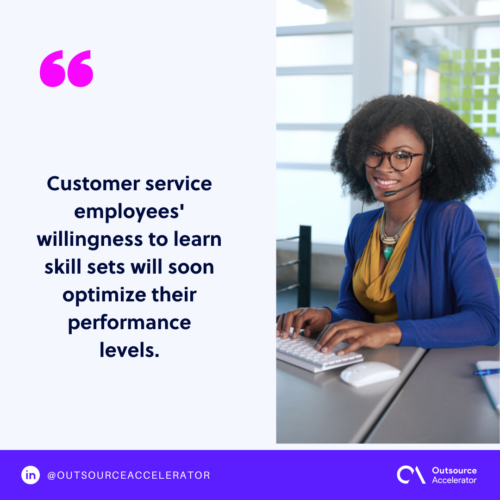
A willingness to learn is the drive to gain new skills. Agents with this trait soon lift their own performance. So they keep looking for new ways to reach goals and take on harder tasks.
20. Quick thinking
Solving small issues fast is a core service job. When a problem pops up, customer service is first to respond. So agents must think and act quickly, since they are the first line of defense.
21. Positive self-image
Reps with solid self-esteem trust their own judgment. As a result, they make better calls. Staff with a positive self-image stay confident and focus on progress, not fault.
22. Persuasion
Persuasion has long been a key sales talent. Still, it helps in customer service too. Every day, reps turn issues into fixes. So a persuasive rep can also help the company lift sales.
Ways to enhance the customer service skills of your team
Strong ties between customer and company matter to any business. Good service starts when you listen to your callers’ needs. Here are some tips to hone your team’s customer service skills.
Enhance your communication with consumers
It is a big plus when agents have great skills. Even so, a solid bond with customers begins with clear communication.
To improve, you can assign reps to a niche of callers they know best. Structured customer service training also builds these habits fast. In addition, you can set up auto-replies on social media to stay in touch.
Reply with positivity
People often reach out because they have a problem. So training reps to reply with warmth helps calm things down. Positive words build trust, while harsh words can anger a customer.
Pay attention and empathize
Empathy is one of the best customer service skills. So your team must learn to listen and relate. Ask agents to clarify and restate what a customer says. In this way, they confirm they truly understand. Regular call center coaching keeps these habits sharp.
Admit mistakes and apologize
An apology shows you are human. When you own a mistake, the customer feels cared for. As a result, this builds stronger, longer ties. Taking the blame also helps restore trust.
The right customer support tools make it easier to track and fix these issues. If you want an outsourcing partner with skilled support agents, Peak Support is the way to go.
Importance of improving your team’s customer service skills
Your support team’s skills drive client loyalty and retention. If customers feel ignored, they will switch to a rival with better service.
So you must keep improving your team’s skills to stay ahead. Well-trained agents handle a wider range of queries and solve them faster. As a result, fewer issues escalate and more customers stay happy.
Building soft skills, like empathy and clear speech, leads to better chats. In addition, investing in your team ensures great service and long-term trust.
So make sure customer service never feels like an afterthought. Instead, upskill your teams and keep raising their game.
Frequently asked questions about customer service skills
What is the most important customer service skill?
Active listening tops the list. When you truly hear a customer, you can solve the right problem the first time. Empathy and clear communication come close behind.
Can customer service skills be taught?
Yes. Most skills grow with training and practice. For example, coaching, role play, and feedback all help agents improve fast.
What are soft customer service skills?
Soft skills are people skills, like empathy, patience, and positivity. They shape how a customer feels during each chat. As a result, they lift trust and loyalty.
How do good customer service skills help a business?
Strong skills build happy, loyal customers. In turn, loyal customers buy more and spread the word. So better service often means higher revenue.
Key takeaways
- The best customer service skill is listening, then solving the real need.
- Core skills include communication, empathy, patience, and problem-solving.
- Strong skills build trust, loyalty, and repeat business.
- You can grow these skills through training, coaching, and practice.






 Independent





