
Virtual office: Everything you need to know


What is a virtual office and how does it work?
A virtual office is a service that gives a business a professional address, phone handling, and support staff without renting a physical office space.
- It offers a real business address, receptionist support, and meeting rooms on demand.
- Teams work from anywhere using cloud tools and video calls.
- It cuts costs while keeping a strong, credible brand image.
Remote work is now normal, so businesses keep testing new ways to work. A virtual office is one of the smartest options. It lets owners and staff blend flexibility with a professional image.
As more firms move out of the traditional office, they look for better setups. So a virtual office space has become a popular choice. In fact, it now ranks among the top solutions for modern work.
In this guide, we explain the virtual office concept and how it works. We also cover its key parts and its main benefits. As a result, you can decide if it fits your business.

What is a virtual office?
The virtual office concept came from Ralph Gregory. He founded “The Virtual Office, Inc.” in 1994. In short, it is a service that lets businesses work remotely. It gives owners a commercial presence without a dedicated physical office.
A virtual office offers a professional mailing address and receptionist services. It can also give access to conference rooms. As a result, businesses keep a strong image without paying to rent private office space. To compare providers, review the top virtual office software on the market.
How a virtual office space works
A virtual office runs on modern technology for communication. It works alongside web-based IT services and computing technologies. So the whole team can act as one unit from any location.
Software, apps, and video tools help employees do three key things:
- Work on a project
- Provide services to customers
- Keep in touch with each other
Because of this flexibility, small firms and startups can set up teams in prime locations. Meanwhile, they still enjoy strong cost efficiency.
Elements of a virtual office
Thanks to wireless technology and the internet, many firms now skip the physical office. So they run daily tasks from anywhere. Below are the main parts of a virtual office worth knowing.
Registered business address
A virtual office gives you a recognized business address in a reputable area. You can use it for mail, mail forwarding, marketing, and other official needs. This address is key because it shapes your legitimacy, credibility, and client trust.
Remote receptionist services
Like a private office, a virtual office has receptionists. They manage phone calls, book appointments, and receive mail and packages. As a result, your brand feels less virtual to customers. This also helps make the business look more legitimate.
Virtual assistants can fill a similar role. For example, teams often use skilled staff hired through DOXA. To see the wider value, learn how virtual assistants help businesses grow.
Call handling services
A virtual office has a dedicated business number with a local area code. This number links to a cloud-based phone system. So it can answer and forward calls, manage extensions, and more.
These phone lines make customers feel at ease when they call. In turn, this boosts the company’s credibility. Some firms also add a live virtual receptionist for a warmer touch.
Digital mail service
A virtual office package often includes digital mail handling services. This service collects, scans, disposes of, and forwards your mail. It can also send items to you electronically.
Conference room
Some virtual offices include a conference room. This looks professional and suits formal meetings. In addition, employees can book these rooms in advance for meetings or events.
Workspace
A few virtual offices offer a physical workspace too. This space has meeting rooms, private offices, and office equipment. As a result, it can be a great asset for company events.
How can a virtual office benefit your business?
A virtual office offers many advantages, from lower costs to higher productivity. Here is a quick breakdown of the key benefits.
Low cost
One big reason firms set up virtual offices is cost-effectiveness. It costs far less than a physical office. So businesses can focus more on their most important investments.
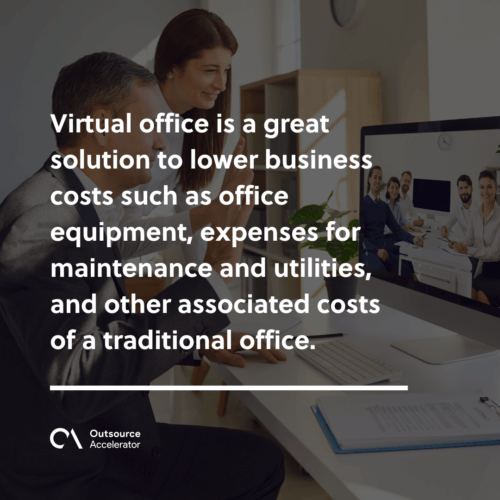
A virtual office also lowers many recurring costs. For example, it cuts spending on equipment, maintenance, utilities, and other office expenses.
Convenience
With a virtual office, teams can work wherever and whenever they choose. All they need is an internet connection and the right communication and collaboration tools. As a result, they can run a fully remote business with ease.
Front-desk support
A virtual office offers front-desk support, so you can focus on core work. Meanwhile, routine tasks get handled for you. For example, virtual office solutions cover phone calls and mail.
Image and legitimacy
Office space and contact details shape the image of small firms and startups. A virtual office gives you a professional image and clear legitimacy. As a result, it helps attract clients and build a positive impression.
Better productivity
Many studies show that remote work lifts productivity. For instance, a Stanford study found that remote work raised productivity by 13% over nine months. Recent work-from-home statistics point to the same trend.
Working from home also helps employees save money on the commute. In the end, it gives them a better work-life balance. So they can do their jobs well.
Set up a virtual office today
To keep up with today’s fast-changing tech, many firms pick a virtual office. It offers many benefits, so plenty of owners choose to set one up. Many also study companies with a hybrid work model before they decide.
On top of that, virtual offices support internal and external work without a physical space. As a result, they make daily operations simpler. Take a step forward in your business, and weigh the benefits above.
Frequently asked questions
What is a virtual office in simple terms?
A virtual office is a service that gives your business a professional address and support. You get mail handling, phone service, and meeting rooms. Still, you skip the cost of renting a physical office.
How much does a virtual office cost?
Prices vary by provider, location, and services. In general, a virtual office costs far less than a physical office. So it suits startups and small firms on a budget.
Is a virtual office legal for business registration?
In many places, yes. For example, a registered virtual office address can serve official and mailing needs. However, you should check your local rules first.
Who should use a virtual office?
Startups, freelancers, and remote teams gain the most. In addition, it helps firms that want a presence in a new city. As a result, they look established without heavy costs.
What is the difference between a virtual office and coworking?
A virtual office focuses on address, mail, and phone support. Meanwhile, coworking gives you a shared physical desk. So you can explore top coworking spaces in Metro Manila if you need a desk too.
Key takeaways
- A virtual office gives you a professional address and support without renting space.
- Core parts include an address, receptionist, phone handling, and digital mail.
- It lowers costs while keeping a credible brand image.
- Remote work often raises productivity and improves work-life balance.
- It suits startups, freelancers, and remote teams that want to scale smartly.






 Independent





