
Digital assistant platforms: The future of AI assistants is in our hands


What are digital assistant platforms?
Digital assistant platforms are voice-activated software tools that respond to your commands and handle everyday tasks like reminders, calendars, and quick messages.
- They use AI to understand and act on your voice prompts.
- They save time by handling small, repetitive tasks for you.
- They come built into phones, computers, and smart home devices.
Technology moves fast, and some days 24 hours feel too short. Mundane tasks pile up, from sorting schedules to prepping notes for meetings. Before digital assistants, we wrote reminders on sticky notes and set phone alarms.
Now, thanks to modern tech, we let artificial intelligence, or AI, set those reminders for us. As a result, digital assistant platforms now shape how many of us work and live.
What is a digital assistant?
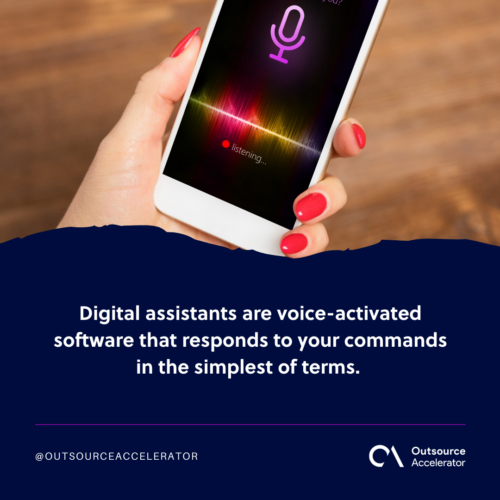
When you think of digital assistant platforms, what comes to mind? Maybe AI, or maybe virtual assistants. The term is open to reading. Still, digital assistants are voice-activated software that respond to your commands in simple terms.
In fact, they can do many tasks for you. For example, they set calendar events, read your notifications, make reminders, and even send a quick text. In short, they take small jobs off your plate.
Why are there different digital assistants?
Most digital assistants work in similar ways. Their main differences come from the environment they are built in.
Take Siri and Cortana, for example. In terms of function, they are alike. But one is native to macOS and iOS, while the other is native to Windows.
Similarly, digital assistants are very flexible. More often than not, you can program them to do a task based on the voice prompts you set.
Which is the best digital assistant?
It is hard to name the single best digital assistant. Our standards are personal, and we all have biases. Still, if we go by popularity, Siri and Google Assistant lead the pack.
Of course, several things made them more popular than rivals. But their easy access on smartphones may be the real key to their success. For a wider view, see this list of voice assistants you can use today.
Top 15 most effective digital assistant platforms
These digital assistants and AI tools exist to make life easier. That said, the tech keeps evolving. Some features we want are still in the works, while others feel just out of reach. Below are some of the best digital assistant platforms on the market. You can also compare them with these best AI assistants for more options.
1. Bixby
Developer: Samsung
Bixby is an AI assistant native to Samsung devices. It was rebooted from S Voice, the company’s older, now-retired assistant.
2. Siri
Developer: Apple
A well-known companion on Apple devices, Siri quickly became a favorite among phone users. It is exclusive to Apple gear. Still, that has not slowed its popularity.
3. Google Assistant
Developer: Google
Unlike its predecessor, Google Now, Assistant can hold a two-way chat with the speaker. As a result, it opens up new ways to engage with an AI assistant.
4. Cortana
Developer: Microsoft
Native to Microsoft Windows, Cortana uses Bing for its searches. Like its rivals, it can set reminders and add events to the device’s calendar.
5. Amazon Echo aka Alexa
Developer: Amazon
Amazon Echo, best known as Alexa, is one of the most versatile AI assistants. So it earned wide popularity among users.
The internet had fun with the “Alexa, play…” meme, since the assistant plays songs on command. Alexa can take a joke. But it is also a strong companion for smart homes.
6. Blackberry Assistant
Developer: BlackBerry
The Blackberry Assistant is native to BlackBerry’s phone line. According to the maker, this AI assistant can convert speech into text with relative ease.
7. NINA (Nuance Intelligent Virtual Assistant)
Developer: Nuance
NINA is called the first virtual assistant built for customer service support. Since its release, its developers have worked hard to deliver on that promise.
It spans web, chat app, and messaging support, plus the Internet of Things (IoT). So NINA has come a long way since it began.
8. SILVIA (Symbolically Isolated Linguistically Variable Intelligence Algorithms)
Developer: Cognitive Code
SILVIA was built to read speech and text and then interact with the operating system and its apps. It is a multi-platform assistant, spanning iOS, macOS, and Windows. Before Alexa arrived, SILVIA was among the pioneers of digital assistants.
9. Dragon
Developer: Nuance (Dragon Systems)
Dragon NaturallySpeaking is one of the oldest AI assistants on this list. It acts as a speech recognition system that types any speech it hears. It runs on both macOS and Windows, so it suits users on either system.
10. Aido
Type: Home robot assistant
Aido is not your typical AI assistant. From its official images, this AI looks like it came from a sci-fi movie. It can help with household chores and manage your schedule. So it is a handy buddy for families, and it targets hospitality, retail, homes, and healthcare.
11. Braina
Developer: Brainasoft
Braina, short for Brain Assistant, is a multi-platform personal AI. It uses natural language processing to get tasks done. Those tasks range from playing music to opening apps and doing math, all by voice or keyboard. Over time, Braina adapts to your needs and anticipates repeat tasks.
12. Mycroft
Type: Open-source assistant
Mycroft is an open-source digital assistant platform. It was built by the Mycroft AI team and shaped by Ryan Sipes and Joshua Montgomery. This AI can run on almost any hardware, custom or off-the-shelf. As the first open-source AI assistant, it can be improved and customized by anyone.
Are human virtual assistants worth investing in?
Human VAs are a gift to busy people. They handle minor tasks that eat up precious work hours. Some say hiring one wastes time and money, since you must sift through applications and run interviews.
Still, hiring a virtual assistant pays off in the end. You gain more time for the things that matter, and you find the hours you were missing. The right virtual assistant tools can make that work even smoother.
The difference between virtual assistants and digital assistants
One clear difference stands out. A digital assistant often misses small errors that a person could fix fast. To see how people add real value, look at how virtual assistants help businesses every day.
AI is AI
If you have ever seen content generated by an AI, you know it needs a human review. The work can also lack the creative flair that people bring. On top of that, digital assistants need time to learn a user’s needs. So mistakes still happen.
VAs can lend a “human touch” to your projects
Virtual assistants may cost more than an AI. But they often make sure their work is error-free. They cannot be online 24/7. Still, VAs help you take back your time and keep daily work smooth.
Why having an assistant is important nowadays
An assistant gives you more freedom in your day. Imagine not spending hours responding to emails and taking calls. Instead, you focus on what matters to you and your business.
Of course, a human assistant is not for everyone. But most of us can still lean on digital assistants to make life easier. To go further, explore how AI for work can simplify your whole day.
Frequently asked questions about digital assistant platforms
What can digital assistant platforms do?
They handle voice-based tasks for you. For example, they set reminders, add calendar events, and send messages. Many also control smart home devices.
Are digital assistants the same as virtual assistants?
No. A digital assistant is software driven by AI. A virtual assistant is a person who works for you remotely. Each one fits different needs.
Which digital assistant is the most popular?
Siri and Google Assistant lead in popularity. Their easy access on smartphones is a big reason. Alexa is also popular for smart homes.
Can digital assistants replace human assistants?
Not fully. Digital assistants are fast and always on. But they miss small errors and lack a human touch. So many people use both.
Do digital assistant platforms cost money?
Many are free and built into your devices. Others, like advanced or open-source tools, may need setup or a fee. It depends on the platform you pick.
Key takeaways
- Digital assistant platforms use AI to handle voice-based tasks and save you time.
- Popular options include Siri, Google Assistant, Alexa, Bixby, and Cortana.
- They differ mostly by the system and devices they are built for.
- Digital assistants are fast, but they still need human review for accuracy.
- Pairing digital assistants with a human VA gives you the best of both.






 Independent





