
15 best AI assistants to make your life easier


What are all AI assistants, and which ones should you use?
AI assistants are software tools that use artificial intelligence to answer questions, run tasks, and save you time. This guide to all AI assistants covers 15 top picks, from Google Assistant and Alexa to writing helpers like Jasper and coding tools like GitHub Copilot.
- They handle voice commands, research, scheduling, and smart home control.
- Different types suit different jobs, so the best one depends on your goal.
- The right assistant can boost your output at work and at home.
List of best AI assistants
- Google Assistant
- Amazon Alexa
- Siri
- Cortana
- Copy.ai
- Writesonic
- Jasper
- SurferSEO
- Frase
- Otter
- Fireflies.ai
- Cleo
- Wally
- GitHub Copilot
- Tabnine
Technology moves fast, and artificial intelligence is now part of daily life. One big area of growth is AI assistant apps. These digital helpers make everyday tasks simpler.
In fact, Zippia found that 77% of people use a device or service powered by artificial intelligence. So the odds are high that you already rely on one.
This article breaks down the 15 best AI assistants for your work and daily routine. First, let us look at what they are and how they help.
What are AI assistants?
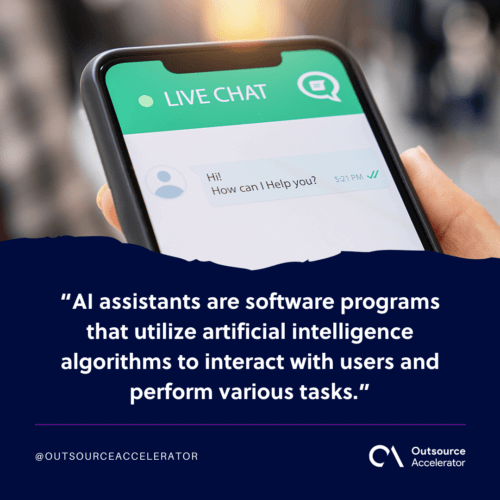
AI assistants are software programs that use artificial intelligence to work with users and carry out tasks. In short, they act like a smart helper you can talk to.
These assistants aim to feel human. As a result, they can give you useful answers or finish a job for you.
They use natural language processing (NLP) and machine learning (ML) to read your requests. Many firms now use the same tech in AI in customer service to speed up support.
Uses of AI assistants
AI assistants help in many settings. Here are the main ones:
- Voice commands. An AI assistant lets you act by voice, so you can call, text, play music, and control smart home gear hands-free.
- Information retrieval. These tools are great at finding answers online. They reply to questions, give directions, and suggest options.
- Smart home control. Many assistants link with smart devices. So you can set lights, thermostats, and alarms with a few words.
- Personal reminders and scheduling. An AI assistant sets reminders for tasks and events. It can also manage your calendar.
- Personalized recommendations. AI assistants learn what you like. So they suggest movies, music, and places that fit your taste.
Types of AI assistants
AI assistants come in several forms. Each one fits a certain task or field.
Chatbots
Chatbots talk with users through text. You often find them on websites, chat apps, and support desks. Many run on conversational AI to sound more natural.
Chatbots reply fast, answer FAQs, and guide you through steps. So they save users and teams a lot of time.
Voice assistants
Voice assistants act on spoken commands. You find them on smart speakers, phones, and other devices with a microphone.
They can search the web, play music, run smart devices, and share weather updates. In short, they keep your hands free.
AI avatars
AI avatars are more visual AI assistants. They can look like animated characters to make the experience more fun.
AI avatars often show up in games and media to guide users and share info. They can also help at work during virtual meetings.
Domain-specific virtual assistants
Some AI assistants are built for one field. As a result, they hold deep, focused knowledge.
For example, there are assistants made for healthcare, finance, education, and customer service. Next, let us look at three broad categories based on how they work.
Voice-activated assistants
Voice-activated assistants respond to a wake word. They keep listening for that phrase and switch on when they hear it.
This lets you work hands-free. So common tasks feel quick and easy.
Task-oriented assistants
Task-oriented assistants focus on getting one job done well. They handle repeat or slow tasks for you.
For example, this type can manage your calendar, set schedules, and take notes. As a result, it solves many day-to-day work problems. Many teams pair them with other AI tools for business to get even more done.
Predictive assistants
Predictive assistants use ML to study how you act. Then they offer tips before you ask.
They read your past choices and suggest useful next steps. So you make faster, smarter decisions.
Benefits of having an AI assistant
AI assistants bring clear perks to work and daily life:
- Time-saving. An AI assistant finishes tasks fast, so you free up time for other things.
- Personalization. These tools learn your habits. So they tailor tips and results to your needs.
- Convenience. With simple menus and voice input, an AI assistant is easy to use.
- Productivity enhancement. AI assistants help with plans, schedules, and tasks. In turn, they boost productivity and keep you on track.
- Access to information. An AI assistant gives fast access to a lot of data. So you stay informed and choose well.
15 best AI assistants to use
Below are the top 15 AI assistant apps, grouped by what they do best.
AI personal assistants
This type offers broad skills, smart links, and easy use.
1. Google Assistant
Google Assistant handles a wide range of tasks, from answering questions to running smart devices. Because it ties into Google apps, the experience feels smooth.
2. Amazon Alexa
Alexa lives on Amazon Echo devices and shines at smart home control. It has many skills, so it can inform and entertain with ease.
3. Siri
Siri is Apple’s AI assistant. It comes built into iOS and links well with other Apple tools. As a result, it can book appointments and share weather updates fast.
4. Cortana
Microsoft built Cortana for Windows devices. It once offered voice commands, calendar help, and links to Microsoft apps. Note that Microsoft has since wound down Cortana as a standalone assistant.
Best AI writing assistants
These tools help you write content, spark ideas, and lift quality.
5. Copy.ai
Copy.ai uses AI to speed up writing work. From blog posts to social copy, it saves writers a lot of time.
6. Writesonic
Writesonic helps you make content, brainstorm, and polish your drafts. Its simple setup makes it handy for any writer.
7. Jasper
Jasper is built for content and copywriting. It gives writers ideas and prompts. So the final copy feels clear and engaging.
Best AI SEO assistants
These tools use AI to improve SEO. They review content, study rivals, and suggest keywords.
8. SurferSEO
SurferSEO reviews web content and offers tips to improve it. It also checks rivals and suggests keywords. As a result, your pages can rank higher.
9. Frase
Frase uses AI for content and SEO work. It builds briefs and runs research for you. So you can create strong pages that rank well.
Best AI meeting assistants
These assistants offer live transcription and note-taking.
10. Otter
Otter uses AI to transcribe meetings in real time. So it is easy to capture and revisit what was said. As a result, you can focus on the talk, not the notes.
11. Fireflies.ai
Fireflies.ai offers AI notes and team features. It transcribes calls, marks key points, and links with popular tools. In short, it keeps follow-ups simple.
Best AI financial assistants
These assistants help with budgets, expenses, and money plans.
12. Cleo
Cleo helps you budget, track spending, and plan your money. Its chat setup makes it easy to use. So you get quick tips to improve your finances.
13. Wally
Wally tracks spending and spots patterns. Then it gives tips to help you take control. Because it is simple to use, it works well for money management.
Best AI coding assistants
These tools suggest code, offer smart tips, and make coding faster.
14. GitHub Copilot
GitHub Copilot suggests code and gives context-aware tips. So it speeds up coding and helps developers write clean, high-quality work.
15. Tabnine
Tabnine predicts and suggests code completions. As a result, it cuts the time needed to write code. Its ML skills make it a strong pick for programmers.
Future of AI assistants
The future of AI assistants looks bright. With better NLP and ML, these helpers will grow smarter and more useful.
As tools like generative AI and AI outsourcing mature, assistants will handle even more work. In short, the road ahead brings smarter choices and better personalization.
Frequently asked questions
What is an AI assistant?
An AI assistant is a software tool that uses artificial intelligence to answer questions and run tasks. It reads your words with NLP and ML. So it can reply and act like a smart helper.
What are the main types of AI assistants?
The main types are chatbots, voice assistants, AI avatars, and domain-specific tools. Some also group them as voice-activated, task-oriented, and predictive. Each type suits a different job.
Which AI assistant is best for writing?
For writing, strong picks include Copy.ai, Writesonic, and Jasper. They help you draft, edit, and spark ideas. So they save writers a lot of time.
Are AI assistants safe to use?
Most AI assistants are safe when you use trusted apps. Still, check the privacy settings and limit the data you share. Because of this, you keep more control over your info.
Do AI assistants help businesses?
Yes. AI assistants speed up support, notes, and daily tasks. As a result, teams save time and get more done.
Key takeaways
- AI assistants use artificial intelligence to answer questions and run tasks for you.
- Common types include chatbots, voice assistants, AI avatars, and field-specific tools.
- The best pick depends on your goal, such as writing, SEO, meetings, money, or code.
- These tools save time, add personal touches, and boost productivity.
- As NLP and ML improve, AI assistants will grow smarter and more helpful.






 Independent





