
Is AI killing offshoring? Why the smartest businesses are betting on both

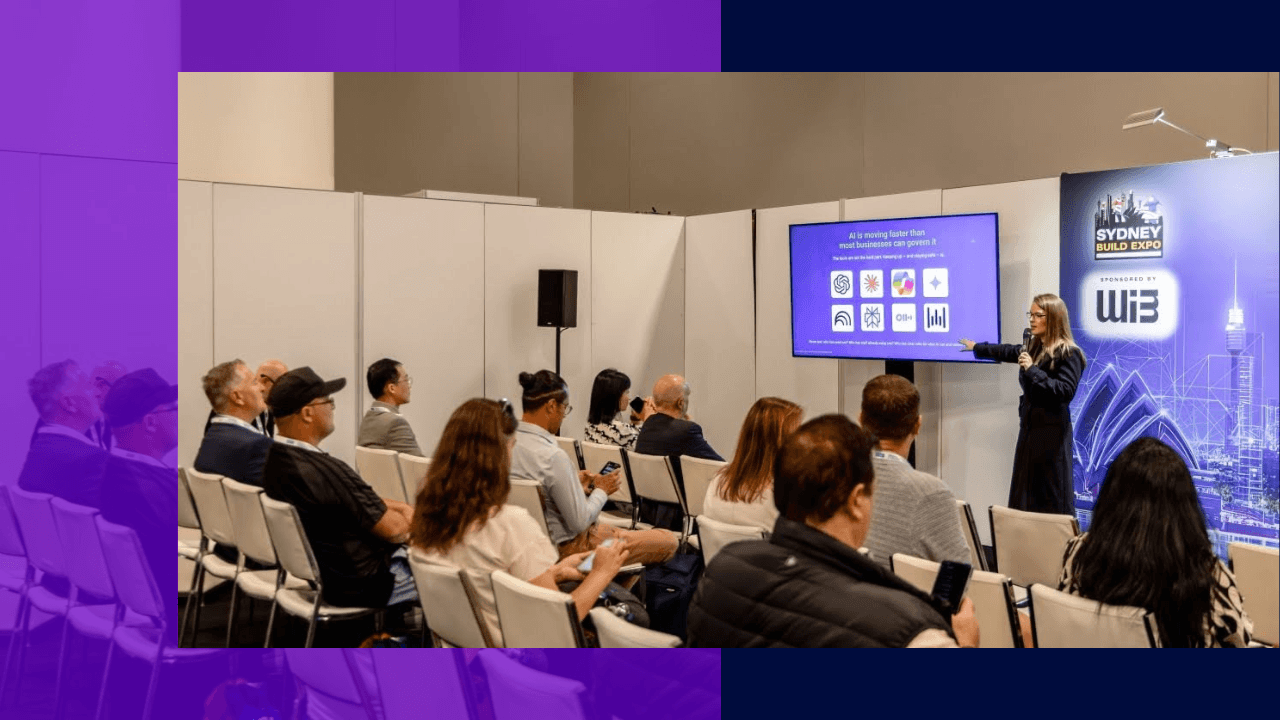
This article was contributed by Tiffany English, Founder of Access Offshoring, an Australian-owned offshoring company connecting businesses with dedicated, skilled professionals in the Philippines.
The changing landscape of offshoring
There is a conversation happening in boardrooms, on LinkedIn, and at business events across Australia right now. It goes something like this:
“If AI can do it, why do we still need offshore staff?”
It is a fair question. Artificial intelligence is advancing rapidly. Tools like ChatGPT, Claude, Midjourney, and dozens of industry-specific platforms are automating tasks that once required significant human time and effort.
Writing, data processing, customer responses, scheduling, basic bookkeeping; AI is touching all of it.
So the concern is understandable. But it is also, in most cases, wrong.
The reality is that AI is not killing offshoring. In fact, for businesses that understand how to combine the two strategically, AI is making offshore teams more powerful, more efficient, and more valuable than ever before.
The fear is rooted in a misunderstanding
When business owners worry that AI will replace their offshore team, they are typically imagining a narrow version of what offshore professionals actually do. They picture repetitive, rules-based tasks, such as data entry, copy-paste work, and basic administrative functions, and assume that AI will simply take those over.
And in some cases, yes, AI tools are automating certain repetitive tasks. That is true in every industry, in every country, at every level of the workforce:
- Finance industry: Automating reconciliation.
- Law firms: Automating document review.
- Marketing teams: Automating first-draft content.
But here is what that narrative misses: the offshore professionals who thrive are not doing repetitive work in a vacuum. They are thinking, problem-solving, communicating with clients, managing relationships, and exercising judgement.
Those are not things AI can replicate, not at the level businesses actually need.
What AI actually does well (and what it does not)
To have a clear conversation about this, it helps to be specific about what AI tools are genuinely capable of today.
What AI excels at:
- Processing large volumes of structured data quickly.
- Generating first drafts of content based on prompts.
- Answering frequently asked questions from a knowledge base.
- Categorising, sorting, and flagging information at scale.
For businesses, these are genuinely useful capabilities that save time and reduce cost on low-complexity tasks.
What AI cannot do:
- Exercise nuanced human judgement: It cannot read between the lines of a difficult client email and decide how to respond with empathy and commercial awareness.
- Manage ambiguity: It cannot handle a project where the goalposts keep moving.
- Build trust: It cannot nurture relationships with a customer over time or notice that something feels off and raise it proactively.
- Adapt to culture: It cannot naturally align with the culture of your specific business to become a genuine extension of your team.
A simple example: A dedicated offshore customer service coordinator might use an AI chatbot to handle the first response to a routine enquiry, such as order status, opening hours, or standard policy questions.
But when a customer writes in frustration about a delayed shipment or a billing error, it is the human coordinator who reads the tone, decides how to de-escalate, and makes a judgement call about whether a refund, a discount, or simply a sincere apology is the right response.
AI can draft the reply; it cannot decide what the moment actually calls for.
The businesses getting this right are doing both
The most forward-thinking businesses in Australia are not choosing between AI and offshore talent. They are integrating both, deliberately and strategically.
Here is what that looks like in practice:
- The Hire: A business hires a dedicated offshore operations coordinator based in the Philippines.
- The Workflow: That person uses AI tools to draft communications, automate reporting, and process routine data.
- The Result: Because AI is handling those lower-value tasks, the coordinator can spend more of their time on higher-value work: client relationship management, process improvement, team coordination, and strategic support.
The business gets more output, better quality, and a more skilled team member, all at a cost structure that simply would not be possible if they were hiring locally for the same role.
This model is working right now across industries, from professional services and e-commerce to healthcare administration and construction.
Filipino professionals are already embracing AI
One of the most important things to understand about the Philippine workforce is how quickly it adapts. The country has one of the most tech-savvy workforces in the Asia-Pacific region, with high English proficiency, strong digital literacy, and a cultural disposition toward learning and upskilling.
Filipino offshore professionals are not waiting to be told to use AI tools. Many are already using them to work faster, produce higher-quality outputs, and become more valuable to the businesses they support.
The offshore professionals who will thrive in the AI era are those who can use AI as a tool while applying the human skills that AI cannot replicate.
This adaptability is not a coincidence. The Philippine offshore industry has spent more than two decades absorbing new technology into its workflows, from early call centre software to cloud-based CRM platforms to today’s generation of AI assistants.
Each wave of technological change has been treated as a tool to be mastered, not a threat to be feared.
The real risk is inaction, not AI
If there is a genuine risk in this conversation, it is not that AI will make offshoring obsolete. The real risk is that businesses will be so distracted by the AI question that they fail to build the offshore teams that could help them grow right now.
Every month a business delays building an offshore team is a month they are paying more than they need to for functions that could be handled remotely, at equal or higher quality, by a skilled dedicated professional.
AI will continue to evolve, but it will do so in the hands of skilled people. The businesses that build strong offshore teams now will be best positioned to harness AI tools effectively as they mature.
What this means for your offshoring strategy
The key takeaway is this: stop thinking about AI and offshoring as competing strategies. They are complementary. A great offshore team member who also knows how to use AI tools is not a cost centre; they are a force multiplier.
When evaluating your offshoring strategy in the context of AI, ask these questions:
- Which tasks in your business genuinely require human judgement, relationship management, or contextual thinking?
- Which tasks are repetitive and rules-based and could be partially or fully automated?
For the former, you need great people, and offshoring gives you access to a global talent pool. For the latter, AI can help those people work faster and smarter.
The businesses that will win in the next five years are not the ones that chose AI over people, or people over AI. They are the ones that figured out how to make both work together.
That means auditing roles honestly, investing in the right tools for the team members you already have, and being deliberate about which parts of a job get automated and which parts stay firmly in human hands.
Offshoring is not dying. It is evolving. And the smartest businesses are evolving with it.






 Independent





