
5 key benefits of outsourcing transcription services for healthcare providers
What are the benefits of outsourcing transcription for healthcare providers?
Outsourcing transcription for healthcare gives providers more accurate records, lower costs, faster turnaround, strong data security, and access to the latest technology.
- Trained medical transcriptionists cut errors in patient records.
- A pay-per-use model turns fixed staffing costs into flexible spend.
- 24/7 teams and AI tools speed up documents and protect patient data.
The world of healthcare is fast-paced and full of paperwork. So accurate, timely transcription plays a critical role in daily operations. Providers rely on precise records to keep patients safe and staff informed.
However, managing transcription in-house can drain time and money. This is true as patient volumes grow. As a result, outsourcing transcription services for healthcare has become a smart, practical fix.
Why do healthcare providers need transcription services?
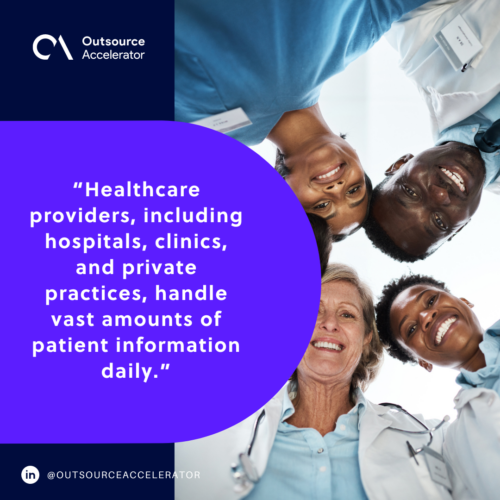
Hospitals, clinics, and private practices handle huge amounts of patient data every day. Each visit between a patient and a provider creates records that must be kept for later use.
These records include patient histories, clinical notes, and diagnostic reports. Accuracy here is vital. After all, even a small error can lead to a wrong diagnosis or treatment.
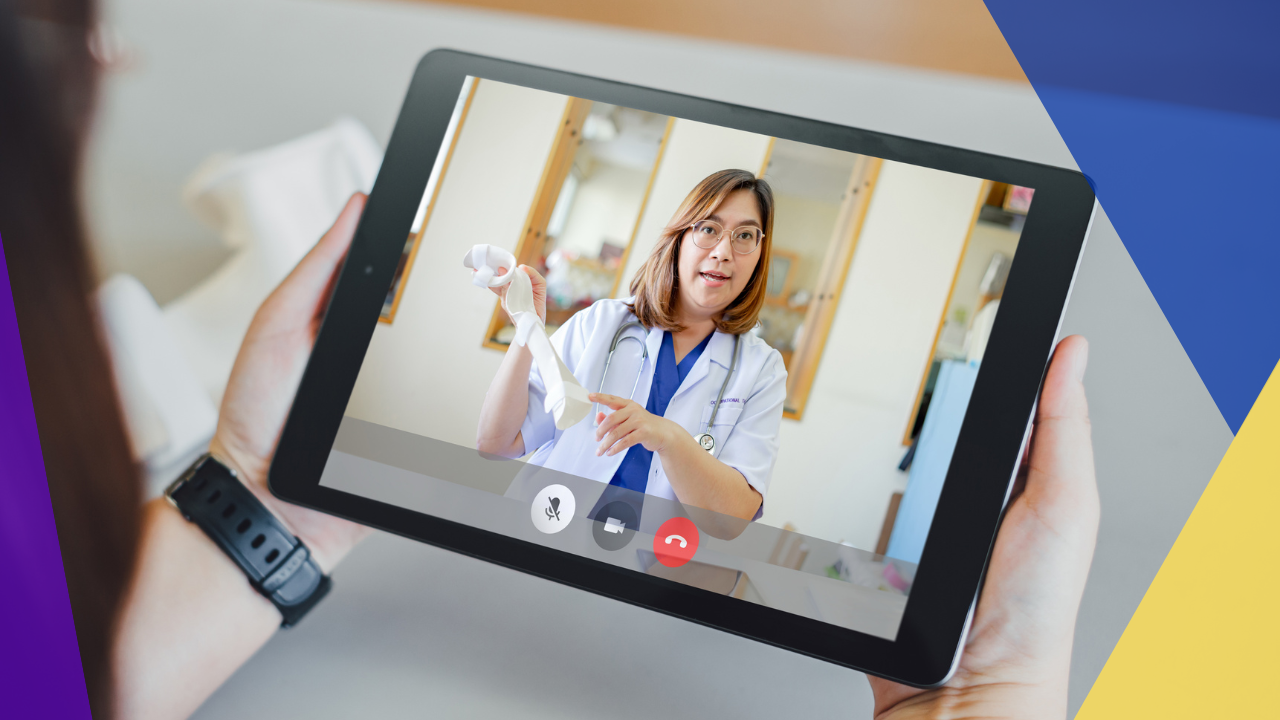
Healthcare transcription turns voice-recorded reports into written text. Doctors and nurses use dictation to save time. Then that audio is typed up and added to patient records or Electronic Health Records (EHR) systems. For many teams, this sits alongside other healthcare outsourcing work.
Traditionally, transcription was handled in-house. However, demand for speed and accuracy keeps rising. Because of this, many providers now choose to outsource the task.
5 benefits of outsourcing transcription services for healthcare
Outsourcing transcription offers providers several clear gains. In short, it lifts both efficiency and patient care.
1. Improved accuracy and quality
Outsourcing gives you access to trained experts who focus on medical transcription. They know the terms, procedures, and rules that keep records accurate. In-house staff may lack these specialist skills. As a result, errors become more likely.
Outsourced providers also run quality checks on every file. So they catch mistakes early and support a better patient experience. For a deeper look at the role, see this guide to medical transcription services.
2. Cost efficiency
Running transcription in-house carries big overheads. For example, you pay to hire, train, and keep staff. In addition, advanced software and hardware push costs higher.
Outsourcing removes most of that spend. Instead, you only pay for the services you use. So this model also makes budgets easier to manage, especially for smaller practices. The same logic drives many teams to outsource medical billing services too.
3. Faster turnaround times
Outsourced transcription teams often work 24/7. As a result, providers get their documents fast, even outside office hours. This helps a lot in high-pressure settings where quick access to records is key.
With staff working around the clock, providers can handle large volumes without delay. Meanwhile, medical teams stay focused on patient care. Much of this sits within broader back office outsourcing.
4. Compliance with data security rules
SonicWall reported 14 million victims of healthcare data breaches in 2024. So the risk to this sector is clear. Privacy rules must be followed closely when handling patient data.
The most cited rules are HIPAA in the United States and GDPR in Europe. Good providers come with strong safeguards. For example, they use encrypted transfers and secure servers. As a result, patient data stays safe and compliant.
5. Access to advanced technology
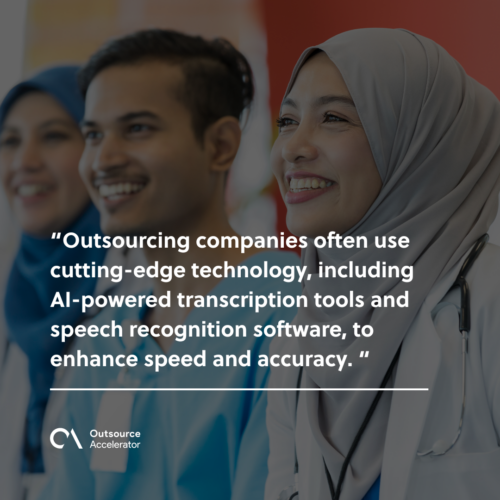
Outsourcing firms often use the latest tools. These include AI-powered transcription tools and speech recognition software. Together, they boost both speed and accuracy.
These tools also link smoothly with EHR systems. So they improve the whole workflow. In contrast, building and maintaining such tech in-house can be costly and complex.
Connext’s healthcare outsourcing solutions
Outsourcing transcription to a trusted partner like Connext can be a game-changer. It offers transcription services built around the needs of healthcare teams.
This BPO brings expert transcriptionists, secure data handling, and scalable support. As a result, providers can focus on care while experts manage the records. Its skill and commitment to quality make it a strong partner for any provider. These strengths also sit within the wider healthcare BPO sector in the Philippines.
Get in touch with Connext to learn more about its healthcare outsourcing services!
Frequently asked questions
What is healthcare transcription?
It is the process of turning voice-recorded medical reports into written text. Doctors and nurses dictate notes to save time. Then transcriptionists type them up for patient records.
Is outsourced medical transcription HIPAA compliant?
It can be, when the provider follows strict safeguards. For example, they use encrypted transfers and secure servers. Always confirm a partner’s compliance before you sign on.
How fast is outsourced transcription?
Many teams work 24/7, so turnaround is often quick. As a result, you can get documents back even outside office hours. This helps a lot in urgent care settings.
Does outsourcing transcription replace in-house staff?
Not always. Many providers use it to ease pressure on busy teams. So staff can focus on care while experts handle the typing.
How does AI help with medical transcription?
AI tools speed up the first draft and flag likely errors. Still, trained people review the output for accuracy. So you get both speed and quality control.






 Independent






