
Inbound calling strategy: Why is it important?

What is an inbound calling strategy and why does it matter?
An inbound calling strategy is a clear plan for how your team answers, handles, and resolves customer calls that come to your business.
- It shapes how fast agents pick up and solve each issue.
- It keeps your call operations stable and easy to run.
- It also helps you plan staff, tools, and metrics with less guesswork.
An inbound calling strategy plays a big role in how you market and sell. So its value should not be underrated. A strong plan affects everything, from how fast your team picks up the phone to how fast they fix the customer’s problem. In addition, it helps you run your inbound calling in a steady, efficient way.
How is inbound calling different from cold calling?
Inbound calls are calls a client makes to a company’s support line. These callers are current customers or prospects who want to buy a brand’s products or services.
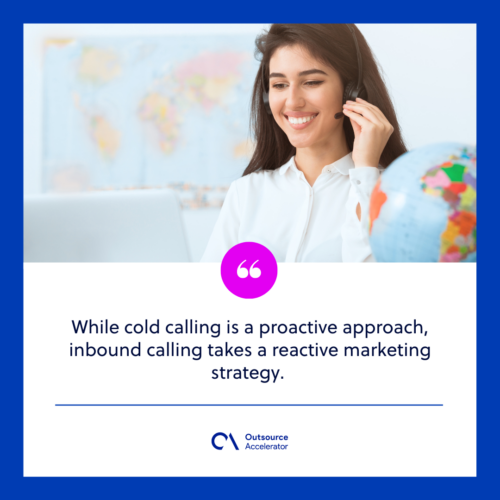
Cold calling, on the other hand, is when a rep contacts people who have not shown interest yet. So cold calling is a proactive push. Inbound calling, by contrast, takes a reactive approach. Your team only acts when clients call in. As a result, they do not dial numbers all day.
This means inbound calling gives customers control over their buying choices. It does not push them to notice your products. Both methods can help your business. Still, inbound calling tends to feel less intrusive to future clients.
Why is it crucial to have an effective inbound calling strategy?
Great customer experience relies on how well you help with each request and complaint. Always remember that customers stay with a brand that solves their problems.
A strong inbound call strategy helps you field concerns with ease. Moreover, it improves your operations in the ways below.
Handle call volumes
The total volume of inbound calls shifts with many factors. A good strategy lets you track how many calls your agents get each day or month. So you learn the baseline and call quota for your reps. As a result, you can estimate how many calls each person can handle. You can also work out how many reps your team needs. Watching your call center metrics makes this far easier.
Offer the right service to clients
An inbound call center has two main jobs: customer support and product promotion. The first needs a support team. The second needs active sales support.
A well-planned inbound calling technique lets you choose one job or both. In addition, you can decide if your team can train on both. As a result, you broaden your services and may cut overhead costs. Some firms also explore full inbound call center solutions to scale faster.
Assemble a great team
With a clear plan, you can build the right team. So your agents can manage higher call volumes and tough customer issues. As a result, your daily operation stays as stable as possible. Because you plan from the start, you know to hire strong communicators. In turn, they can handle the most stressful calls. Aiming for a high first call resolution rate keeps that team focused on results.
Know what metrics to measure
A strategic plan lets you track Key Performance Indicators (KPI) to see how your business improves. Tracking KPIs is key. For example, they show if your team meets its goals. They also flag a high rate of customer churn. Some KPIs to watch include call volume, average talk time, and the total number of abandoned calls.
Invest in the right tools
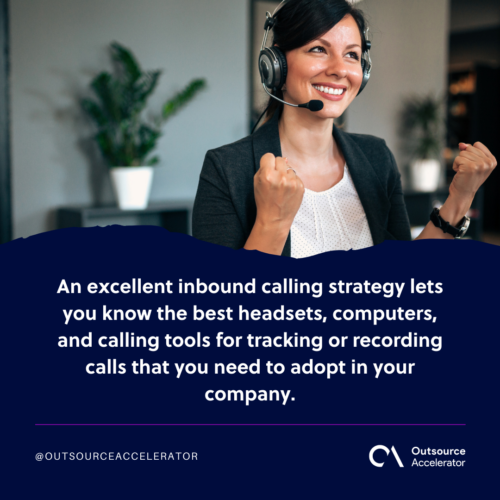
To field and route calls well, you must invest in the right tools. A strong strategy shows you the best headsets, computers, and call software to adopt. As a result, you can track or record calls with less friction. Good inbound call center software ties these tools together in one place.
How to build an effective inbound calling strategy
A solid plan does not need to be complex. First, map your common call types and set clear response goals. Next, script friendly openings and simple steps for each issue. Then train agents on both tone and problem-solving.
After that, pick tools that route calls to the right person fast. Finally, review your metrics each month and adjust. As a result, your strategy keeps pace with demand. Strong telemarketing skills also help agents turn support calls into sales.
Enhance your inbound calling strategy with 123Employee
If you are trying to build or boost an inbound calling strategy, an outsourcing agency can help with the planning.
123Employee offers high-quality voice services across several key verticals. They provide a skilled team that can help you plan and run an effective inbound calling strategy. In addition, their ongoing training keeps agents sharp. As a result, they deliver strong telemarketing service to clients. Beyond inbound calls, their voice reps can also help with help desk, tech support, monitoring, and appointment setting.
If you are interested, you can listen to sample audios of 123Employee’s voice talents on their website here.
Frequently asked questions
What is an inbound calling strategy in simple terms?
It is a plan for how your team handles calls that come to your business. So it covers greetings, steps, tools, and goals. As a result, agents solve issues in a steady, clear way.
What metrics show a good inbound calling strategy?
Watch call volume, average talk time, and abandoned calls. In addition, track first call resolution and customer churn. Together, these numbers show if your plan works.
How is inbound calling different from outbound calling?
Inbound calls come to you from customers. Outbound calls go out from your team to prospects. So inbound is reactive, while outbound is proactive.
Do small businesses need an inbound calling strategy?
Yes. Even a small team gets better with a clear plan. For example, simple scripts and set goals cut wait times. As a result, customers get faster help.
Can I outsource my inbound calling?
Yes. Many firms hire an agency to plan and staff their calls. So you gain trained agents and proven tools. As a result, you can scale support without heavy overhead.






 Independent





