
10 best inbound call center software for superior support


What is the best inbound call center software?
The best inbound call center software routes calls fast, links to your CRM, and shows live analytics, and the top picks are RingCentral, Twilio, Freshdesk, CallRail, Talkdesk, Aircall, Five9, Nextiva, Bitrix24, and CloudTalk.
- Good inbound call center software cuts wait times and lifts customer satisfaction.
- It connects with your CRM so agents see caller history at a glance.
- The right pick depends on your call volume, budget, and security needs.
Best inbound call center software list
What is the purpose of inbound call center software?
Businesses use modern call center software solutions to boost support and serve buyers well. This is key to success. So efficient inbound call center software is vital for fast, helpful service.
The main goals of inbound call center software include the following:
- Efficient call routing. The software sends each call to the best agent or team. As a result, it cuts wait times and lifts customer satisfaction.
- Call queuing and management. It manages queues to reduce dropped calls. So the customer experience stays smooth.
- CRM integration. Agents can pull up customer data fast. Because of this, they give warmer, better-informed help.
- Call recording and monitoring. The software records and tracks calls. In turn, this aids training, quality checks, and dispute reviews.
- Real-time analytics. It shows live performance data. As a result, teams can act quickly and improve service. To go deeper, many teams also track key call center metrics over time.
Choosing the right inbound call center software
Picking the right inbound call center software can feel hard with so many options. To make it simpler, weigh the points below before you choose.
Assessing business needs
First, look at the size of your call center and your likely call volume. Next, think about how complex your customer questions are. As a result, you can spot the exact features that fit your team.
You should also weigh your own needs. For example, you may want multilingual support, links to current systems, or advanced analytics. When the tool matches your goals, it serves your buyers well. It also helps to compare inbound tools against contact center platforms that bundle voice, chat, and email.
Considering deployment options
Inbound call center software can be set up in two main ways. Each one has clear trade-offs.
On-premises
On-premises software runs on servers inside your own building. As a result, you gain more control over your setup. It also lets you tailor the tool to your exact needs. So it suits firms with strict security and compliance rules.
Still, this option needs a large upfront spend on hardware, licenses, and IT. In addition, your own team must handle updates, security, and repairs. Because of this, you need a dedicated IT crew to run it well.
Cloud-based
Cloud-based or Software-as-a-Service solutions (SaaS) are very popular. The reason is simple: they are flexible and cost less. With this model, the vendor hosts the software, and you use it online.
As a result, you skip big hardware costs and long setup. So the tool works for firms of all sizes, from startups to SMEs. Many cloud tools also overlap with VoIP call center solutions, which route calls over the internet.
Evaluating security and compliance features
Security and compliance features matter a lot, since you handle private data. Call centers deal with names, contact details, and sometimes payment data. So strong safeguards are a must.
You should look for software that offers the following:
- Data encryption – The tool should encrypt data in transit and at rest. As a result, it blocks unwanted access.
- Access controls – It should offer user permissions. So only the right staff can see private data.
- Compliance certifications – Check that it meets rules like GDPR or HIPAA.
- Regular updates – A trusted vendor updates the system often to fix flaws and boost speed.
Researching vendor reputation
When you choose inbound call center software, study each vendor’s track record. The vendor will be a long-term partner, so pick one with proven results.
Here is what to look for:
- Customer reviews – Read reviews to learn from other firms. For example, look for praise on support, ease of use, and uptime.
- Track record – Check the vendor’s history. Ask how long they have offered call center tools and how often they improve.
- Reliability – Make sure the platform has high uptime. Downtime can hurt your team and your buyers.
10 best inbound call center software for ultimate call service
Now that you know the purpose and the key factors, let us explore the top ten inbound call center software options.
1. RingCentral
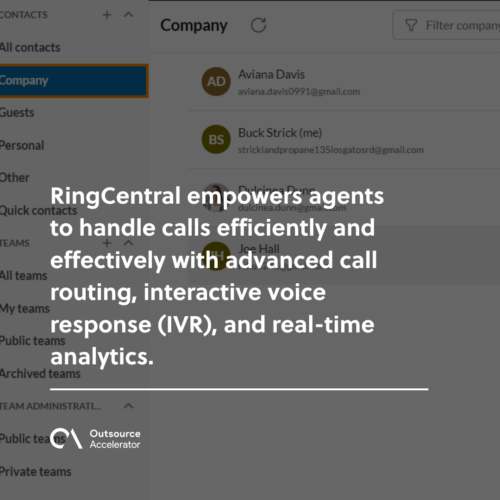
RingCentral is a full inbound call center software with a simple, powerful design. It gives agents smart call routing, IVR, and live analytics. As a result, calls flow well and buyers stay happy. So it is a top choice for firms that want strong support.
Key features
- Intelligent call routing based on caller data and agent availability
- CRM integration for personalized customer interactions
- Real-time analytics for call center performance insights
- Call recording and monitoring for quality assurance
- Interactive voice response (IVR) system for call automation
2. Twilio
Twilio is a flexible inbound call center software with many communication tools. It lets you blend voice, SMS, and other messaging with ease. Moreover, its open APIs allow custom builds. So it fits firms with special needs.
Key features
- Programmable call routing and queuing for efficient call management
- Integration with CRM and other business systems
- Call tracking and analytics for performance optimization
- Interactive voice response (IVR) system for self-service options
- Support for voice, video, and messaging communications
3. Freshdesk
Known for its help desk and ticketing, Freshdesk also offers a strong inbound call center tool. It uses smart routing and auto ticket creation. As a result, no customer query slips through. Plus, it links with other Freshdesk features for well-rounded support.
Key features
- Automatic call distribution for streamlined call routing
- Multi-channel support for handling calls, emails, and social media inquiries
- Call monitoring and barge-in options for coaching agents
- Ticketing system for issue tracking and resolution
- Integration with various third-party applications
4. CallRail
CallRail centers on call tracking and analytics. So it fits firms that rely on inbound calls for leads. With it, you learn where your calls come from. As a result, you can tune campaigns and spot your best channels.
Key features
- Call tracking to determine the effectiveness of marketing campaigns
- Dynamic number insertion for personalized customer experiences
- Conversation intelligence and sentiment analysis
- Lead scoring and recording for better lead management
- Integration with popular marketing and CRM tools
5. Talkdesk
Talkdesk is a cloud-based call center tool built to boost customer chats. It offers call queuing, monitoring, and live analytics. As a result, agents work faster and the whole center runs better. Meanwhile, its simple setup makes it a favorite for firms of all sizes.
Key features
- Call queuing and routing for efficient call distribution
- Real-time reporting and analytics for performance tracking
- Call monitoring and whisper coaching for agent training
- Integration with over 60 third-party tools and platforms
- AI-powered virtual assistant for call automation
6. Aircall
Aircall is a cloud-based call center tool that stresses teamwork and links. It ties in with popular tools like CRMs and help desks. As a result, agents see the right data during calls. So each chat feels more personal.
Key features
- Customizable call flows for personalized customer experiences
- Call monitoring and analytics for performance insights
- CRM integration for seamless customer interactions
- Integrations with business tools like Slack and Zapier
- Global phone numbers for international support
7. Five9
Five9 is an enterprise-grade inbound call center software for high call volumes. It offers smart automation, a predictive dialer, and AI assistants. As a result, agents work faster and callers wait less. So it holds up well even during peak hours. Its dialer also supports teams that run outbound call center software alongside inbound.
Key features
- Intelligent routing and automatic call distribution
- Predictive dialer for optimized outbound calls
- Agent scripting and screen pop-ups for personalized interactions
- Real-time and historical reporting for performance analysis
- CRM integration for streamlined workflows
8. Nextiva
Nextiva’s inbound call center software focuses on ease and scale. So it fits firms of all sizes. It offers call queuing, recording, and analytics in one simple package. As your business grows, it handles more calls with no fuss.
Key features
- Advanced call routing and queuing for efficient call management
- Voicemail-to-email transcription for quick message handling
- Real-time analytics and reporting for call center performance
- Integration with popular CRMs and productivity tools
- Instant messaging and video conferencing features
9. Bitrix24
Bitrix24 is a full business suite with a rich inbound call center tool. It offers CRM links, smart routing, and click-to-call. As a result, agents handle queries fast and with care. So it suits firms that want one tool to manage buyer ties.
Key features
- Omnichannel communication for seamless customer interactions
- Social media integration for monitoring and responding to inquiries
- CRM system for managing customer information and history
- Task and project management tools for efficient teamwork
- Knowledge base and self-service options for customers
10. CloudTalk
CloudTalk is a flexible cloud-based call center tool built for growing firms. It offers call distribution, scripts, and monitoring. As a result, agents and buyers connect with ease. Plus, its simple design helps teams tune their call center for better support.
Key features
- Call queuing and distribution
- Click-to-call (CTC)
- International numbers
- Detailed call analytics
- Integration with help desk software
Frequently asked questions about inbound call center software
What is inbound call center software?
Inbound call center software helps teams handle calls that buyers make to your business. For example, it routes calls, manages queues, and records chats. As a result, agents give faster and better support.
How is inbound call center software different from outbound?
Inbound software handles calls that come to you, like support and sales questions. Outbound software helps agents make calls out, like sales or surveys. Still, many tools now do both in one place.
How much does inbound call center software cost?
Cost depends on the vendor, the features, and the number of agents. Cloud plans often charge a monthly fee per user. So small teams can start cheap and scale up later.
Does inbound call center software work with my CRM?
Most top tools link with popular CRMs. As a result, agents see caller history during each call. Because of this, they give warmer and more useful help.
Is cloud-based inbound call center software safe?
Yes, trusted vendors use strong encryption and access controls. In addition, many meet rules like GDPR and HIPAA. So your customer data stays protected.






 Independent





