
Outsourcing healthcare staffing: 6 Roles to start with


Why outsource healthcare staffing?
Outsourcing healthcare staffing gives providers quick access to skilled talent, so they can focus on patient care.
- It fills hard-to-hire roles fast and keeps services running.
- It trims payroll and overhead costs.
- It shifts admin work off busy in-house teams.
The healthcare industry faces steady demand for skilled workers. By 2031, the U.S. is projected to face a shortage of nearly 200,000 nurses. As a result, many providers now use outsourcing to close gaps. Meanwhile, rising costs and the push for quality care make the case even stronger.
In this guide, we explain why outsourcing healthcare staffing is smart. Next, we list six roles you can start with. Finally, we show how VirtualStaff.ph can help you set it up.
Why outsourcing healthcare staffing makes sense
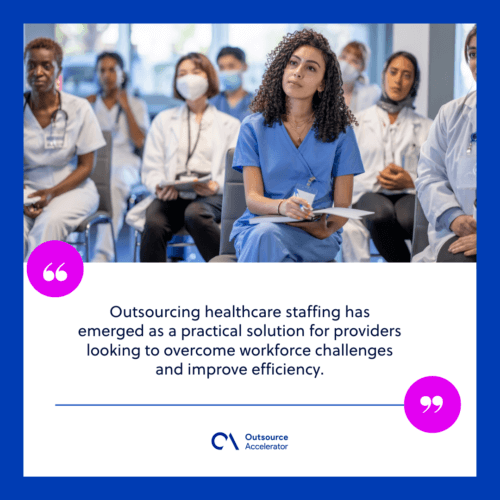
Outsourcing has become a practical way to solve workforce problems and lift efficiency. Because of this, more clinics and hospitals now use it.
With the right partner, facilities can focus on care. Meanwhile, they hand off non-core and specialized tasks to trusted teams. For many groups, a patient-centric healthcare outsourcing approach also keeps quality high.
Addressing workforce shortages
Healthcare facilities often struggle to fill key roles. So talent shortages slow them down.
Outsourcing opens access to a global pool of skilled workers. As a result, vital roles get filled fast. In addition, it is a cost-effective option. It helps providers save on overhead while they keep quality high.
Access to specialized expertise
Outsourcing partners often bring a team of specialists. For example, they cover many healthcare domains. As a result, you get better efficiency and stronger patient care.
Reduced administrative burden
Some staffing roles are pure admin, such as billing and customer service. By outsourcing them, your in-house team can focus on patients. So they spend less time on paperwork and more on care.
6 Healthcare staffing roles to start with
Below are six roles that work well for outsourced healthcare staffing. Each one offers quick value and clear efficiency gains.
1. Medical billing and coding specialists
Accurate billing and coding keep the revenue cycle healthy. So they matter a lot.
Outsourcing these roles cuts errors. In addition, it speeds up payments from insurers. As a result, you face fewer delays and disputes.
2. Telehealth support staff
Telehealth keeps growing, so dedicated support helps. In fact, strong telehealth outsourcing keeps virtual visits smooth. It ensures:
- Smooth virtual consultations
- Prompt scheduling
- Efficient technical assistance
- Data management
- Enhanced patient experience
3. Administrative assistants
Admin tasks eat up time, such as record management and coordination. Because of this, staff have less time for patients.
Outsourced assistants take on these tasks. As a result, your in-house team can focus on care.
4. Customer service representatives
Great service drives patient satisfaction. So it deserves real attention. Outsourced reps handle questions, book appointments, and fix concerns. In addition, they share timely updates. Many providers pair this with wider outsourced customer service support to keep response times short.
5. IT and tech support specialists
Healthcare runs on technology, from patient records to telehealth. So reliable systems are a must.
Outsourced IT support keeps systems stable. In addition, it protects data and fixes issues fast. As a result, downtime stays low.
6. Healthcare recruiters
Hiring skilled clinicians is hard and slow. Still, it is vital. Outsourced recruiters speed up hiring. Meanwhile, they tap a vetted talent pool and ease the load on HR. For volume hiring, many groups also use recruitment process outsourcing.
How to get started with healthcare staffing outsourcing
Outsourcing healthcare staffing is a smart way to solve workforce gaps. At the same time, it lifts efficiency and care quality.
Start with these six roles. Then providers can free up resources and focus on care. So where do you begin? First, map your needs. Next, pick a trusted partner to build a stronger team.
Here is a quick guide:
Identify your staffing needs
Assess your staffing gaps first. Then decide which roles you can outsource without hurting care. Focus on non-core roles that work well remotely.
Research outsourcing providers
Look for partners with real healthcare experience. Also check for compliance with healthcare rules. In addition, look for strong data security and a solid track record. Trusted healthcare BPO providers should show all three.
Implement a smooth transition process
Plan the handoff with care. First, give training and clear guidelines to the new team. Next, keep open lines for questions. As a result, everyone stays aligned with your goals.

Optimize your healthcare business with VirtualStaff.ph!
VirtualStaff.ph offers a dedicated healthcare BPO solution that helps you build reliable teams with ease. You can handpick your team from their platform of over 1,000,000 skilled virtual professionals. Or you can let their specialists build it for you. Either way, the process stays simple.
They partner with over 10,000 businesses worldwide, including many in the USA, Australia, and the UK. As a result, they are a trusted choice for medical billing specialists, healthcare virtual assistants, and other key roles.
So you save time, cut costs, and focus on care. Meanwhile, a dependable team handles the rest.
Visit VirtualStaff.ph today and take the first step toward smoother operations!
Frequently asked questions
How much can outsourcing healthcare staffing save?
Savings vary by role and location. Still, many providers cut labor and overhead costs by a wide margin. For example, offshore teams often lower payroll while keeping quality steady. So the exact number depends on your mix of roles.
Which healthcare roles should I outsource first?
Start with non-core and remote-friendly roles. For example, billing, coding, admin, and IT support are common picks. Next, add customer service and recruiting. This way, clinical work stays in-house.
Is outsourced healthcare staffing compliant with data rules?
It can be, when you pick the right partner. First, check their security controls and certifications. Then confirm they follow healthcare privacy rules. As a result, patient data stays protected.
How long does it take to onboard an outsourced team?
Timelines depend on role count and training needs. Often, small teams launch in a few weeks. Meanwhile, larger teams take longer. So clear guidelines help speed things up.
Will outsourcing hurt patient care quality?
Not when it is done well. In fact, it can lift quality by freeing clinicians from admin work. So your in-house staff spend more time with patients.






 Independent





