
How outsourcing can help make a business successful


What is outsourcing and how does it help your business?
Outsourcing is the practice of hiring a third-party provider to handle specific work processes, and it helps your business cut costs, save time, and tap expert skills.
In short, outsourcing gives you three clear wins:
- Lower operating costs, since you pay only for the work you need.
- More time to focus on your core products and services.
- Access to trained specialists you may not have in-house.
To be efficient today, a business must use modern process management. As a result, business process outsourcing (BPO) has become a common way to run and grow a company. This guide explains what is outsourcing, how it works, and which business areas you can outsource.
You might ask, “What do you mean by outsourcing?” Simply put, it means contracting certain work to a provider outside your company. The exact services depend on what your business needs.
In most cases, a company outsources support tasks. For example, this can include accounting, payroll, data entry, and phone customer service. These are jobs that sit outside the core business.
Outsourcing brings plenty of benefits, from small start-ups to major firms. For one, it boosts your edge in the wider market. In addition, it can cut costs while you grow the business and lift profits. Because of this, the outsourcing industry keeps growing fast.
2 types of business process outsourcing services
To see how outsourcing works, you need to know the two basic types of service: front office and back office.
Front office
Front-office services deal with work that touches customers directly. For example, this includes technical support, sales, and marketing. In most cases, it covers the reception and sales side of the company.
Back office
Back-office services, on the other hand, cover internal work like billing and purchasing. These tasks run behind the scenes, yet they still shape daily results.
Left unchecked, such work can drain both budget and resources. So any cost-cutting method helps, and outsourcing fits that goal well.
BPO firms like Hugo help businesses meet their duties to both staff and customers. In addition, they help you keep tight control of overhead costs.
Outsourcing non-core work also frees up your team’s time. As a result, in-house staff can spend more time on growth. The main point is simple: you bring in outside experts to take over roles that would otherwise crowd your team’s task list.
Planning ahead: Why do you need to outsource?
One clear benefit of outsourcing is lower business costs. It lets you keep overheads on a tight rein while you grow the business.
BPO does more than support your core products, though. It also sharpens your complementary areas. In addition, it gives you insight into new markets and trends, so you can stay ahead of rivals.
Advantages of business process outsourcing
From small start-ups to major firms, outsourcing brings many benefits. Companies of any size can outsource as their needs grow. So BPO works as a service that helps you get ahead in your field.
1. For solopreneur
Outsourcing does not just work for big firms, as many people think. Even solopreneurs, like online retailers, can use providers to support daily work.
Running your own brand can be hard, even on good days. There will be times when tasks pile up fast. In those moments, you may feel there are not enough hours in the day.
Offshore outsourcing can lift the speed of your daily work. After all, you cannot handle every task alone and still stay efficient. So a reliable provider can take on menial tasks for you. In turn, you free up time for your core strengths and better products.
2. For SME companies
Small and medium firms drive a lot of economic growth. They can grow even more with the benefits of offshoring.
Many people think outsourcing is costly for small firms. However, that is not true. BPO is a cost-smart option for SMEs, not just large companies. Even a small business can cut its overhead and payroll costs this way.
Small firms often lack certain in-house skills. As a result, growth can stall. So SMEs can hand specific roles to skilled outsourced workers. This way, they get high-quality output from real professionals.
For SMEs, outsourcing brings more flexibility and financial freedom. In addition, it makes daily work efficient and saves time. So you get to choose which tasks to keep and which to outsource.

3. For large corporations
What can big firms gain from this practice? Large companies always face a flood of tasks. As a result, smooth daily work can be hard to reach.
The main reason big firms outsource is to lower costs. It cuts spending on manpower, extra office space, and equipment. Large firms carry many staff, so payroll and benefits add up fast.
However, outsourcing can reduce these fixed costs. So you can move money toward revenue-driving work. In addition, you gain an edge in time-driven tasks, and your team no longer has to multitask.
No firm can cover every skill in-house, no matter its size. So BPO gives you access to trained experts in a niche. As a result, your overall performance improves.
10 reasons why outsourcing business functions is a must
Outsourcing has served small and large firms alike. It is now a common strategy for modern companies. Below are ten key advantages of outsourcing to third-party providers.
1. It reduces and controls the operating costs but increases revenues
Outsourcing removes the need to hire full-time staff for every task. Instead, you get a flexible workforce that you pay only when needed. As a result, operating costs drop.
2. It helps you maximize the use of external resources
A BPO helps you make the most of outside resources. So you can cut other costs, such as shipping and production. In addition, it reduces infrastructure costs, since the provider takes those on.
3. It enables the company to gain access to world-class capabilities
Whether it is offshoring, domestic, or nearshore outsourcing, it opens up the global market. In addition, time-zone gaps can let your company run around the clock.
4. It can free up internal resources for other purposes
Outsourcing gives you resources you may not have in-house. As a result, it frees up your team from back-end work, so they can focus elsewhere.
5. It requires little to no initial capital investment
Outsourcing removes the need for a big upfront outlay. For example, you save on infrastructure, hiring, training, and daily production costs.
6. It provides you access to trained and expert specialists
It gives you skilled professionals in their fields. So you get high-quality output that might be sub-par if done in-house.

7. It allows you to focus on the core competencies of your business
Outsourcing cuts overhead, and it also gives you extra time. So you can focus on your core strengths. As a result, you can spend more energy on sales and revenue.
8. It reduces the training and labor costs of the employees
When you outsource, you skip the need to recruit, hire, and train. Instead, the provider handles training and the tools your workers need.
9. It gives you instant access to world-class skills
Outsourcing gives you access to world-class talent. So you stay competitive in your field. In addition, the right provider helps you get the best output possible.
10. It ensures 100 percent security in the billing process
Billing is a common outsourced service. It frees your staff from a heavy task. In addition, a good provider offers a clear, well-secured billing process, so your data stays safe.
Business areas that you can outsource
You now know what outsourcing means and how it works. So here are some clear business areas you can outsource to outside providers.
Outsourcing administrative tasks
Business admin is made up of day-to-day work. Too often, staff spend hours on admin tasks. As a result, they have little time for core work. This is why many firms outsource admin. Below are the common admin tasks that you can outsource.
· Data entry
Data entry takes a lot of staff time. So a provider can handle it for you. As a result, your data stays filed and organized without eating your hours.
· Travel management
A travel manager keeps your bookings on track. For example, they handle reservations and airline tickets. In addition, a real person makes it easier to fix issues fast.
· Scheduling
Running a business keeps you busy. So someone who arranges your schedule always helps. As a result, you never miss a call or a meeting.
· Typing
Bulk typing eats time and effort. So you can outsource it instead of doing it in-house. This way, you free up time to grow the business.
· Personal assistant
Hiring a virtual assistant is like duplicating yourself. As a result, you can focus on the bigger issues of growth.
· Data processing
Data processing is rarely simple. For example, entering data in Excel or Word takes real time. In addition, fetching data is slow when it is not organized. So outsourcing keeps every document tidy and easy to find.
Outsourcing customer support
How does outsourcing help your customer support? Here are the main functions you can hand off.
· Sales moderation
Sales moderation is a technical task. So if it is not your strength, let an expert do it for you.
· Customer service
Call centers are among the most outsourced services. After all, customer needs and complaints keep growing. So it is smart to keep experts focused on happy, engaged customers.
· Live chat support
You can also outsource live chat support. It serves the same goal as outsourced customer service.
· Community moderation
Outsourcing suits firms with a fast-growing online community. So outside experts can handle this task for you. As a result, you save time and training costs.
Outsourcing financial and accounting duties
It is better to keep your books organized all year. Otherwise, tax season becomes a scramble. However, tidy books take time and focus, which often means a costly in-house team. Luckily, there are financial and accounting duties that you can outsource.
· Bookkeeping
Working with an outside bookkeeper is easy today. After all, cloud accounting software makes it simple. So you send your data, and they send back clean reports. In addition, it removes the hassle at tax time.
· Invoicing
Outsourced invoicing saves you a lot of hassle. As a result, you get regular, accurate, and timely invoice management.
· Accounts payable and receivable
Invoices are a smart place to cut costs, mainly in AP and AR. Outsourcing improves your internal controls. As a result, you save money and streamline the work without long daily hours.
· Financial reporting, analysis, and planning
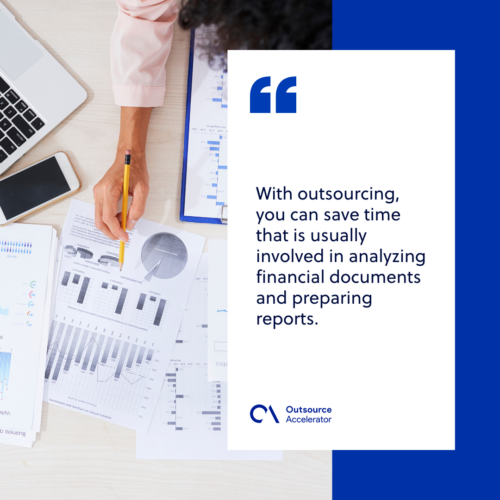
Financial reporting can be slow when it is not streamlined. For example, it takes time to prepare many reports and analyses. So outsourcing can make this process fast and clean. As a result, you save the hours usually spent on reports.
Financial reporting software can streamline this process if you do it internally. Still, you need to make the choice that is best for your business.
Outsourcing IT operations and management
How does IT outsourcing work? Here are the common IT functions you can hand off.
· IT support
System
Every business faces system glitches at some point. For example, servers crash, data gets corrupted, and malware strikes. In these cases, outsourced IT support helps. In addition, it costs less than a full in-house IT team.
Network admin
A secure system is only part of the job. So outsourcing a network admin helps keep your processes smooth too.
· Creative services
Website design
A great website can make or break your online presence. So if you are not an expert, hiring a pro helps. As a result, you save time and get high customer satisfaction.
Graphic design
Unless you are a pro at graphic design and digital presentations, outsourcing this task helps a lot. In addition, a pro-designed slideshow saves you rehearsal time.
Web development
It is smart to leave web development to an expert. That way, you can focus on growth and product quality instead of site upkeep.
Software development
Outsourced software development sharpens your competitive edge. In-house builds are costly, so outsourcing is often the smarter choice. In addition, it solves the gap when you lack in-house skills. As a result, a real expert does the job for you.
Animation
Many entertainment firms outsource animation. One key reason is cost, since studios overseas often charge less for pre-production work.
Storyboard
Outsourcing storyboards brings clear benefits. It cuts time and cost, and it opens access to skilled pros. In addition, you gain from their global exposure and strong tools.
Outsourcing human resources (HR) functions
Hiring and training staff can be a big job for HR. Often, it takes time they could spend on core work. This is why HR is a common task to outsource. Here are a few examples.
· HR support
Outsourcing to human resource support helps you manage many HR tasks at once. For example, it covers payroll, recruiting, training, and benefit plans.
· Medical billing
Outsourced medical billing brings many benefits. It makes the whole process easy and quick. As a result, staff can focus on patients, not paperwork. In addition, a pro reduces billing errors and keeps you compliant.
· Insurance support
Outsourcing insurance support drives innovation in your processes. In addition, it greatly improves customer service.
Outsourcing sales and marketing
· Brand development
Building your brand takes time and effort. Since time is precious, an expert helps here. In addition, they can craft a better plan to build brand awareness.
· Press release
Firms use press releases for coverage or SEO. However, a weak release wastes money. So outsourcing to a skilled writer helps your business a lot.
· Online marketing
Social media marketing
Social media keeps you close to current and new customers. However, it can be tedious, since you must post often. So a tech-savvy pro can run your channels and save you time.
Content marketing
Quality content is a strong way to reach the market. Still, it takes time and effort to create. Luckily, you can hire a content writer, which makes article production much easier.
SEO and PPC
Content alone will not lift your business to the top. To rank on the first page, you need SEO and PPC skills. Training staff for this takes time and money. So a pro who optimizes your content is more cost-smart.
Email marketing
Every marketing campaign takes time, and email is no exception. Luckily, you can outsource it to someone who knows how to do it right.

Outsourcing back office admin and support
What does outsourcing mean for back office support? Here are some back office jobs you can contract out.
· Lawyers and paralegals
Is outsourcing legal services a smart cost move? Yes, in many cases. With it, firms lower costs through labor arbitrage. In short, that is the gap between in-house and outside labor costs.
· Real estate
Outsourcing in real estate gives you an expert on hand. As a result, you get strong solutions, mainly when you optimize space for your business.
· Management and administration
Business admin involves many daily tasks. Often, it pulls staff away from core work. So a provider can manage these tasks for you. As a result, you gain more control over growth.
Internal guide to starting business process outsourcing for your company
Learning how outsourcing works matters before you begin. After all, you cannot succeed without knowing the strategy and the market.
What are the different types of outsourcing?
Knowing the models below helps you pick the right fit for your business.
· Professional outsourcing
Sometimes your staff cannot finish complex tasks. This can happen for many reasons. For example, they may lack training, time, or the right tools. In these cases, it is cheaper to outsource a pro. So professional outsourcing is the most common type. It often covers accounting and legal work.
· IT outsourcing
IT outsourcing is in high demand today. It means contracting technology services for part or all of an IT function. For example, it covers infrastructure, upkeep, development, and support. In addition, you can outsource data storage instead of buying costly in-house systems.
· Multisourcing
Multisourcing fits any area, but it is common in IT. In short, it blends IT services with other functions from outside providers. As a result, it forms best-of-breed teams focused on your goals. Still, it needs a clear strategy and strong provider relationships.
· Manufacturer outsourcing
In-house production can be very costly. For example, raw materials, factory workers, and equipment all add up. However, outsourcing the process cuts these costs. So you worry less about infrastructure, equipment, and labor.
Manufacturing outsourcing is common and often industry-specific. For example, an auto maker can outsource the building and fitting of car windows.
This type is not just for big firms, though. It also helps small businesses compete with bigger rivals. As a result, they can scale up without hiring many staff or buying new equipment. Still, it carries some risk, mainly around quality.
· Process-specific outsourcing
Some outsourcing targets one task or internal step. This is known as process-specific outsourcing. For example, a retailer can outsource delivery for its international shipping. So this model usually comes with a detailed contract. As a result, it covers timelines, costs, and customer contacts.
· Business Process Outsourcing
Business process outsourcing is the most common type. In short, it means contracting any business process to a provider. For example, a firm can outsource equipment repair and machine upkeep. As a result, it cuts costs and keeps non-daily tasks off the payroll. You can also outsource cleaning, landscaping, and facilities upkeep.
· Project outsourcing
Juggling many projects can be hard. Often, quality drops when time runs short. So a firm can outsource a whole project or part of it. There are many reasons for this. Usually, it is a lack of people or skills. In addition, it is more cost-smart than training current staff.
· Offshore outsourcing
Offshoring means contracting work in another country. It is a strategy to lower labor costs. After all, some countries charge less for the same task. In addition, offshoring taps global skills and opens new markets. Firms like Boomering focus on several verticals, such as business support, IT, and marketing. So they work as offshore extensions of a client’s in-house team.
· Reshoring
Some firms find offshore labor less useful over time. So they bring the work back home. This is known as reshoring. In short, it moves an operation from another country back to the home country. As a result, it can cut shipping costs and reduce delays. Some firms go further and bring the work fully in-house, which is called insourcing.
· Nearshore outsourcing
Nearshoring sits between offshoring and reshoring. Instead of bringing work back home, firms move it to nearby countries. Its main goal is faster service with fewer delays. In addition, it still cuts costs by using cheaper nearby labor. So it blends the benefits of both models.
Recognizing the pricing, labor costs and internal revenues
Firms mainly outsource to save costs while growing sales. So price is often the key factor when choosing a partner. However, first decide which functions to outsource and the quality you expect.
This step shows if outsourcing is as cost-smart as you think. In addition, work out the in-house cost of the same task. Then subtract in-house costs from outsourcing costs. As a result, you get your total savings.
Outsourcing vs. offshoring: Knowing their difference and importance
Outsourcing and offshoring share a similar goal. Both aim to cut costs while lifting revenue. However, they differ in how they work.
Outsourcing means contracting a process to a third-party provider. In some cases, that provider sits in the same country as the hiring firm. Offshoring, on the other hand, sends work to a different country. So it relies on an offshore center abroad.
Outsourcing vs. offshoring: What is the most preferred method?
Both methods bring real benefits. For one, outsourcing is a go-to move for its cost savings. So it is a top reason firms contract work out. In addition, it saves time on menial tasks, which frees you for core work. Outsourcing also helps when you lack a skill in-house.
Offshoring offers similar benefits. It saves cost for firms that do not want to invest in their own setup. In addition, it opens up competitive skills that give a global edge.
The right choice depends on what suits your business. However, offshore outsourcing blends the two well. So you gain the benefits of both, including specialized skills.
It is also a good middle ground for lower costs and higher output. Still, both practices carry some risk. So before you outsource, learn the downsides too. After all, an outside partner adds complexity. This is why a strong client-provider relationship matters so much.
When do you outsource or offshore your business?
Business process outsourcing is now common across firms. No matter your size, it can bring real value. For one, it is a smart way to cut costs. After all, cheaper outside labor can save you a fortune.
A skills gap is another reason to outsource or offshore. So always partner with reliable, skilled firms like MVP Asia Pacific. In some cases, you can pick either model, based on what works best. However, some functions suit outsourcing but not offshoring, such as legal services.
Frequently asked questions
What is outsourcing in simple terms?
Outsourcing means hiring an outside provider to handle specific work. For example, a firm can outsource payroll, IT, or customer service. As a result, it saves time and money.
How does outsourcing help a business grow?
It lowers costs and frees up your team for core work. In addition, it gives you access to skilled experts. So you can scale faster without heavy hiring.
What business areas can you outsource?
You can outsource admin, customer support, finance, IT, HR, and marketing. In short, most non-core tasks are a good fit.
What is the difference between outsourcing and offshoring?
Outsourcing sends work to a third party, which may be local. Offshoring sends work to another country. So offshoring is one form of outsourcing.
Is outsourcing only for large companies?
No. Solopreneurs, SMEs, and large firms all benefit. As a result, a business of any size can outsource as it grows.
Key takeaways
- Outsourcing means hiring an outside provider to handle specific work.
- It cuts costs, saves time, and gives you access to expert skills.
- Front-office and back-office tasks can both be outsourced.
- Common models include professional, IT, offshore, and nearshore outsourcing.
- Firms of any size, from solopreneurs to large corporations, can benefit.






 Independent





