
Top 10 goals for customer service in 2026


What are the top goals for customer service?
The main goals for customer service are fast response times, support on every channel, and steady feedback that turns buyers into loyal fans.
- Clear, measurable goals give agents direction and lift customer satisfaction.
- Speed matters, but accurate help matters even more.
- The best teams pair smart automation with real human care.
Today’s buyers want something better, fresher, and faster. As a result, this pressure weighs on business leaders every day. So they keep building new ways to win the loyalty of their market.
Endless promos and campaigns try to hook that market. However, clear goals for customer service do the job far better. Here are time-tested goals to help your company get started.
Why do you need to set goals for customer service?
A rude tone, slow replies, and a lack of proper decorum can all break customer trust. Still, these problems can creep in even when managers work hard to keep quality high.
Good goals for customer service help you avoid them. Here is how.
1. Clear direction. Simple goals leave no gray areas. As a result, employees trust the process and perform as expected.
2. Better employee management. Measurable goals help managers give clear, useful feedback. So employees can see how to improve.
3. Easier alignment. Different teams work together better. For example, shared goals push people to pull in the same direction.
4. Better customer satisfaction. Clear metrics set the bar for great service. In addition, they help you secure loyalty and hold your spot in the market.
Top 10 goals for customer service to help you dominate the competition
Here are ten smart goals for customer service to boost customer satisfaction.
1. Fast, faster, fastest first response time
The digital age has made customer chats smoother and easier. Along with that ease came higher expectations. For example, a client often expects a response within 15 to 30 minutes from a support team. In some cases, one hour is still fine.
On social media, buyers want even faster help. Most expect a reply within one to six hours. So keeping wait times low will lift satisfaction.
However, first response time is more than speed. It is about solving the customer’s real need. Clients value clear, correct answers over fast but sloppy ones. To track this well, watch your core customer service metrics each week.

2. Omnichannel service
People have their own favorite channel. Some like calls, while others prefer chat or video. Many firms miss buyers because they ignore this. So opening more channels pulls in more customers from many groups.
The hard part is getting the whole company to work as one. Because of this, one core goal should be to keep every client concern in one clear view. This kind of customer service support model keeps replies consistent across channels.
3. Actively eliciting customer feedback
Feedback leaves room to grow. It can sting to hear about flaws. Still, it helps you keep products and services strong.
A great strategy makes clients feel their input counts. As a result, they become your most useful critics. Meanwhile, short, regular surveys help you spot new trends fast. So the business stays ahead of rivals.
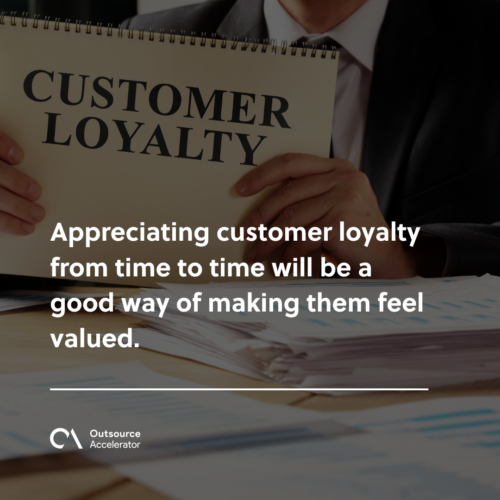
4. Appreciating customer loyalty
Firms often take loyalty for granted. However, one or two purchases do not lock a buyer in for life. So a small thank-you goes a long way.
For example, free merchandise or an exclusive discount makes people feel valued. These are small costs that protect long-term loyalty. In addition, they build goodwill that drives repeat business.
5. Proactive innovation
Rivals always look for a better way to lead the market. So set a goal around smart tools that help staff do more. For example, shared team tools help departments solve problems together.
Meanwhile, a clean, easy website helps buyers browse with less friction. Many tools now make client chats simpler. In the end, it is just a matter of adopting them.
6. Customer service automation
Almost every company now uses chatbots across channels. They cut costs and offer round-the-clock help. However, automation can only do so much.
Bots cannot replace human warmth and instinct. So use them with care. Still, the right mix keeps loyal buyers happy instead of annoyed.
7. Utilizing social media
Social media is now a top place to search information. As a result, clients are online almost all day. So smart campaigns on these platforms help the business grow.
However, a big crowd does not promise attention. Sparking real interest is the next challenge. For example, a mix of short videos, creator clips, and fun content drives traffic and catches curious eyes.
8. Prioritizing employee growth
There is no shortcut to great service. In fact, agents remain your best asset for happy clients. This makes employee training and growth so important.
The more skilled the agent, the better the service. As a result, clients leave good reviews. In addition, happy clients stay loyal and spread the word for free.
The best way to invest in growth is a clear career path. When agents see room to rise, they push harder. Because of this, the whole company gets more productive. Strong frontline service skills only sharpen with steady coaching.
9. Client empowerment
Customers are always on the move. They want quick answers in plain terms. As much as possible, they would rather not wait on hold for an agent.
So FAQs and a good search tool help them help themselves. Just keep every instruction simple and short. First, study your calls and complaints to find the most common issues. Then turn those into clear self-help answers.
10. Mobile-friendly customer service
Smartphones now drive much of our shopping and chatting. Almost 55% of global website traffic comes from phones. However, many firms still forget this.
They assume their site will just work on any device. So mobile friendliness should be a top priority. Check that every page and feature runs well on a phone. In addition, link SMS and click-to-call so buyers can reach you fast.
Best practices in making your goals for customer service happen
Setting goals is easy. Keeping them alive is harder. So you need a clear, steady approach. Here are three proven practices.
Be realistic
Goals are good. However, impossible goals help no one. The point is a simple, clear path that agents can follow in any decision.
If goals get too complex, people struggle to act. So keep your goals for customer service clear and practical for everyone.
Set measurable expectations
The industry uses many metrics to gauge customer happiness. For example, CSAT and NPS both show if buyers feel satisfied. So tie your goals to these tools for faster, smarter improvements. As a result, the numbers point to a clear path forward.
Dates matter
Deadlines and checkpoints create healthy urgency. As a result, teams push to finish and fix issues on time. In addition, shared dates help different divisions plan together.

Developing a customer-centric business
Today’s market is full of rivals, high expectations, and fast tech. As a result, customer loyalty can shift in a blink. So whoever gives buyers what they want will win their trust.
A model built around the buyer is the right path. Redirecting a company that way is not hard. In fact, all it takes is empathy for the customers.
It may feel slow at first. Still, clear and measurable goals make the shift possible. Many third-party service providers can supply the advice you need. For heavy chat volume, an outsourced live chat team can also ease the load.
Frequently asked questions about goals for customer service
What are good goals for customer service?
Good goals for customer service are clear, measurable, and tied to the buyer. Common ones include faster response times, support on every channel, higher CSAT scores, and better first-contact resolution.
How do you measure customer service goals?
You measure them with simple metrics. For example, CSAT, NPS, first response time, and resolution rate all show progress. Track them weekly or monthly to spot trends early.
Why is first response time so important?
First response time shapes the buyer’s first impression. Most clients expect a reply within minutes to a few hours. So a fast, correct answer builds trust and lowers complaints.
Should customer service goals include automation?
Yes, but with care. Chatbots cut costs and offer round-the-clock help. However, they cannot replace human warmth. So use them for simple tasks and keep people for complex ones.
How often should you review customer service goals?
Review them on a set schedule, such as monthly or quarterly. Regular check-ins let you adjust to new trends and fix weak spots fast.
Key takeaways
- Clear, measurable goals for customer service give agents direction and lift satisfaction.
- Speed helps, but correct answers and human care matter more.
- Support buyers on every channel, and reward loyalty with small, thoughtful perks.
- Use automation for simple tasks and keep people for the complex ones.
- Track CSAT, NPS, and response time, then review your goals on a set schedule.






 Independent





