
The value of having a dedicated workspace at home


Why does a dedicated workspace matter for remote work?
A dedicated workspace is a fixed spot at home set aside only for work, and it helps you focus, stay healthy, and keep work and home life apart.
- It cuts distractions and lifts your daily output.
- It sets a clear line between your job and your personal time.
- It supports good posture, so you avoid aches and strain.
Remote work brings real value to both firms and staff. Many teams now use a work from home model for daily tasks. Still, it is easy to lose track of time at home. This is true when you get deep into an important project.
People who work from home need their own dedicated workspace. It helps them set clear boundaries between work and personal life. So how does a dedicated workspace help remote workers? And how do you build one that fits you? Read on to find out. If the model is new to you, this quick primer on what remote work is gives helpful context.
Dedicated workspace: Benefits of working from home
Working from home was slow to catch on at first. Many firms felt it broke the normal office setup. On top of that, several remote work myths kept some leaders wary.
Now the picture looks very different. Companies have built remote work into their plans. In addition, more firms want a flexible workforce going forward. This shift comes from a simple truth. The setup helps both firms and their staff. For a full list, see these primary benefits of remote work.
Advantages of working from home for employers
Here are some gains employers enjoy when they run a work-from-home model:
Cost reduction
Employers can save a lot when they go fully remote. Without an office, they cut spending on rent and utilities. They also save on upkeep, equipment, supplies, and office WiFi.
Lower absenteeism rate
Long commutes can push staff to be absent when they feel unwell. Remote staff face a shorter trip, though. They only move from one room to their dedicated workspace. As a result, they often keep working even on an off day.
Wider talent pool
Remote work lets owners hire beyond their local area. So they gain access to a much larger talent pool. They can also bring in experts from another city or country.
More time allotted for work
Home-based staff skip the prep and travel for work. In turn, they use that time in a more useful way. Working from home also cuts tardiness and idle chatter. So more of the day goes to real tasks.
Advantages of working from home for employees
Firms are not the only ones who gain. Staff also see clear perks that lift morale. Here are the main ones.
Cost savings
Like employers, remote staff save money too. First, they skip the daily commute. They also spend less on work clothes, lunches out, and coffee runs.
Work-life balance
Remote staff hold more control over their day. So they can take short breaks when they need them. This helps them dodge stress, such as office politics. Many now aim for work-life blending, a softer take on the old balance idea.
Peaceful and quiet working environment
A busy office often means noise from every desk. Phones ring and coworkers chat all day. At home, staff can work in calm within their own dedicated workspace.
Flexibility and freedom
Remote workers get room to plan their own day. They just need to meet their deadlines on time. So the trade is freedom in exchange for results.

Why is a dedicated workspace a must for remote workers?
All the perks above depend on one thing. You need a real dedicated workspace at home. Without it, your mind may wander from task to task. As a result, you may miss deadlines.
A dedicated workspace helps you in clear ways. Here is what it does for you.
It helps avoid distractions
A dedicated workspace gives you an office feel at home. So you feel less pull toward other activities. A home office also helps you focus on the job at hand. Because of this, you waste less time on social media or snacks.
A proper workspace boosts productivity
A dedicated workspace is a set area just for work. It should hold the tools you need to do your job. A home office also beats moving to a new spot each day. It brings routine and steady focus, much like an office does. For more ideas, see these proven ways to boost workplace productivity.
A dedicated workspace gives you a sense of discipline
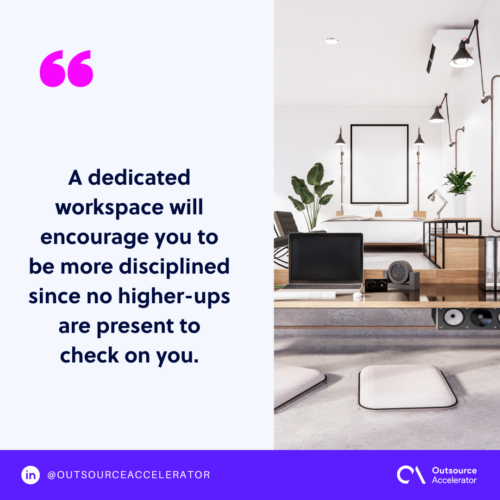
A set work area helps you stay disciplined on your own. No boss is there to check on you. Still, with fewer distractions, you push to finish your work well. Physical limits soon turn into mental ones. So a dedicated workspace sets natural bounds on your day.
It promotes work-life balance
Working from bed or the couch often leads to nonstop hours. A dedicated workspace helps you step away when the day ends. As a result, you lower the risk of burnout. You also keep work and home life apart, even under one roof.
Working from anywhere can impact physical health
People who work from a couch or bed rarely watch their posture. A survey from Cincinnati University found that 75% of remote workers at home hunch over their laptops.
Poor posture then leads to neck pain, back pain, headaches, and cramps. In turn, this hurts your focus and your output. So a good desk and a comfy chair matter a lot. An ergonomic desk setup keeps you comfortable through long work hours.
Essentials of a dedicated workspace
Now you know why you need a dedicated workspace at home. So it is time to set one up. Here are the steps to prepare your space. The right remote working equipment makes the setup much easier.
Keep it cozy
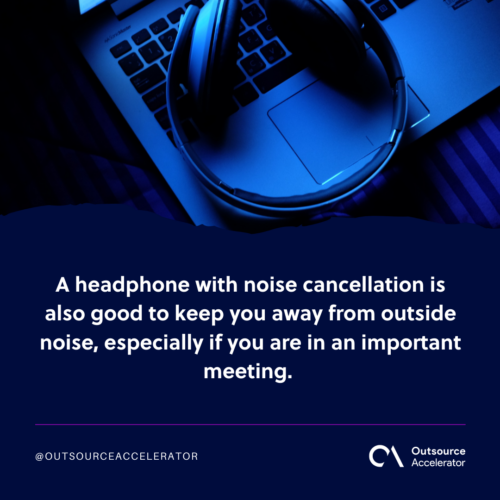
Comfort should come first in your workspace. You will sit for long stretches each day. So invest in a chair that is comfy and supports your posture. A noise-canceling headphone also helps block outside sound. For a boost, add a photo of family, a loved one, or a pet.
Ensure proper lighting
Try to place your dedicated workspace near a window. This gives you natural light through the day. Natural light can lift your mood and raise your energy. No window nearby? Then use a desk lamp that mimics daylight.
Separate your workspace from your living space
Keep your work area apart from where you relax. As noted, a clear line matters here. So set a proper boundary between rest and work zones.
Stock up on supplies
Keep what you need within arm’s reach. Stock up on sticky notes, pens, paper, and snacks. This way, you will not have to search for items mid-task.
Organize your space
Keep your dedicated workspace neat and tidy. So you always know where each item is. Besides, no one wants to work at a messy desk. A small desk organizer helps hold pens, notes, tape, and clips.
Frequently asked questions
What is a dedicated workspace?
A dedicated workspace is a fixed spot at home used only for work. It holds your desk, chair, and work tools. So it keeps your job separate from your home life.
Do I need a whole room for a dedicated workspace?
No, a full room is nice but not a must. A quiet corner with a desk and chair works well too. The key is a set spot you use only for work.
How does a dedicated workspace boost productivity?
It cuts distractions and builds a steady routine. As a result, you focus better and finish tasks faster. It also signals to your brain that it is time to work.
What are the must-have items for a home workspace?
Start with an ergonomic chair and a sturdy desk. Add good lighting and basic supplies within reach. A noise-canceling headphone helps during calls and meetings.
Key takeaways
- A dedicated workspace is a fixed spot at home used only for work.
- It cuts distractions, lifts output, and supports work-life balance.
- Good posture and an ergonomic setup help you avoid aches.
- You do not need a whole room, just a set and tidy space.
Final thoughts on creating your own dedicated workspace
Your dedicated workspace lets you shape the setting you work best in. It becomes a kind of working environment that fits you. It may not look like a traditional office. Still, it can push you to strive more, finish tasks, and deliver quality work.






 Independent





