
Debunking 10 popular myths about remote work


What are the most common remote work myths?
The most common remote work myths claim that remote workers are less productive, less creative, and unable to collaborate, but data shows the opposite is often true.
- Studies link remote work to higher output and real cost savings.
- The right tools make collaboration, culture, and team building work from anywhere.
- Remote roles are real jobs with real career paths across every industry.
Remote work has grown fast across the globe. But it is not a new idea. Many companies used remote setups for years before it went mainstream.
In fact, 17% of workers in the US already worked remotely at least five days a week early on. So the remote work trend was building long before it took off. This shows the shift was steady, not sudden.
It is true that working from home helps both employers and employees. Still, many firms remain unsure about it. For one, it breaks the old way of working. Moreover, some companies lack the tools or plans to shift smoothly. On top of this, several remote work myths still hold people back.
In this article, we debunk 10 remote work myths and share the truth behind each one.
How remote work is revolutionizing the traditional work environment
Remote work has changed the way we work in a big way. It kept many companies running through hard times. It also gave firms a fresh way to operate.
Both companies and workers gained from the low cost of working from home. For example, a two-year study conducted by Stanford found that productivity rose. It also found that profits grew by $2,000 per remote worker. So the gains were clear on both sides.
Workers also cut their daily costs a lot when they work remotely. Many firms save even more by hiring remote staff from outsourcing partners like Remote Employee. As a result, both sides come out ahead.
TECLA notes that remote staff can save $7,000 per year. This covers clothing, transport, childcare, and food. Because of this, take-home value goes up.
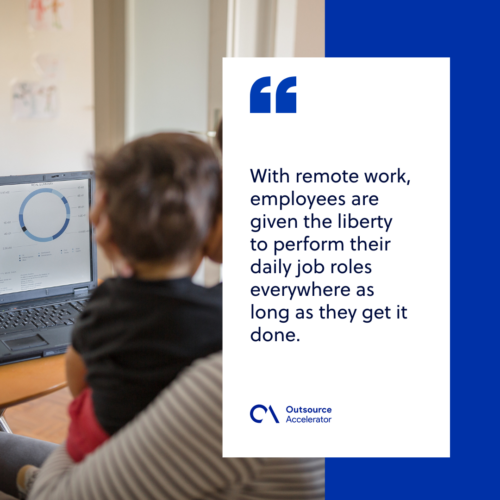
With remote work, staff can do their jobs from anywhere as long as the work gets done. Employers, in turn, learn to trust their people. They see that quality holds up outside the office. To weigh the upsides, see these clear benefits of remote work.
Owl Labs’ State of Hybrid Work report finds that many workers now prefer remote or hybrid setups. In fact, a large share would leave a job that removed these options. For more numbers, review these remote work statistics.
These are just a few trends that favor remote work. Next, we tackle the remote work myths that have held some firms back.
10 popular remote work myths debunked
What is the truth behind these remote work myths? We break down each one below.
1. Remote workers are not productive
This is one of the most common remote work myths. It is often held by people who have not worked remotely. Micromanagers fear that staff will slack off without close watch.
The truth is remote workers are often more productive. A CoSo survey found that 77% of individuals working from home get more done than office peers. So the fear does not match the data.
This myth fades even more with AI tools on remote teams. According to Hubstaff’s AI Productivity Shift report, 45% of respondents saw output rise after they adopted AI tools. Managers can also confirm output with remote employee tracking tools.
2. Remote work limits innovation and employee creativity
Some people think remote work stifles new ideas. They say staff cannot share views in person with their team. As a result, they fear creativity will drop.
But an office can limit ideas too. Staff there only interact with who is nearby. It can also repress input when power dynamics silence some voices.
Collaboration tools give remote teams more room to create. For example, they can run polls, share images, or work on a shared canvas together. So creative work still thrives.
3. Collaborative work is impossible
Teams did struggle with remote work at first. Communication felt hard because working from home was new to many. So early friction was normal.
However, the right collaboration tools fix this fast. Remote teams can run both solo and group projects with ease. Examples include Slack, ClickUp, Asana, and Trello.
Managers can also assign tasks and track progress in these tools. As a result, staff stay accountable and meet their deadlines.

4. Remote workers aren’t able to cultivate a good working relationship with one another
Yes, in-person contact is nice. Still, remote teams can build real bonds too. It just takes the right approach.
Many leaders have invested in virtual tools. A significant number of executives did so, and staff who reported higher output had no trouble working together online. So strong ties are possible from afar.
Communication tools let staff join talks and events at the same time. This gives people across the world a chance to take part. Because of this, no one gets left out.
5. Working from home is not a real job
The truth is remote jobs exist in every sector. They range from entry roles to senior posts. So the choice is wide.
Remote workers can take part-time, freelance, or full-time roles. Many firms also offer the same benefits that office staff get. For proof, look at these leading companies that allow remote work.
Remote openings will not fade. In fact, demand should grow as tech keeps improving.
6. Career advancement is not attainable in remote work
This one depends on the firm. Some companies reward staff with incentives, not promotions. So results vary by workplace.
Still, many workers grow well in remote roles. According to a 2021 Harvard Business School study, 29% pursued more education in a remote setup. Another 34% found time to take online courses. As a result, career growth stays within reach.
7. Remote work destroys company culture
Some say remote work kills culture since staff are not in one place. Camaraderie does help a team. But it does not equal strong culture on its own.
What matters is that staff feel valued. Culture can grow wherever people work. In addition, clear communication binds remote teams together. To learn more, see how to build a strong remote work culture.
8. Remote work means a lot of free time
Some assume a remote job means idle days. That is not true. Remote staff carry the same duties as anyone else.
They have set hours and firm deadlines. It may be easy to delay, but rules still apply. So remote workers face the same review and standards as office staff.
9. Remote work does not end
Others believe remote staff work past office hours all the time. The idea is that home blurs the line between work and rest. So the fear is constant overtime.
But office workers can log overtime and feel burnout too. In truth, this depends on the role, time habits, and company support. As a result, balance is a matter of good management, not location.
10. Team building is not possible in a remote work setup
Team building used to mean in-person events. That feels like a fair worry. But virtual team building works well too.
Even when staff sit in different places, tools bridge the gap. For example, Zoom team building has become common for remote teams. Others use Skype, Google Meet, and Messenger to plan fun activities.

Remote work myths vs the future of remote work
The truth about these remote work myths is simple. Every work model has challenges. No setup is perfect.
Still, the upsides of remote work often outweigh the downsides. As more firms adopt it, one thing is clear. Remote work is here to stay.
Frequently asked questions about remote work myths
Are remote workers really less productive?
No. Data shows many remote workers get more done than office peers. AI tools push output even higher. So the productivity myth does not hold up.
Can remote teams collaborate well?
Yes. Tools like Slack, Asana, and Zoom make teamwork smooth. Managers can assign tasks and track progress in real time. As a result, remote teams stay in sync.
Is career growth possible when you work remotely?
Yes. Many remote workers gain skills and take courses on the job. Growth depends on the firm and the role, not the location.
Does remote work hurt company culture?
Not if leaders build it well. Culture grows when staff feel valued and stay in touch. Clear communication keeps remote teams close.
Are remote jobs real, full jobs?
Yes. Remote roles exist in every industry and at every level. Many offer the same pay and benefits as office jobs.
Key takeaways
- Most remote work myths fall apart once you look at real data.
- Remote workers are often more productive, and AI tools raise output further.
- The right tools support collaboration, culture, and team building from anywhere.
- Remote roles are real jobs with real career paths in every sector.
- Remote work brings clear cost savings, so it will stay part of how we work.






 Independent





