
Everything you need to know about omnichannel support


This article is a submission by SupportYourApp. SupportYourApp is a Support-as-a-Service company that provides secure technical and customer support for growing startups and tech companies around the globe.
Why does omnichannel support matter?
Omnichannel support matters because customers now expect one smooth, connected experience across every channel they use.
- It links email, phone, chat, and social media into a single, consistent conversation.
- It lets customers pick up where they left off, no matter which channel they choose.
- It lifts satisfaction, loyalty, and efficiency, so it sets your business apart.
Today, every customer interaction counts. According to a Forrester report, 90% of companies expect to compete mostly on customer experience. As a result, businesses now work hard to improve the customer journey. Omnichannel support is one way to do that. It personalizes the experience and turns more buyers into loyal fans.
What is omnichannel support?
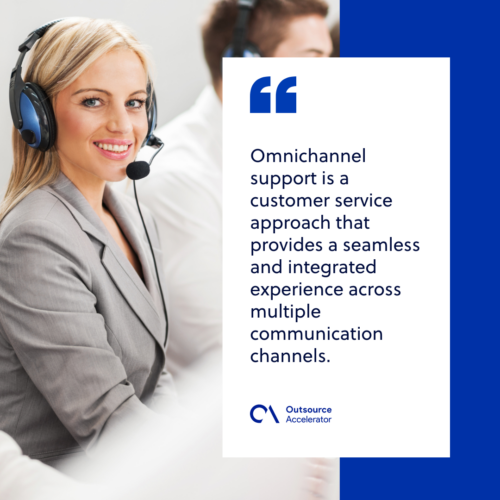
Omnichannel support is a customer service approach. It gives people a smooth, connected experience across many channels. So customers can reach a company through any channel they like, such as:
- Phone
- Live chat
- Social media
- In-person
They get consistent, personalized support no matter which channel they pick. In this model, the company tracks and manages interactions across channels. As a result, customers pick up right where they left off.
This approach makes support more convenient and efficient. It also helps companies serve people better, lift customer satisfaction, and build stronger relationships.
For example, a customer visits the website and asks a chatbot about a product. The chatbot lacks the answer, so it connects the customer to a live agent. That agent sees the browsing history and the product of interest. As a result, the agent answers right away. The company can even send a follow-up email with more details for later. To see how expectations keep shifting, these customer experience statistics are worth a read.
So how does this compare with a single-channel or multichannel approach?
5 key benefits of omnichannel support
Below are the five main benefits of omnichannel support.
1. Meets customer expectations
Today’s customers expect to reach a business across many channels. With omnichannel support, companies meet them where they are. As a result, the experience stays consistent on every channel.
2. Increased customer satisfaction
Omnichannel support often raises satisfaction. Customers get answers quickly through their preferred channel. In addition, the model enables personalization, since all data sits in one place. As a result, customers feel valued and happy.
3. Improved efficiency
With one connected system, teams streamline operations and work faster. They manage every interaction from a single platform, which saves time and resources. Meanwhile, a multichannel setup risks losing customers, because people must switch channels and repeat themselves.
4. Enhanced data collection
An omnichannel system gathers useful data from many channels. So you can use it to improve operations, sharpen marketing, and refine the whole experience.
5. Competitive advantage
Omnichannel support sets you apart from rivals that use only a few channels. As a result, it helps attract and keep customers who value a smooth, personal experience. Yet only 15% of organizations have launched true omnichannel support, and many find it hard. So now is the time to learn the steps. Strong customer retention often follows.
Steps to successfully launch omnichannel support
Here is how to roll out efficient, reliable omnichannel support.
Identify customers’ preferred channels
First, walk in your customers’ shoes. Track their journeys and learn which channels they prefer. For example, 63% of customers respond to personalized homepage recommendations. So keep that experience sharp and search-friendly.
Choose communication channels
Next, use your research to pick the most relevant channels. Make sure they connect to each other. In addition, manage them all from one platform. Many teams compare contact center platforms before they commit.
Implement a CRM system
A CRM system is a key step in any omnichannel strategy. Its main benefits are:
- Centralized customer data. All data sits in one place, so agents share information across channels with ease.
- Personalization. With full data on hand, teams tailor each conversation to the customer’s history and preferences.
- Automation. Many CRM tools automate routine steps, which streamlines service.
- Data analysis. CRM systems reveal useful insights into customer behavior and trends.
- Integration. A CRM links with other tools, so the experience stays consistent across channels.
Train the customer support team
Then, train your agents often. Well-trained agents give consistent, personal answers. As a result, they deliver a smooth experience on every channel. Good training also eases common customer service challenges.
Test omnichannel support
Before launch, test the whole system. Check that it works smoothly across all channels. As a result, you catch and fix issues before customers ever see them.
Monitor and optimize
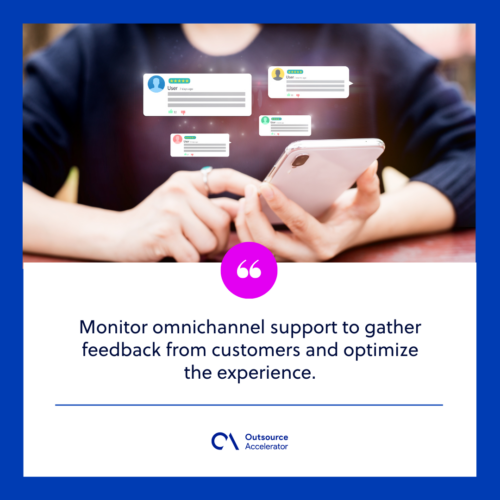
Finally, monitor the system and gather feedback. Use analytics to track behavior. Then make changes as needed to keep improving the experience.
Omnichannel support fosters customer loyalty
Omnichannel support is essential for modern businesses. It helps them deliver a high-quality experience, work more efficiently, and stay ahead. By offering one smooth experience across channels, companies win customer trust. As a result, those customers keep coming back. Many firms lean on outsourcing customer service to scale this support fast.
Omnichannel support FAQs
Here are quick answers to common questions about omnichannel support.
What is the difference between omnichannel and multichannel support?
Multichannel support offers several channels, but each one works alone. Omnichannel support connects them all. So the customer moves between channels without repeating anything.
Which channels should a small business start with?
Start with the channels your customers already use most. For many, that means email, phone, and live chat. Next, add social media once those core channels run smoothly.
Does omnichannel support require a large team?
No. The right tools do much of the heavy lifting. A CRM and shared inbox let a small team cover several channels well.
How do you measure omnichannel success?
Track a few clear metrics. For example, watch response time, satisfaction scores, and retention. Then compare them over time to see real progress.
Can you outsource omnichannel support?
Yes. Many companies hire a specialist provider to run support across channels. As a result, they get round-the-clock coverage without building the whole team in-house.






 Independent






