
20 hiring trends to look out for in 2026


What hiring trends should businesses watch this year?
The key hiring trends now center on AI-driven recruitment, flexible and remote work, pay transparency, strong candidate experience, and a bigger focus on skills and inclusion.
- AI and automation now speed up much of the hiring process.
- Remote, hybrid, and gig work are firmly part of the norm.
- Pay transparency and candidate experience shape who you attract.
Staying on top of hiring trends helps you attract top talent and stay competitive. So as the job market shifts, you must adapt your recruitment approach and make smart choices.
The world of work still faces pressure from inflation, supply chain issues, and global uncertainty. Because of this, keeping up with hiring trends can help firms survive and thrive.
In this article, we break down 20 hiring trends set to shape recruitment this year and beyond.
Why be aware of hiring trends?
Keeping up with hiring trends helps you stay competitive and win top talent. It also helps you handle wider uncertainty with more confidence.
Today’s job market is hard to predict. So it pays to adapt fast and make informed choices. Staying aware of new trends lets companies:
- Gain a competitive edge
- Improve their hiring processes
- Secure the best candidates for their organizations
- Proactively address challenges
- Leverage new technologies
- Create a positive candidate experience
In short, staying updated on hiring trends supports growth. So it helps your whole organization succeed.
20 hiring trends to implement in 2026
No one can fully predict the future. Still, these 20 hiring trends are already making waves in recruitment.
1. Gen Z further integrating into the workforce
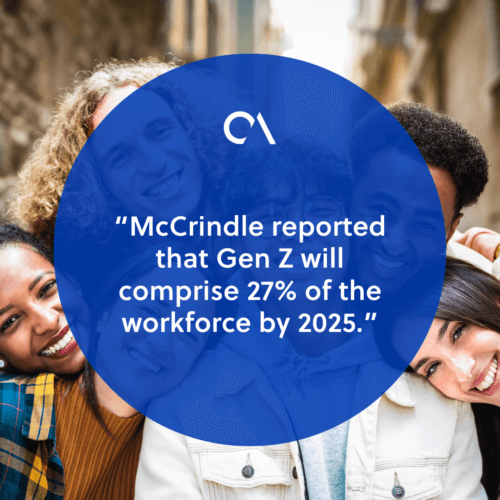
McCrindle projected that Gen Z would grow to make up 27% of the workforce. As the first fully digital generation grows in the job market, firms must adapt to attract them.
Gen Z values career growth, work-life balance, and meaningful work. So employers should stress flexibility, tech, and room to develop.
2. Social media recruiting
Social media still plays a big role in talent acquisition. So firms use platforms like LinkedIn and X to source and screen candidates.
You can also attract passive candidates this way. For example, engaging content builds a strong employer brand online.
3. Prioritization of data-centric recruitment
Smart firms use data to guide hiring. So they lean on analytics tools to:
- Identify trends
- Measure the effectiveness of recruitment strategies
- Make data-informed hiring decisions
By reading this data, firms streamline work. As a result, they cut time-to-hire and improve candidate quality. For proof points, see these recruitment statistics.
4. Hiring will be affected by economic uncertainties
Economic shifts can sway hiring choices. So firms must stay agile as conditions change.
They should adapt to factors like recessions, new tech, and global events. Because of this, flexible workforce planning is now vital.
5. Rise of AI and HR automation
Most experts agree AI and automation will keep reshaping talent acquisition.
AI tools speed up resume screening, assessments, and interviews. For example, they can answer questions and book interviews. As a result, hiring gets faster and simpler. To compare options, review these AI recruitment tools.
6. More diverse and inclusive work environments
Diversity, equity, and inclusion (DEI) stays a key focus. So firms keep working to build fair, inclusive teams.
This means unbiased hiring, more diversity, and equal chances for all. As a result, workplaces grow stronger and more balanced.
7. Candidate matching
Job seekers and postings keep rising. So firms invest in tools to match people to roles faster.
Applicant tracking systems (ATS) and AI tools help here. For example, they find the best fit by skills, qualifications, and culture.
8. Focus on candidate experience
A strong candidate experience helps you win top talent. So employers now craft a smooth, personal journey, from the application stage to onboarding.
Timely communication and clear steps matter a lot. As a result, respectful treatment sets top employers apart.
9. Increase in internal recruitment through upskilling
Nurturing internal talent lifts morale and cuts hiring costs. So more firms invest in upskilling and reskilling.
Instead of always hiring outside, they grow their own people. As a result, they build loyalty and smooth transitions. Learn why upskilling and reskilling are now essential.
10. Prominence of soft skill hiring
Technical skills still matter. Still, soft skills now weigh heavily in hiring.
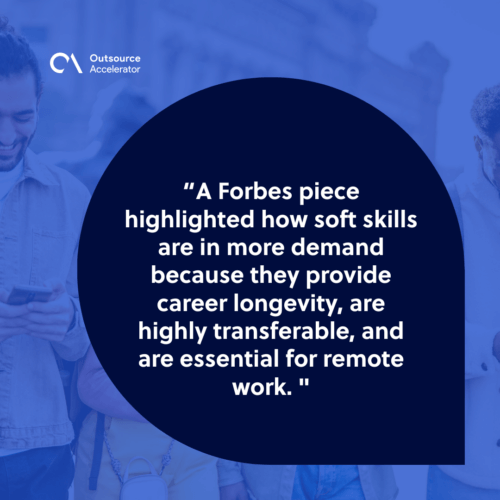
A Forbes piece noted that soft skills are in more demand. They last across careers, transfer well, and suit remote work.
So more employers want strong communication, adaptability, and problem-solving. As a result, teams grow more creative and resilient.
11. Candidates want better pay
Competitive pay always attracts talent. Now it is a must-have for top candidates.
Firms that match industry pay gain an edge. So a clear, honest view of total pay is key to hiring and keeping skilled staff.
12. Salary transparency becomes fundamental
Secrecy around pay is fading. So candidates now expect clear pay ranges and benefits upfront.
Firms that embrace pay transparency build trust. As a result, they stand out as ethical employers. In addition, open pay supports fairness for women, people of color, and other underpaid groups.
Tip: Get a clearer idea on offshore salaries and cost savings by using this Outsourcing Calculator.
13. Emphasis on employer branding and values
Employer branding still helps you attract candidates. So firms must show their culture, values, and care for staff to stand out as employers of choice.
Job seekers want their values to match yours. As a result, a clear brand story matters more than ever.
14. Rehiring of former employees
Boomerang employees are staff who return to a past employer. This is more common now, as many workers feel Great Resignation regrets.
Firms value these returners. After all, they know the culture and settle in fast. So alumni networks are now a smart tool.
15. Remote and hybrid work as part of the norm
Remote and hybrid work are now built into work culture. So they will not fade anytime soon.
These setups give candidates more flexibility and balance. As per Zippia, firms now weigh staff health and well-being more. In fact, 84% say those factors shape their work plans.
So firms must refine remote policies and invest in the right tools. As a result, they can adapt hiring to this shift.
16. Virtual recruiting
Virtual recruiting has gained strong traction. So it will stay a key trend going forward.
Many firms already use video interviews, virtual job fairs, and remote onboarding. As a result, they reach global talent, cut costs, and gain flexibility.
17. Expansion of benefits
Firms now go beyond basic healthcare and retirement plans. So many add benefits like:
- Mental health support
- Professional development opportunities
- Wellness programs
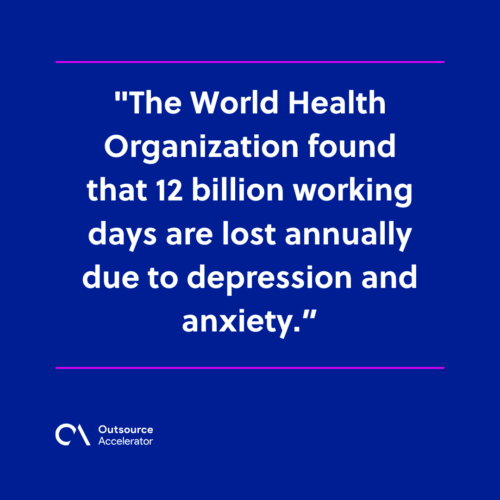
Mental health coverage is now vital. In fact, the World Health Organization found that 12 billion working days are lost annually to depression and anxiety. So a strong benefits package sets firms apart.
18. Quiet hiring of in-demand talent
Competition for top talent is fierce. So firms now take a quieter path to hiring in-demand pros.
Instead of public job posts, they reach out directly and build relationships. As a result, this approach supports employee mobility and upskilling.
19. Widespread gig work
The gig economy keeps growing. More people want flexible work, and more firms see the value.
So businesses use freelancers, contractors, and project workers to fill skill gaps. As a result, they gain scale and reach. Learn about the different types of gig workers.
20. The Great Resignation continues
The trend of the Great Resignation lingers. Many workers still leave for better balance or a career change.
So firms must focus on keeping their people. For example, better work settings, benefits, and support all help.
The future of hiring talent
By embracing these hiring trends, firms can lead in recruitment. So it pays to act early.
Adapt to the shifting job market, use tech to streamline work, and put candidate experience first. As a result, you attract and keep top talent. A strong global talent acquisition plan makes this far easier.
Build a diverse, inclusive team and invest in growth. Stay agile in uncertain times too. Because of this, your organization can thrive in a tough market.
Remember, hiring is not just about finding the right people. It is also about creating an environment where they can thrive and add to shared success.
Frequently asked questions about hiring trends
What is the biggest hiring trend today?
AI and automation top the list. They speed up screening, matching, and scheduling. As a result, hiring gets faster and more accurate.
Why does candidate experience matter so much?
A good experience helps you win and keep top talent. So clear steps and timely replies are key. In turn, happy candidates may recommend your firm to others.
Is remote work still a hiring trend?
Yes. Remote and hybrid work are now part of the norm. So firms must refine their policies and tools to support both.
How can small firms compete for talent?
Small firms can lead on pay transparency and flexible work. They can also upskill their own staff. As a result, they attract talent without huge budgets.
How often should I review hiring trends?
Review them at least once a year. The market shifts fast, so regular checks help. Because of this, you can adapt your plan in good time.
Key takeaways
- AI and automation now drive much of the hiring process.
- Remote, hybrid, and gig work are firmly part of the norm.
- Pay transparency and candidate experience shape who you attract.
- Soft skills, DEI, and upskilling are rising priorities.
- Firms that adapt early will lead the race for top talent.






 Independent





