
Benefits of hiring healthcare virtual assistants


What do healthcare virtual assistants do?
Healthcare virtual assistants are remote workers who handle admin and support tasks so medical teams can focus on patient care.
- They cover work like medical transcription, insurance claims, and scheduling.
- They help clinics save time and cut costs.
- They work remotely, so practices do not need extra office space.
The healthcare industry keeps changing as new tools and technology arrive. As a result, more clinics now use healthcare virtual assistants to keep up. Virtual assistants, also known as VAs, are remote workers who support businesses and organizations.
Healthcare virtual assistants can help with many tasks. For example, they handle medical transcription, insurance claims, and other admin duties. Many clinics also lean on healthcare outsourcing to reach skilled staff fast.
What does a healthcare virtual assistant do?
A healthcare virtual assistant can do many jobs. It depends on the needs of the organization they work for. Their most common tasks include the ones below.
Medical transcription
Medical transcription means turning notes from doctors into a digital format. They can also add data to a patient’s chart when a physician records a dictation during a visit.
Connext offers this as one of its main healthcare outsourcing solutions. So this saves time for medical staff. It also keeps records accurate and consistent.
Insurance tasks
Insurance tasks include submitting claims, following up on them, and handling patient billing. The virtual assistant can also manage all contact with patients’ insurance firms. In addition, they can confirm a patient’s eligibility before medical care is preapproved.
As a result, this saves medical staff a lot of time. It also makes sure claims are processed correctly. Some clinics even hire a medical billing virtual assistant for this exact work.
Triage
Triage is the process of ranking patient care by how urgent it is. Healthcare virtual assistants can handle triage tasks. For example, they answer patient calls, book appointments, and share basic medical info.
Because of this, patients get the care they need on time.
Virtual reception
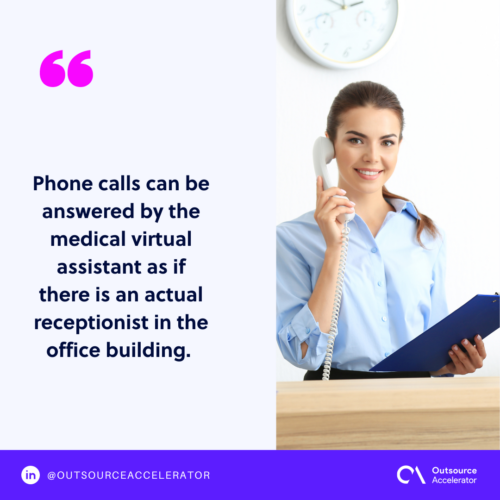
The medical virtual assistant can answer phone calls like a receptionist in the office. So they address concerns, take messages, and forward only urgent calls. Meanwhile, the same assistant can work on other tasks between calls.
Virtual reception brings a few clear benefits. First, calls get returned quickly. Next, the same person answers the phone each time, which helps build patient trust. Finally, spam calls can be filtered out when they waste time.
Admin Tasks
Admin tasks take up a lot of time once they pile up. These tasks include booking appointments, sending emails, and managing databases. Structured appointment setting keeps the calendar full and tidy.
As a result, admin help gives medical staff more time for patient care and their practice.
Managing medical records
Medical staff can turn to virtual medical assistant services to manage records better. These assistants can maintain electronic medical records (EMRs), such as test results and treatment plans.
They also help practices move from paper to digital. So they transfer physical documents into electronic medical records with care.
Essential skills of healthcare virtual assistants
To do well in their role, healthcare virtual assistants need certain skills. Some of the most important ones are below.
Reliability
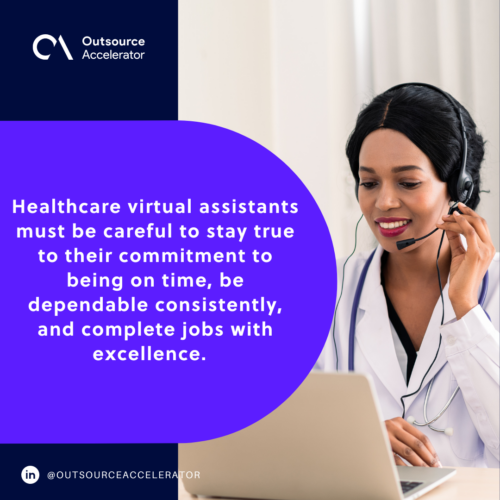
Professionalism matters most in healthcare virtual assistants. So they must show up on time, stay dependable, and finish jobs with care.
Accuracy
High focus is a must when noting patient details. This is true for insurance coverage, medical directions, and health histories. After all, each word and number matters.
Keep in mind that patient health is at stake. So accurate information is key to good care. Healthcare virtual assistants must transcribe details correctly and keep patient records clean.
Communication skills
Doctors must always know how their tasks are moving along. As a result, clear instructions with the right context matter a lot.
Clear communication also helps with patients. So context and key details are needed when giving care instructions or updates. For this reason, strong communication skills matter for healthcare virtual assistants. They must speak clearly with doctors, patients, and other stakeholders.
Self-directed
Self-direction is another key skill for healthcare virtual assistants. They must work on their own and handle tasks without close supervision.
Daily work brings many tasks. So they need discipline to finish jobs quickly and well. In addition, good planning shapes how well tasks get done.
Resourceful
Clinics and doctors do not have time to wait around. They see many patients each day, so one-on-one info sharing is hard.
Great virtual healthcare assistants know this limit. So they must find smart ways to send and receive vital information.
Benefits of hiring healthcare virtual assistants
Hiring healthcare virtual assistants brings many benefits to medical organizations. Some of the most important ones are below.
Cost-effectiveness
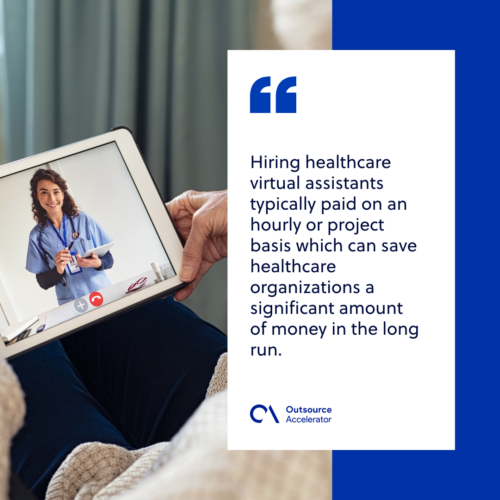
Cost savings is one of the biggest benefits. They are usually paid by the hour or by project. As a result, clinics save a lot of money over time. Many firms fold this into a wider healthcare BPO plan.
Enhanced patient experience
Virtual assistants can handle triage and virtual reception. So patients get help on time. They also take on admin tasks like booking appointments. As a result, patients save time and the care feels more convenient.
Increased workplace productivity
Hiring healthcare virtual assistants also lifts workplace productivity. They can work on medical transcription and insurance claims. So medical staff save a lot of time.
Because of this, staff can focus more on patient care. In turn, the overall quality of care goes up.
Exceptional workforce
Healthcare virtual assistants are skilled and experienced. So they bring real knowledge to medical organizations. They hold many of the same skills as on-site employees, plus the flexibility of remote work.
As a result, clinics gain a strong workforce they can trust for high-quality service.
Healthcare virtual assistants aid businesses in the industry
Hiring healthcare virtual assistants brings many benefits to any practice. They handle a range of tasks, so physicians get valuable time back. As a result, doctors can focus more on patients and their practice.
These assistants also save money. After all, they do not need benefits or office space, and they work flexibly. In addition, they bring diverse skills to the table.
In today’s fast, digital world, medical virtual assistants help clinics stay organized and efficient. So hiring one can be a wise move for any medical practice that wants to grow.
Frequently asked questions about healthcare virtual assistants
What is a healthcare virtual assistant?
A healthcare virtual assistant is a remote worker who supports medical teams. They handle admin and clinical support tasks. For example, they do transcription, billing, and scheduling.
Are healthcare virtual assistants HIPAA compliant?
Reputable providers train their assistants on patient privacy rules. So they follow strict data security steps. Still, you should confirm compliance before you hire.
How much do healthcare virtual assistants cost?
Most healthcare virtual assistants are paid by the hour or by project. As a result, they cost far less than a full in-house hire. The exact rate depends on tasks and experience.
What tasks can I outsource to a healthcare virtual assistant?
You can outsource transcription, insurance claims, and triage. You can also hand off reception, admin work, and records management. So your team keeps more time for patient care.
Key takeaways
- Healthcare virtual assistants handle admin and support work for medical teams.
- Their tasks include transcription, insurance claims, triage, and records management.
- Key skills include reliability, accuracy, and clear communication.
- They cut costs, lift productivity, and improve the patient experience.






 Independent





