
Virtual medical assistant: How do they aid medical professionals?


What is the medical VA meaning?
The medical VA meaning is simple: a virtual medical assistant is a remote worker who handles daily admin and some clinical tasks for healthcare professionals.
- They work from anywhere, so you can hire skilled help across time zones.
- They cover admin, data entry, billing, marketing, and reception duties.
- They free up doctors to spend more time with patients.
Most of us link virtual assistants with startups and other business firms. Yet virtual medical assistants exist too, and they support healthcare professionals every day.
What is a virtual medical assistant?
A virtual medical assistant is a remote pro who handles daily repetitive tasks for medical practitioners. Like other VAs, these workers can be hired from many locations. As with broader healthcare BPO services, they help clinics do more with less.
Medical VAs know the day-to-day work of a medical office well. So health pros can count on them for admin duties and some clinical tasks. With proper training, they can take on almost any office task that does not need a physical presence.
Who can benefit from a virtual medical assistant?
A virtual medical assistant can work for almost any medical setting. For example, this includes clinics, physicians’ offices, rehab centers, urgent care, and mental health facilities.
More so, any healthcare practitioner can use a remote medical assistant. This covers surgeons, psychiatrists, psychologists, physicians, and dentists.
Doctors are busy by nature. As a result, a medical assistant can go a long way to support their work and cut long hours.
Virtual medical assistant roles and tasks
A virtual medical assistant can do many tasks that need no special clinical skill. However, that does not limit them to clerical work. In fact, health pros can still rely on them for set admin and clinical tasks. Here are the main roles you can delegate to a medical VA.
Administrative tasks
As virtual physician assistants, medical VAs can take on many admin duties. These range from routine office tasks to more complex ones, like handling patient medical histories.
For example, they can take calls, book appointments, manage email, order supplies, and organize files in the database.
Data entry and transcription
Some medical VAs are skilled in data entry and medical records. For instance, they handle Electronic Medical Records (EMR) and Electronic Health Records (EHR).
Today, VAs can join patient exams through encrypted video software. From there, they record patient history in real time. Others may record notes during a visit. Then the VA transcribes the file into the patient’s chart. So strong medical records management keeps this data safe.
Bookkeeping
Virtual medical assistants can also create and send invoices, run payroll, or pay bills. Some can even build financial reports. As a result, facilities track their expenses and cash flow with ease.
Verifying insurance coverage
Other medical assistants verify insurance coverage before patients get certain treatments. They can also process and submit billing statements and insurance forms after each service. For deeper claims work, a medical billing virtual assistant is a strong fit.
Marketing
A medical assistant with marketing skills can help you reach more patients. Beyond social media management, this role covers website updates and online review replies. Some VAs can also run targeted campaigns within the practitioner’s area.
Virtual receptionist
It is also possible for medical virtual assistants to answer calls for medical professionals. In effect, they act like a regular clinic receptionist.
For example, they answer phones, take messages, transfer urgent calls, and handle patient questions. So even though they work off-site, doctors can still hand off phone duties with confidence.
Advantages of hiring a virtual medical assistant
Hiring a virtual medical assistant brings many benefits for healthcare pros. Here are the main ones.
Better service
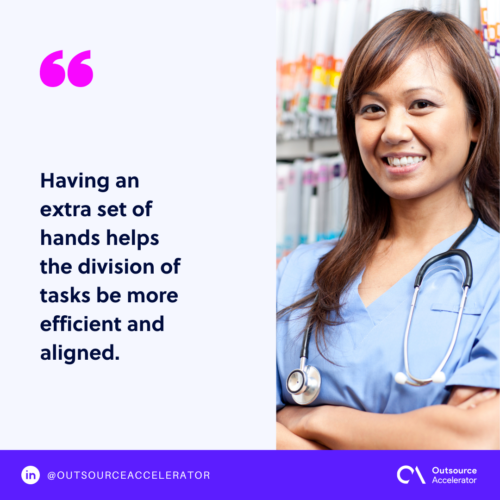
An extra set of hands makes the split of tasks more efficient. As a result, everyone can focus on the work that matters most. In turn, patients get better care and often recommend your services to others.
More time for patients
Medical assistants also handle the paperwork. So doctors gain more time for patient care. As a result, they can see more patients within the day.
Cost-effective
Contracting a medical VA is far cheaper than a full-time in-house hire. With in-house staff, you must also provide office space and other resources. A remote worker, by contrast, already has the tools, skills, and experience.
No need for training
Virtual assistants tend to invest in their own skills and tools. In short, they keep up with the latest trends in their field.
Some medical VAs hold a college or associate degree in a medical field. Others may need set training or an accredited program before onboarding. Hiring from reputable agencies or BPO providers like Connext often gives access to certified medical assistants.
Flexibility
As noted, virtual medical assistants handle many roles well. For example, they cover accounting, marketing, and simple admin. So they can work to fit what each employer needs.
They can also start right after the contract is signed and details are set. This growing flexibility mirrors trends in telehealth outsourcing.
Factors to consider before hiring virtual medical assistants
A virtual medical assistant brings many perks to your practice. However, weigh a few factors first. Below are the main things to clarify before you hire.
Possible timezone differences
Virtual medical assistants work remotely, like any VA. So you might sit in a New York facility while your VA works from Southeast Asia.
Because of this, decide early if you want them in your time zone. Or you may want them to cover admin while you are off the clock. This choice affects whether you hire local or offshore. Each option has its share of pros and cons. In the end, it comes down to what fits your business.
Length of contract
Next, think about how long you need the VA. This helps you plan your budget. It also shapes the tasks you delegate.
For example, you would not ask a short-term VA to build a new filing system. After all, you would lose it once they leave.
What to look for when hiring virtual medical assistants
To make your VA a real asset, know the qualities to seek. Partnering with a firm like Remote Employee will speed up this process. Here are the key things to check.
Qualifications and certifications
Your VA does not need a medicine degree. However, related certifications help with clinical duties. For example, look for a certified or registered medical assistant.
Experience
Prior clinical experience is always a plus. Some clinics accept entry-level candidates. Still, many prefer experienced VAs who can hit the ground running. For clinical-heavy roles, dedicated healthcare virtual assistants are worth the search.
Adaptability and multitasking ability
Work in a medical facility can get hectic. So a good VA should handle routine admin tasks smoothly alongside other duties. In short, check how they cope in a fast, demanding setting.
Skills and competence
Medical VAs will not draw blood or record vital signs. Even so, you should confirm their skill in other areas. In this field, near-perfect admin skills are a must. So test how well they manage records, medical coding, and other admin tasks.
Where to hire virtual medical assistants
Virtual assistance is more popular than ever. So hiring a virtual medical assistant is now easier. If you want to hire virtual medical assistants, here are some places to look.
Virtual assistant agencies
As the name says, VA agencies connect pros with skilled assistants. In fact, this is one of the fastest ways to hire a medical VA. Once you find a reputable firm, share your needs. Then they match you with a suitable VA at fair rates.
Freelance marketplace
You can also find medical VAs on platforms like Upwork and Fiverr. Simply post your tasks, and freelancers will apply. However, this route can be slow. After all, you screen the candidates yourself.
BPO firms
Business process outsourcing firms work much like VA agencies. You give them your requirements, and they handle recruiting and screening. Then you pick your VA from their pool.
So when hiring medical VAs, lean toward VA or BPO firms. Because they protect their reputation, they make sure your VA gets proper training for healthcare work.
Frequently asked questions about virtual medical assistants
What does a virtual medical assistant do?
A virtual medical assistant handles admin and light clinical tasks from a remote location. For example, they book appointments, manage records, verify insurance, and answer calls. In short, they support the whole practice.
Is a virtual medical assistant cost-effective?
Yes, they cost far less than a full-time in-house hire. You skip office space and extra resources. As a result, you save money while still getting skilled help.
Do virtual medical assistants need certifications?
They do not always need a medical degree. However, certifications help with clinical duties. So look for a certified or registered medical assistant when the role needs it.
Where can I hire a virtual medical assistant?
You can hire through VA agencies, freelance platforms, or BPO firms. For screening and training, agencies and BPO firms are the safest choice.
Key takeaways
- The medical VA meaning is a remote worker who supports healthcare pros with admin and clinical tasks.
- They cover reception, data entry, billing, insurance, and marketing duties.
- Hiring one is cost-effective and frees doctors to focus on patients.
- Weigh time zones, contract length, and certifications before you hire.
- Agencies and BPO firms offer the safest path to a trained medical VA.






 Independent





