
8 convincing ways to manage complaint resolution


Every business, regardless of its size or industry, encounters customer complaints from time to time.
Complaints are a natural part of the customer experience, and how a company handles them can significantly impact its reputation and customer loyalty.
Efficiently resolving complaints not only pacifies dissatisfied customers but also presents an opportunity to turn them into loyal advocates.
This article explores the art of complaint resolution, its significance, and eight effective strategies to manage it successfully.
What is complaint resolution?
Complaint resolution encompasses a series of strategic steps to effectively handle and settle customer complaints or concerns.
These complaints span a wide spectrum of issues, from tangible product defects to intangible matters like perceived lapses in service quality or unmet expectations.
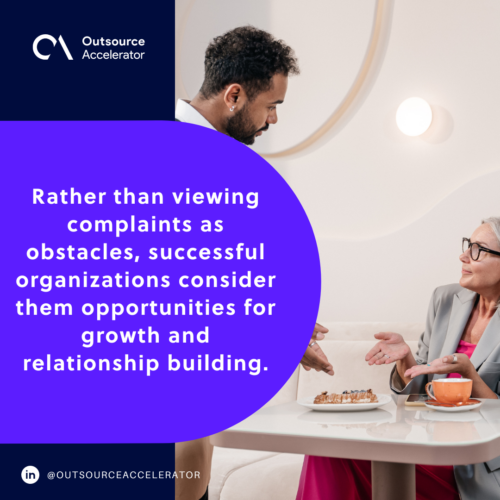
The essence of complaint resolution lies in its proactive approach to addressing customer dissatisfaction. Rather than viewing complaints as obstacles, successful organizations consider them opportunities for growth and relationship building.
The process involves more than just acknowledging the problem; it’s about delving into the heart of the matter to understand the intricacies of the customer’s grievance.
Complaint resolution process
Identification is the foundational step in complaint resolution that entails the following aspects:
- Listening attentively to the customer’s perspective
- Dissecting the layers of their complaint
- Extracting the underlying factors that triggered dissatisfaction
Whether it’s a malfunctioning product, a service that didn’t meet expectations or a communication breakdown, the goal is to pinpoint the precise cause of the issue.
Following identification, the focus shifts to crafting meaningful solutions. This is where the art of complaint resolution truly shines.
True complaint resolution involves proactive action. Businesses must draw upon their expertise, resources, and creativity to formulate solutions that address the customer’s concern.
These solutions can encompass a spectrum of options, from simple remedies to complex overhauls—depending on the nature and severity of the complaint.
But the journey doesn’t end with solution generation. The organization must implement the chosen solution, rectify the problem, and restore customers’ trust.
Importance of efficiently solving complaints
Customers appreciate when their concerns are taken seriously and resolved promptly. Efficient complaint resolution shows that a company values its customers, fostering loyalty and increasing the likelihood of repeat business.
Effectively resolving complaints demonstrates a commitment to customer satisfaction, which can mitigate the negative impact of unhappy customers sharing their experiences.
Complaints often highlight areas of improvement that may have gone unnoticed otherwise. Addressing these issues can enhance products, services, and internal processes.
8 effective ways to manage complaint resolution
Here are the eight effective ways to equip yourself with a toolkit that will empower you to navigate the complex landscape of complaints with confidence:
1. Investigate the complaint
To effectively resolve complaints, you must listen attentively to customers’ narratives. It entails diving beyond the surface to grasp the nuances of their concerns.
Gathering pertinent details, such as the timeline of events, previous interactions, and any supporting documentation, sets the stage for a well-informed resolution process.
This investigative phase lays the groundwork for an accurate diagnosis of the issue. This enables you to craft a solution that addresses the root cause rather than just the symptoms.
By immersing yourself in the customers’ experience, you demonstrate your commitment to taking proactive steps toward resolution.
2. Build rapport and trust
When customers voice a complaint, they seek more than a solution; they desire acknowledgment and empathy.
Building rapport forms the bridge between dissatisfaction and resolution. Express genuine empathy for the complainants’ situation, validate their feelings, and demonstrate your commitment to rectification.
Your ability to relate on a human level, rather than solely as a company representative, can de-escalate tensions. This also fosters an atmosphere conducive to collaboration.
Remember, empathy is not just a technique but a mindset that forms the cornerstone of effective complaint resolution.
3. Address complaints promptly
In complaint resolution, time is both an ally and a potential adversary. Acknowledging customers’ complaints is the first step in showing them that their voice matters.
Swift responses prevent frustration from festering and evolving into deeper dissatisfaction. A rapid acknowledgment can temper negative emotions. This sets the tone for more productive interaction.
By promptly conveying that their issue is being taken seriously, you lay the foundation for a smoother resolution process.
Customers gain confidence that their concerns are a priority, reinforcing that their satisfaction is central to your business’s mission.
4. Deliver a transparent service
Transparency is the bedrock upon which trust is built. Keeping customers informed about the progress of their complaint resolution journey is crucial.
Transparency dispels uncertainty and minimizes the likelihood of misunderstandings. It empowers the customer to stay engaged in the process.
Providing regular updates, sharing insights into the steps being taken, and discussing potential outcomes demonstrate your commitment to openness.
Open and honest communication fosters an environment of mutual respect and cooperation, reaffirming your dedication to finding a fair and lasting solution.
5. Treat customers as individuals
Every customer is unique, and the complaints often stem from specific circumstances. Tailoring your approach to address each customer’s distinct concerns showcases an excellent commitment to resolution.
Acknowledge that a one-size-fits-all strategy falls short in capturing the intricacies of each case. By customizing your response, you communicate that your patrons’ voice is heard and respected.
This approach also enhances the likelihood of finding solutions that resonate with the customer’s preferences, strengthening the bond between them and your brand.
6. Collaborate toward a solution
An inclusive approach can transform a customer’s complaint into a collaborative endeavor by doing the following:
- Engage the customer as a partner in finding a resolution
- Propose potential solutions and invite their input
- Empower customers to shape the outcome actively
This collaborative stance not only respects customers’ autonomy but also enhances their satisfaction with the chosen resolution.
Customers appreciate being regarded as contributors to the solution rather than just decision recipients. Involving them in the process reinforces that their concerns hold significance in driving positive change.

7. Ensure customer satisfaction
While finding a solution is vital, customer satisfaction is the true measure of success. After proposing a resolution, take the extra step to confirm that it aligns with the customer’s expectations and needs.
If any lingering dissatisfaction persists, be prepared to reevaluate the solution or explore alternative avenues. Keep in mind that your goal is to leave the customer content and genuinely pleased with the outcome.
Customer satisfaction transcends the immediate problem. This solidifies customers’ trust in your commitment to their well-being and builds a foundation for continued engagement and loyalty.
8. Learn from customer complaints
Each complaint carries within it a valuable lesson. Once the resolution process concludes, don’t simply move on; embark on a journey of reflection and growth.
Analyze the root causes of the complaint, identifying patterns and trends that can inform future improvements. Proactive learning from customer feedback is a hallmark of customer-centric organizations.
Additionally, addressing underlying issues reduces the likelihood of recurring problems and demonstrates an unwavering commitment to continuous enhancement.
Embrace each complaint as an opportunity to evolve. This will ensure that your business resolves immediate concerns and evolves better to meet customer needs in the long term.
How you should handle difficult customers
Navigating complaints can sometimes lead to interactions with difficult customers. Here’s how to manage these situations:
Remain calm
Your composed demeanor acts as a stabilizing force, preventing the situation from escalating further.
For instance, imagine an irate customer who received a damaged product. You can encourage them to articulate their grievances clearly by staying calm and empathetic. As a result, this allows you to address the core issue.
By remaining calm, you create a safe space for customers to express their concerns without fear of additional conflict.
Use positive reinforcement
Acknowledging valid points raised by the customer and adopting a positive tone can drastically alter the conversation’s trajectory.
For instance, consider a scenario where a customer complains about a delayed delivery. Acknowledge their frustration and convey your genuine commitment to resolving the issue promptly.
This approach fosters a more cooperative atmosphere, shifting the customer’s perception from adversarial to collaborative.
Apologize sincerely
When you encounter a simple or complex customer complaint, offering a sincere apology can work wonders in rebuilding trust.
For example, suppose a customer receives the wrong product due to an order processing error. In that case, a sincere apology acknowledges the mistake and reassures them that steps are being taken to rectify it.
Taking responsibility for errors or shortcomings showcases accountability and a genuine desire to make amends.
Set boundaries
While empathy is crucial, there are instances where a customer’s behavior crosses the line into aggression or disrespect.
In such cases, it’s essential to set firm but polite boundaries. Communicate your commitment to resolving their concerns. Assert that abusive or inappropriate behavior will not be tolerated.
For instance, a customer begins using offensive language. Calmly inform the customer that while you’re here to assist, maintaining a respectful tone is a prerequisite for a productive conversation.
Avoid blaming
Avoiding the blame game reduces defensiveness and promotes collaboration. Redirect the conversation towards exploring ways to rectify the issue.
For instance, if a customer receives a damaged package, channel the energy into discussing how to replace the item instead of dwelling on who might be at fault.
Shifting the focus from assigning blame to finding solutions is a key strategy in managing difficult customers.

Provide options
Empower customers by offering a range of solutions they can choose from. This approach grants them a sense of control over the outcome. It also makes them more invested in a mutually agreeable resolution.
For example, if a customer is unhappy with a product’s performance, provide options such as a replacement, a refund, or store credit.
This allows people to select the best solution with their preferences, fostering a more satisfactory outcome.
Effective complaint resolution transforms dissatisfaction.
By implementing the abovementioned strategies and considering how to handle complaints, you can turn complaints into opportunities to build stronger customer relationships.
Remember that complaint resolution is not just about fixing problems; it’s about showing customers that their concerns matter and that you are dedicated to their happiness.
With the right approach, you can transform dissatisfaction into loyalty and turn customer complaints into business success stories!






 Independent





