
B2B leads: 3 ways to get quality and active leads


What are B2B leads and how do you get them?
B2B leads are other businesses that could buy from you, and you get them through referrals, outreach, software, and online forms.
- Every lead is a possible customer for your sales team.
- Quality matters more than volume, so each contact must be checked.
- You can source leads in house or through a BPO partner.
Businesses today do all they can to find good prospects. B2B leads are the backbone of the sales team, because each one is a possible customer. Soon after, marketers and sales reps reach out to them.
Still, one rule stands out in B2B lead generation. Every name and contact detail must be valid and checked as real.
What is B2B?
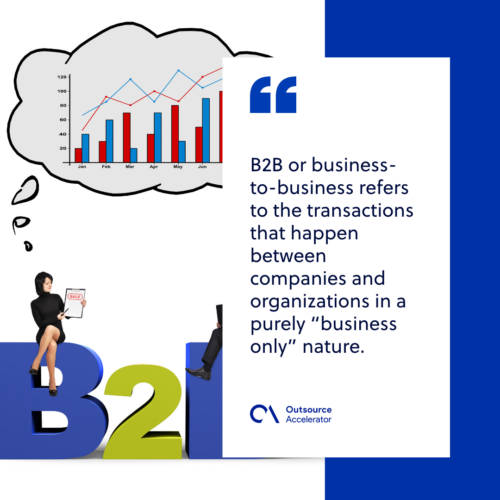
B2B, or business-to-business, means deals that happen between companies in a pure business setting. For example, a factory may sell to a distributor. In the same way, a business process outsourcing agency works with firms and large groups.
There are three main deal types. These are B2B (business-to-business), B2C (business-to-consumer), and B2G (business-to-government).
B2B companies serve their fellow companies. However, they do not always serve direct rivals.
Defining your B2B leads
Leads are usually people a company reaches out to for a sale. However, B2B prospects are not single people. Instead, they are other companies and businesses.
B2B companies sell their products as an enterprise-grade service for other firms to use. As a rule, they market these products as cost-efficient and creative solutions.
Active leads
Active prospects respond more often when you reach out on their preferred channel. For example, some prefer email over phone calls, and others the reverse.
Active prospects stay warm for a few months through steady lead nurturing, even if the deal does not close on the first try.
Inactive leads
By contrast, inactive leads rarely respond, or they never reply at all. This can stem from old numbers, dead email addresses, or plain disinterest.
However, you can still win some of them back. A re-engagement campaign can turn a past client or partner into an active lead again.
Still, keep in mind that some inactive prospects are not worth the chase. In that case, it is better to focus on active prospects and on finding new ones.
2 ways to reach out to B2B leads over the phone
There are two main ways to reach a lead by phone. However, one works much better than the other. These are warm and cold calling, and both can run side by side in a campaign. For some teams, cold calling remains one outbound lead generation method among many.
Warm calling
Warm calling is the opposite of cold calling. In short, you warm up to the prospect before you call. For example, the lead may have talked to an agent first, which led to a booked call. Because of this, warm calling often starts with appointment setting.
Cold calling
By contrast, cold calling gets a frosty reception these days. Here, agents reach out to a prospect with no heads-up that a call is coming.
For an individual, this can feel off-putting. However, in a business setting, cold callers are expected, since most calls are screened and sent to a sales office.

Surefire ways to get B2B leads
Quality B2B leads are easy to get once you know where to look. In fact, many firms give a whole team to lead generation, telemarketing, and telesales. Some also turn to sales outsourcing to scale faster.
1. Acquire qualified B2B leads through external third parties
External partners such as BPO firms and lead generation companies team up with other businesses to supply quality prospects. As a result, the leads are reliable, because they pass a strict check and qualify process.
2. Generate B2B leads with software
Tools like Hunter.io and HubSpot are called lead generation tools. They turn website visitors into leads. However, there is a catch. Your in-house sales team still needs to qualify the data these tools produce.
For a larger company, this is less of a problem. In that case, the work can go to lead generation specialists.
3. Use online forms and landing pages
Online forms and landing pages keep rising, as more people seek products and services that solve a clear problem. For this reason, they are one of the fastest ways to get active, responsive prospects. These lead generation techniques work best when you use them together.
Why generating leads is important to a business
As noted earlier, B2B leads are the backbone of a business when it comes to revenue and reach. In short, more valid prospects mean more closed deals.
More closed deals then mean a greater chance of a repeat client, or even a long-term business partnership.
Frequently asked questions
What is the difference between a lead and a prospect?
A lead is any business that shows some interest. A prospect is a lead that fits your ideal customer and is worth a sales effort. In short, every prospect is a lead, but not every lead becomes a prospect.
How do you qualify a B2B lead?
Check the company size, budget, need, and buying authority. Then confirm the contact details are current. This keeps your team focused on deals that can close.
Are bought lead lists worth it?
They can be risky. Many bought lists hold old or wrong data. A verified list from a trusted BPO, or your own research, usually works better.
How long should you keep an inactive lead?
Give it a few re-engagement attempts over a few months. If there is still no reply, move on. Your time is better spent on active prospects.
What tools help generate B2B leads?
CRM systems, email finders, and marketing automation all help. Still, a person should review the data before outreach begins.






 Independent






