
10 most effective call deflection techniques

What is call deflection and how does it work?
Call deflection moves a customer’s phone call to another channel, such as chat, email, or a self-service page, so the issue gets solved without a live call.
- It routes simple questions away from your phone lines.
- Customers get fast help, often without waiting on hold.
- Your agents get freed up for the calls that truly need them.
Great customer service is a big part of your promise to buyers. So your service team should matter as much as any other department.
However, agents cannot keep up quality when calls pile up. After all, this team is the direct link between your firm and your customers. So it pays to protect their time.
What is call deflection?
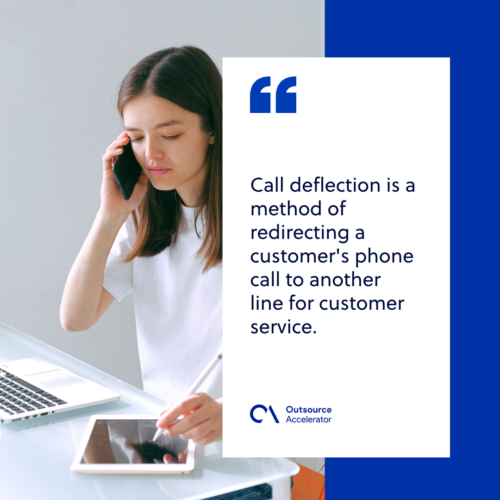
Call deflection is a way to redirect a customer’s phone call to another line for customer service. For example, it may point them to a self-service option or a digital channel.
Some customers prefer help without talking to a person. So they often welcome call deflection.
As a result, clients get the help they need fast. Meanwhile, your agents are free to handle the questions that need quick, human care. Many firms pair this with call center outsourcing to scale support.
Benefits of call deflection
Call deflection brings many gains for firms. Here are the main ones.
Improved customer experience
Call deflection can lift the customer experience and make tasks easier and safer.
It helps customers spot issues, and agents can then fix them. As a result, online steps get smoother. So customers also enjoy a better time when they buy online. In fact, smart customer experience optimization often starts here.
Cost-effective while making interaction easier
Digital channels cost less than phone calls. So firms can lift satisfaction by growing these channels.
As a result, queries get solved faster. Plus, it gives customers a more tailored experience.
Fewer website errors
Your website is vital, since it is one of your firm’s most visible features. So an error-free, well-kept, and updated system is a must.
A good call deflection plan can find your site’s weak points. Because of this, you can fix them and give visitors fewer technical snags.
How to improve call deflection
Firms use many call deflection tactics to cut the number of inbound calls. Here are the best practices to try.
1. Improve your knowledge base
First, look at what drives the most calls. For example, your site’s search terms show what clients want to find.
Once you know their needs, you can make self-service content easier to reach.
2. Eliminate the need to make the phone call
Giving clients the info they need up front is an effective way to avoid call deflection.
So before a problem grows, point clients to self-service options. There, they can solve queries on their own.
3. Reduce the amount of time spent on hold
As call volume climbs, so does the number of people on hold. So use call scheduling and automated callbacks to cut hold time. As a result, the customer experience improves too.
4. Utilize digital channels
Using digital channels to divert calls is a smart move. So promote chat, email, and surveys to your market. Adding a live chat option often deflects the most calls.
These channels are more usable and cheaper than phone lines. Still, they route client questions just as well.
So feature them clearly on your site. That way, clients know the options and how to reach them.
5. Find out why people are calling in the first place
Speech analytics can show you how to automate call deflection fast. For example, it reveals the types of calls you get.
Once you know why people call, you can route them to an online portal. There, self-service choices help them help themselves.
6. User-friendly self-service channels
Today, many customers would rather solve problems on their own. So easy self-service channels must work well for your firm to win.
7. Implement virtual assistants
Think of computer vision AI as a virtual assistant. It helps customers spot the problem at hand.
So AI can guide people to an answer with clear, visual steps. As a result, it is a great way to block unwanted calls.
8. Give customers the opportunity to self-serve on your contact page
Next, add self-serve options right on your contact page. So consumers can help themselves before they call you.
Most of the time, customers do not need a call. In fact, a few clicks often get them the answer they want.
9. Assist by text or live chat
SMS and web chat help a lot, since one agent can handle many people at once.
As a result, you are less likely to hit your support limit and leave customers waiting.
10. Create a helpful community of customers
Finally, build a closed community for your customers. There, they can share wins, tips, and fixes for common problems.
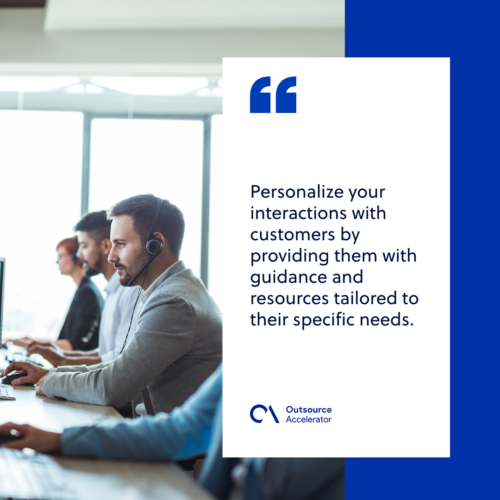
So make your chats personal with guidance and resources for each need. Plus, this gives you instant feedback from customers. It also helps ease common customer service challenges.
Why utilize call deflection?
Call deflection is about backing your agents, who do a hard job. So it gives them support while customers still get the service they want.
A good call deflection strategy can also lift satisfaction and streamline support. This is true when you use it well across the customer journey. As a result, it pairs neatly with contact center as a service setups.
Frequently asked questions
What does call deflection mean?
Call deflection means guiding a caller to another channel. For example, it may point them to chat, email, or a help page. So the issue gets solved without a live call.
Is call deflection good for customers?
Yes, when done well. Many customers prefer fast self-service over waiting on hold. As a result, they often get help sooner.
What tools help with call deflection?
Common tools include chatbots, live chat, IVR, and strong knowledge bases. So most firms use a mix that fits their needs.
Does call deflection cut costs?
Yes. Digital channels cost less than phone calls. So moving simple queries off the phone lowers your support spend.
How do I measure call deflection?
Track the share of queries solved without a live call. Also watch hold times and satisfaction scores. As a result, you can see if the plan works.
Key takeaways
- Call deflection routes simple queries away from phone lines.
- It gives customers fast help and frees agents for hard cases.
- Digital channels like chat and self-service cost less than calls.
- Speech analytics and knowledge bases make deflection work better.
- Track solved queries, hold times, and satisfaction to measure success.






 Independent





