
What is remote work?


What is remote work?
Remote work is a setup that lets an employee work outside a traditional office, from home or any location their role allows.
- It covers full-time, flexible, and freelance arrangements.
- Workers keep the same pay and benefits as in-house staff.
- Any role that can be done online can usually be done remotely.
Companies and workers around the world now use remote work every day. Some have run this setup for years. However, many still work out how to handle communication and virtual teamwork. Remote work can be a double-edged sword to businesses. Still, it can help them join a more digital, global market. So this article covers the basics of remote work, its types, and the roles that fit it.
Remote work is also known as telecommuting. In fact, remote employees can work in any location they choose, as long as their role allows it. In addition, more companies now offer remote work, whether for a set period or for good. For instance, Twitter gave staff the option to render work-from-home “forever”.
The National Football League showed similar flexibility. It drew 55 million views when the 2020 draft went ahead with the commissioner and coaches working from home and holding a virtual draft. As more firms test the model, many now study how to roll out remote work across their teams.
Remote work vs work from home
People often swap these two terms. Still, remote work and work from home (WFH) have different scopes. For example, WFH is one way to do remote work. Here, employees work from home with a home office and online tools on their laptops.
Remote work has a much wider scope than WFH. For example, employees can work from a different place, city, or country, not just their home. However, unlike a digital nomad, they may still have a preferred spot they go to for work.
Types of remote work
An employee can do remote work in a few ways. Depending on the deal, they can go fully remote, work flexibly, or work as a freelancer.
Fully remote
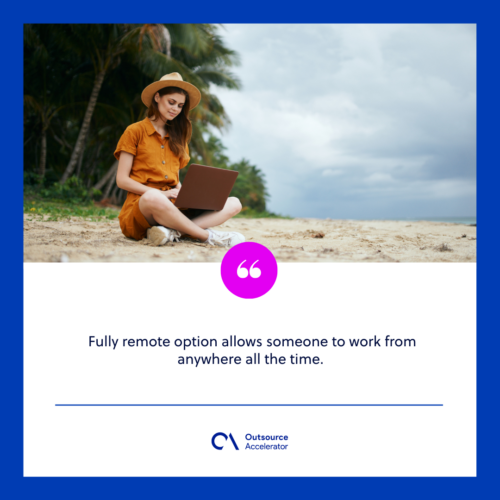
The fully remote option lets someone work from anywhere, all the time. These employees do not need to visit the office, since their role does not require it. As a result, they get full flexibility over location and schedule. Still, they keep the same pay and benefits as in-house staff.
Flexible work
Flexible work gives people some freedom over their schedule, location, or both. For example, they can work remotely for two days and go to the office for the rest of the week. In some cases, companies let staff work remotely most of the time. Then they only come in for meetings and team events. A clear remote work culture helps these mixed teams stay aligned.
Freelance work
Freelancers are a common type of remote worker. They take on short-term projects of all sizes for companies. Many take freelance work on top of a full-time or part-time job. So they can follow a passion, earn extra income, or build a side business.
Their way of working is not the usual office one, either. For example, freelancers find open projects on freelance websites with plenty of short- and long-term work.
Remote work benefits and disadvantages
Remote work helps both the worker and the employer. Still, both sides should weigh the setup and pick what suits them. This way, they can avoid the downsides that come with it.
For employees
Lifestyle flexibility
Many people choose remote work for the lifestyle it gives. They can work around their schedule, whether set hours or their own. In return, they get time for other activities that build their skills and passions. For example, they can take online courses, earn another degree, or learn a new skill.
Improved health and wellness
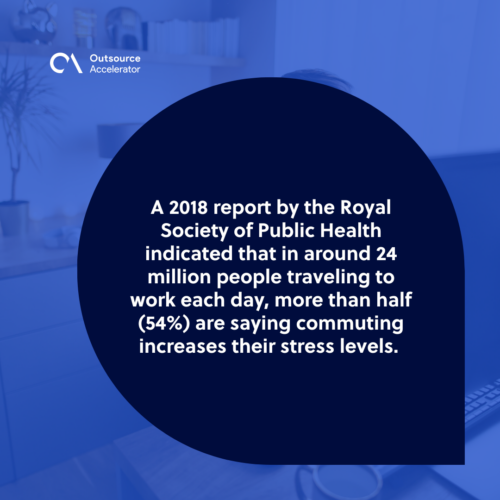
Remote work has long been seen as good for health and welfare. A 2018 report by the Royal Society of Public Health looked at around 24 million daily commuters. More than half (54%) said commuting raised their stress levels.
With remote work, people worry less about the trip to and from work. Instead, they can head to a nearby coffee shop or set up a home office and start right there.
A whole new passion at work
In addition, employees often find fresh motivation when they work remotely. This is because they face fewer added stressors. At the same time, they can build a better space to focus on the tasks ahead.
For employers
Cost savings
A whitepaper from Global Workplace Analytics shows the upside. US companies can save about US$11,000 per employee when staff work remotely for at least half the week. These savings come from productivity, office costs, absence, and turnover.
With remote work, companies need less office space and fewer on-site resources. As a result, they save on both office and labor costs.
Increased productivity
Employers can also see productivity rise with remote work. Some studies say an average worker is productive in an office setting for only three to four hours a day. Remote work can lift that figure, because staff often feel more motivated and focused.
Disadvantages in remote working
Not every role or worker fits remote work. So some people may face the challenges below, which can affect their output and drive.
- Security risks. Tasks with sensitive data need extra care, in case of leaks or breaches.
- Technology issues. Not all remote workers can supply and maintain their own gear. So tech problems can disrupt communication and teamwork.
- Maintaining focus. Remote work brings new distractions. For example, these include chores, social media, and streaming.
- Isolation. Over time, remote staff may feel cut off from their employers.
Top roles available for remote work
The rule of thumb is simple. If a job can be done online, it can usually be done remotely. In addition, thanks to many online tools, almost any task can be handled this way.
Some of the top remote roles include:
- Digital marketing
- Social media management
- Accounting
- Virtual assistant services
- Software development
- Customer service management
Many outsourcing firms and service providers offer remote work solutions for businesses. Before you decide, it helps to review the latest work-from-home statistics. It also helps to know the gap between a remote employee and a contractor. So, to protect efficiency, partner with a trusted firm, such as StaffWiz.
Frequently asked questions
What is the difference between remote work and work from home?
Work from home means you work from your house. Remote work is broader. For example, it lets you work from any city or country, not just your home.
What jobs work best for remote work?
Any role that runs online tends to fit. For example, digital marketing, accounting, software development, and customer service all work well. Virtual assistant roles are popular too.
Is remote work good for productivity?
Yes, for many teams. Workers often focus better with fewer office distractions. Still, clear goals and good tools matter a lot.
What are the main downsides of remote work?
The common ones are security risks, tech issues, and isolation. In addition, some people struggle to stay focused at home. So strong routines and support help.
How can companies save money with remote work?
They spend less on office space and on-site resources. As a result, they cut both office and labor costs. Many also see lower turnover.






 Independent






