
How an outsourced Philippines team is different


How is an outsourced Philippines team different?
An outsourced Philippines team is different because Filipino workers value clear structure, strong community, private feedback, and steady career growth over a flat, informal Western style.
- Filipino staff thrive with defined roles, clear rules, and visible team leaders.
- They build close bonds at work, so warmth and open communication matter.
- They dislike public criticism, so give feedback in private to keep morale high.
Business Process Outsourcing to the Philippines gives Western companies a rare chance. In short, you can tap a hardworking, skilled, and English-fluent workforce without the overhead of more in-house hires. As a result, an outsourced Philippines team can drive steady growth. It also frees your budget for more critical work.
However, like any strategy, outsourcing needs care. If you ignore certain factors, it can cost more than you expect. One key factor is the huge amount of cultural differences between the home company and a Filipino team. Only by learning these differences can a Western company truly gain from an offshore team in the Philippines.
This article aims to help. Below, we share tips to resolve those differences smoothly. By using them, you can boost the cohesion between your in-house staff and your outsourced team. To go further, you can also review these best practices for offshore teams.
First, though, we want to share one important piece of advice. The way you manage a Filipino team can differ a lot from how you manage in-house staff in the West. Even if you feel your way is “better,” forcing it without understanding Filipino work culture can cause problems. As a result, misunderstandings can make outsourcing a nightmare for you and your team.
It is unfair to force your Philippines team to adjust to a brand-new way of working, especially at the start of your contract. Instead, treat this as a chance to learn a fresh style of management. Relearn the basics, and apply them in a new way. This may seem hard and add some cost at first. Still, we guarantee the effort pays off over the long term.
Think of how the fast food giant McDonald’s adds local recipes and ingredients whenever it opens in a new part of the world. If it forced the same menu on everyone, it would alienate many customers. As a result, it would lose a lot of business. With that in mind, here are the tips Western owners should keep in mind with an outsourced team from the Philippines. It also helps to understand core Filipino traits and values before you begin.
Have strict company structures, role definitions, and processes for your Filipino team.
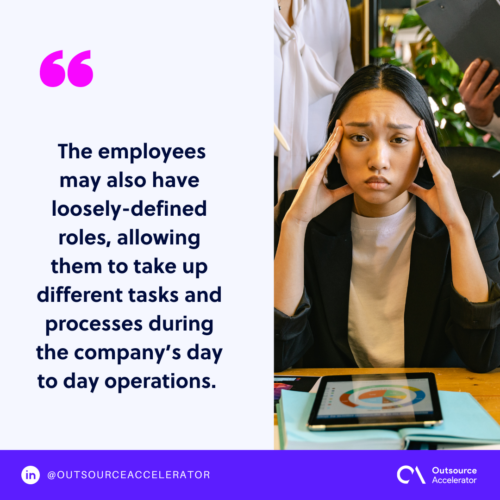
Many modern Western companies use flat or non-traditional structures. This is common in the startup IT sector. Their staff often have loose roles, so they can take on many tasks each day. This kind of approach to business management creates a versatile, agile workforce.
The modern Filipino employee usually does not thrive under these conditions, at least at the start. Instead of a loose, informal setup, they prefer clear managers, supervisors, and team leaders. In short, they want the structure of well-defined roles. They also want rules that are clearly written in manuals, HR codes, and other formal documents.
Why an outsourced Philippines team prefers clear structure
Why would a workforce want such a firm setup? The answer lies in the hardworking, focused nature of Filipino staff. For example, they want defined roles so they can devote all their energy to their assigned job. As a result, they study every material and lesson needed to do the work well. Loose roles clearly get in the way of that.
This focus on excellence also explains their wish for strict quality controls and direct supervisors. They want to be told clearly what to do to help the company reach its goals. In addition, they want to know how to fix any gaps in their work. Your Filipino workers also want someone to raise concerns and complaints to. So a flat hierarchy with no team leaders works against them here.
Some owners may see this need for structure as tedious or costly. Still, every company needs this kind of order once it grows. So this is simply doing it in advance. In short, you get ahead of the curve.
Foster a sense of community in the workplace.
Filipinos often form communities wherever they are. They build strong bonds with each other, even if all they share is the same workplace or role. In fact, coworkers often join a Filipino employee’s social circle, alongside friends and family. This differs from many Western offices, where coworkers stay more like acquaintances.
What Western owners should know is this. This community habit is not limited to fellow Filipinos. For example, a manager from the UK can easily earn the friendship of their Philippines team. They can do this through video calls, informal emails, phone calls, or on-site visits.
The same goes for your in-house staff. So open the lines of communication, and let both sides be genuine, social, and informal. As a result, bonds form quickly. This is where effective communication pays off most.
The benefits of this are huge. First, instructions are better understood once the team feels safe to ask questions. Next, misunderstandings and conflicts get resolved before they grow. Best of all, employee morale stays high, which is always vital to business success.
Don’t be afraid to lay out clear and proper demands and guidelines.
One pitfall of a Filipino workforce is that they can lean too much on their superiors’ instructions. Despite a very Westernized culture, many Filipinos are slow to make waves or take initiative unless told to. This trait starts young, and it shows in their schools and offices.
This does not mean they are lazy or prone to delay. Rather, they need encouragement to show initiative and use creative solutions. Otherwise, they will consult their superiors or follow the manual to solve issues. That is great if you want work done strictly by the book. However, it is not ideal if you want more initiative. If the latter is your goal, make sure they know they are allowed to act on their own.
Address or call out deficiencies in private. Never dress down your Filipino staff in public or in sight of their coworkers.
In the West, managers may be used to reprimanding staff in public. This may be accepted, or even encouraged, in a Western office. However, it must be avoided in the Philippines. Otherwise, the manager risks humiliating the employee to the point they may leave.
This is because public shaming is a serious taboo in Filipino culture. Much like the Japanese, Filipinos have a strong sense of public honor and an instinct to “save face.” So a public reprimand makes them lose face. As a result, they may feel the manager is attacking their character. This can badly hurt their morale and trust.
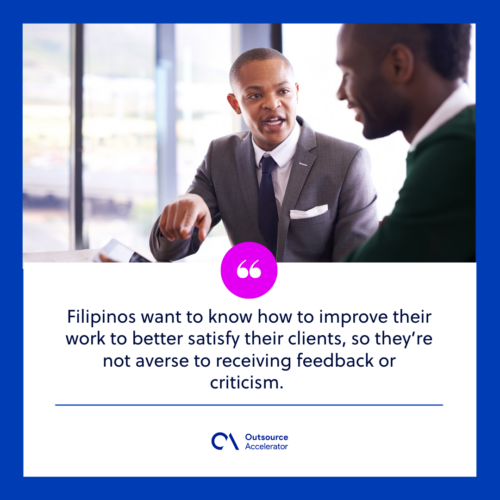
Avoid this by giving all criticism in private, no matter how constructive or harsh. As noted earlier, Filipinos want to know how to improve, so they welcome feedback. What they do not want is to be scolded in public. By respecting this, Western firms can secure the loyalty and strong work ethic of their outsourced Philippines team. In fact, Filipino staff link their own reputation to the company’s, so they work hard to avoid PR disasters.
Invest in their career development to keep them happy and loyal.
Filipino workers do not always chase promotions the moment they join. They will not doggedly pursue higher pay or bigger offices, though they welcome both. Rather, they value pay that arrives on time and covers their needs. So they will not fuss if they stay in the same role for a while, as long as the pay is prompt and reliable.
What, then, keeps them happy and loyal if new titles or raises are not on the table? The answer is training. For example, you can send them to conventions and seminars, or to programs that build new skills. This shows them the company is investing in their growth. In addition, they love the prestige of awards and bonuses for good work. Many common roles outsourced to the Philippines reward this kind of steady upskilling.
Either keep your Filipino workforce small or go big.
Remember how a Filipino team needs strict structure to prosper? You can skip much of that if you keep the team very small, like a 4- or 5-person group. It will be small enough that the usual concerns rarely crop up. As a result, members work well together and can come to you directly with issues.
Conversely, if you grow the team to at least 100 people, you still need those strict hierarchies and processes. However, the effort then pays for itself with ease. The goal is to make the added investment in structure, manuals, and HR worth the cost.
Doing this for a team under 100 members can waste money. In that case, you must hire even more staff just to manage them. A small team of 5 to 10 can take care of itself. Meanwhile, a 100-person workforce earns enough to cancel out the expense. To start finding the best remote Filipino hires, you can visit a platform like VirtualStaff.ph. It also helps to understand the wider Philippines BPO industry before you scale.
Frequently asked questions about an outsourced Philippines team
Why do Filipino teams prefer clear structure?
Filipino staff are focused and hardworking. As a result, they want defined roles so they can master their job. In short, clear rules and leaders help them do their best work.
How should you give feedback to a Philippines team?
Always give criticism in private. Public shaming is a serious taboo in Filipino culture. So a quiet, respectful chat keeps morale and trust high.
What keeps an outsourced Philippines team loyal?
Training and steady growth matter most. For example, seminars, new skills, awards, and bonuses show you value your staff. In addition, prompt and reliable pay builds trust.
How big should a Filipino outsourced team be?
Keep it very small or go large. A team of 5 to 10 can manage itself. Meanwhile, a team of 100 or more earns enough to justify the added structure.
Where can you hire a Filipino team?
You can use dedicated platforms and providers. For example, VirtualStaff.ph helps you find remote Filipino hires. You can also hire a Filipino virtual assistant to start small.
Key takeaways
- An outsourced Philippines team values clear roles, rules, and visible leaders.
- Build community and open communication to earn trust and lift morale.
- Give feedback in private, since public shaming is a strong cultural taboo.
- Invest in training and steady growth to keep Filipino staff happy and loyal.
- Keep the team very small or scale past 100 to make structure pay off.
Conclusion
Cultural differences exist, and there is no getting around that fact. If you downplay or ignore them, you can cause serious problems, especially with offshore teams. However, you can also address these differences with simple common sense. As a result, a business owner can turn them into an advantage. In the end, that effort improves both operations and the bottom line.






 Independent





