
Hubstaff’s guide to a distributed workforce: Myths, trends, and strategies


The world of work has changed. Today, the clear shift is toward a distributed workforce. Yet some leaders still fight this trend. They believe staff must sit in an office to do good work. This belief simply refuses to fade.
In response, Hubstaff wrote a report, The Workstyle Revolution. It shares real experiences and survey data. The finding is clear. Execution, not the remote model itself, may be the true cause of low productivity. This article looks at Hubstaff’s findings and advice for managing a distributed workforce.
What is a distributed workforce?
A distributed workforce is a team spread across different locations, where people work remotely from various regions instead of one central office.
- Staff work from home, coworking spaces, or other remote spots.
- They stay connected through digital tools and communication apps.
- The model lets firms hire talent from almost anywhere.
In short, a distributed workforce often works remotely across many geographic regions. Many experts now see this model as the future of work. In fact, it is set to grow fast. For example, global digital jobs are expected to top 90 million roles by 2030.
For its part, Hubstaff backs the distributed workforce model. According to CEO Jared Brown, “Productivity isn’t about where your team sits; it’s about creating systems that empower them to thrive.”
Effect of workstyles on a distributed workforce
Perhaps the bigger question is not where people work. Instead, it is how they work. In a distributed workforce, diverse workstyles shape collaboration, output, and team dynamics. So the best practice is to see how tools, systems, and cultures affect the result.
In the end, it all comes down to leadership. This workstyle revolution gives leaders a chance to change things for the better.
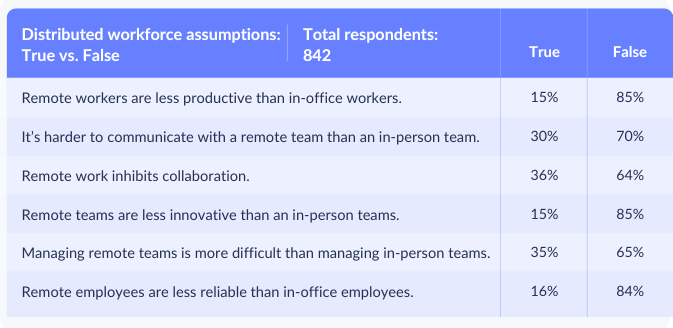
Distributed workforce performance: Myths vs reality
From its survey of 842 respondents, Hubstaff found these results:
- 85% disagreed that remote workers are less productive.
- 70% disagreed that it’s harder to communicate with remote teams.
- 64% disagreed that remote work was an obstacle to collaboration and effective teamwork.
- 85% disagreed that remote work stifled innovation.
- 65% found it less difficult to manage remote teams than in-house, onsite teams.
- 84% disagreed that outsourcing produced low-quality work.
In addition, those who used remote monitoring tools like Hubstaff were even less likely to believe the myths. So it becomes clear. This is about fixing processes, not seat placement. These findings also line up with wider workplace productivity benchmarks.
5 key trends in workforce transformation
The modern workforce keeps changing fast. As a result, firms now see five key trends reshaping distributed workforce dynamics.
1. Generative AI adoption
Generative AI has changed the workplace. It automates content creation, data analysis, and customer chats. So companies that use AI-driven tools set the stage for more innovation. As the tech grows, firms must invest in upskilling to keep their workforce sharp.
2. Intentional leadership
New workstyle models also call for new leadership styles and behaviors. Hubstaff’s playbook stresses inclusivity, adaptability, and precision hiring. In addition, clear communication, empathy, and data-driven choices are key to managing distributed teams. As a result, firms that lead with intention see better morale and output.
3. Global team dynamics
With distributed workforces, companies hire talent from across the globe. This expanded talent pool brings diverse, multicultural teams. So members share fresh views and ideas. This drives innovation. Still, it asks firms to embrace flexible policies, cross-cultural tools, and local management. For many leaders, the benefits of virtual teams make this effort worthwhile.
4. Increased automation and AI integration
Companies want to use AI to make jobs easier. Automation can handle the repetition and tedium. So staff can focus on high-value work. AI-powered tools also improve resource use and cut manual admin. As a result, a firm that embraces automation gains an edge in its workflows.
5. Hybrid work models
Torn between the office and remote work? Hybrid models offer the best of both worlds for your distributed workforce. Naturally, there are things to plan. For example, how many days a week should staff come onsite? Should you set specific days or let people choose?
Studies show that two or three in-office days strike a good balance. These days should also include activities that build team cohesion. On the other hand, giving employees the choice boosts job satisfaction, autonomy, and work-life balance. For ideas, look at companies with a hybrid work model. Whatever you decide, keep a clear yet flexible strategy in place.
According to Hubstaff, “The secret to productivity isn’t where you work, it’s how you work.”
5 ways to manage distributed workforces better
Hubstaff recommends these five strategies to manage your distributed workforce. Together, they help you manage a remote team with more confidence.
1. Redefine productivity
In a distributed workforce, productivity is not about hours worked. Instead, it is about outcomes achieved. So leaders should shift their focus. Move from watching screen time to measuring key performance indicators (KPIs) and results. Clear expectations help. So do time-tracking tools like Hubstaff, which keep staff on track.
2. Master asynchronous communication
Real-time chat sounds good. Still, it is not always an option. Asynchronous communication lets staff across time zones work well without live meetings. So encourage documentation, project management tools, and recorded updates. As a result, workflows keep moving and misunderstandings drop.
3. Foster innovation and creativity
Creativity in a remote setting takes intentional effort. So leaders can foster innovation through these actions:
- Creating virtual brainstorming sessions
- Leveraging collaboration tools
- Giving staff the autonomy to experiment and develop new ideas
In the end, a strong culture of trust empowers staff to think outside the box.
4. Streamline meetings
Too many meetings can hurt productivity, especially for distributed teams. In fact, it is estimated that inefficient meetings cost employers an average of $29,000 a year. So consider a “meetings with a purpose” approach. This means fewer calls, clear agendas, and more async updates.
5. Build agility in leadership
Leaders of a distributed workforce must be adaptable and open to change. They also need strong remote management skills. Agile leadership means reviewing goals often and staying responsive to team needs. So it helps to use workforce analytics to optimize performance. In addition, leadership training and smart tools can improve decisions in remote settings.

Hubstaff’s solutions for a distributed workforce
Do you need a partner to help manage your distributed workforce? If so, look no further than Hubstaff. Hubstaff is committed to helping businesses thrive in the distributed work revolution. Its platform offers a suite of workforce management tools. So you can streamline operations, boost productivity, and keep remote teams on track.
You can enjoy these advantages from Hubstaff:
- A new level of productivity: Hubstaff provides tools for efficient time tracking, activity monitoring, and performance analysis, giving you insights so you can identify ways to improve.
- Seamless automation: Hubstaff automates various workforce management tasks, minimizing input and speeding up operations.
- Global payroll solutions: Managing payroll for a distributed workforce is complex, but Hubstaff ensures timely and accurate disbursement.
- Simplified workforce management: The Hubstaff platform offers a unified dashboard for all the tools you need to align and scale your distributed workforce team.
- Data-driven decisions: Hubstaff empowers businesses through its data, allowing them to make informed decisions and plans.
Hubstaff aims to build a culture where distributed workforces soar, no matter their location. So with Hubstaff’s unique tools, you are set for a bright future in this new era of remote work.
Frequently asked questions about a distributed workforce
What is the difference between a distributed workforce and a remote team?
The two overlap, but they are not the same. A remote team works away from the office. A distributed workforce is spread across many regions or time zones. So every distributed team is remote, yet not every remote team is widely distributed.
Are distributed workforces less productive?
No, the data says otherwise. In Hubstaff’s survey, 85% disagreed that remote workers are less productive. The key is good process and clear goals, not where people sit.
How do you manage a distributed workforce well?
Focus on outcomes, not hours. Use async communication and clear KPIs. In addition, keep meetings short and lead with trust. Time-tracking and analytics tools help you stay on top of performance.
What tools does a distributed workforce need?
Teams need communication, project management, and time-tracking tools. Many also use workforce analytics and automation. Together, these keep a spread-out team aligned and efficient.
Is a hybrid model good for a distributed workforce?
It can be. Studies show two or three in-office days strike a good balance. Still, giving staff some choice often boosts satisfaction. So the best setup fits your team and goals.






 Independent






