
10-step guide to a delightful customer service strategy


This article is a submission by JindalX. JindalX is an outsourcing company that delivers exceptional customer experience solutions in multiple indigenous and foreign languages for businesses worldwide.
What is a customer service strategy and why does it matter?
A customer service strategy is a clear plan for how your team treats customers at every touchpoint, and it drives loyalty, repeat business, and word-of-mouth growth.
- It sets one standard, so every customer gets the same care.
- It guides your team on tools, tone, and how to fix problems fast.
- It turns each contact into a chance to build trust.
Customer service is the lifeblood that keeps your business healthy. Each interaction is a moment to make a strong impression. So a good customer service strategy is not just a checklist. Instead, it acts as a compass that guides every step with your clients. Read on for the ten steps that help you build one.
Why establish a good customer service strategy
Building a customer service strategy can feel hard at first. However, it opens the door to growth and lasting relationships. It helps you set a clear vision and use new tools to run smoother operations.
A strong plan also shows you how to give each client your best service. As a result, you can personalize support and create a space where your team feels free to make good calls. Overall, it sets a new standard that keeps customers happy and coming back. In short, it builds a customer-centric experience that feels rewarding.
10 steps to a delightful customer service strategy
These ten steps come packed with practical tips and clear examples. Together, they help you shape a plan that transforms how you serve customers.
Develop a clear customer service vision.
Your vision sets the destination for the whole journey. First, write a short, clear vision statement that sums up the service you want to give.
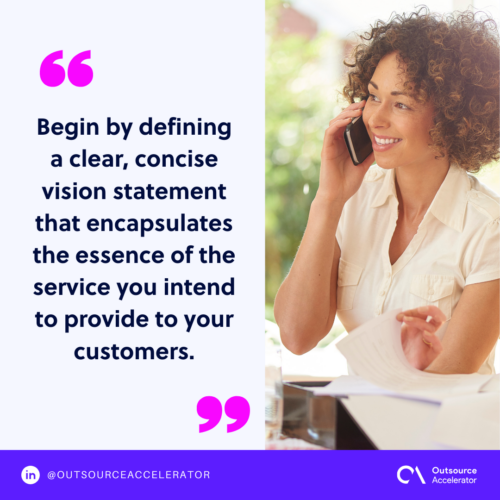
Your vision statement guides the entire plan. So here is what it should include:
- Be specific: Avoid vague words. Instead, spell out the service you want to give and the impact you aim to create.
- Include action-oriented language: Use words that show action and commitment. A good vision pushes your team to chase it every day.
- Reflect your brand’s value: Your vision should match your core values. As a result, your service and brand stay consistent.
A well-made vision statement inspires your team. In addition, it sets the tone for the rest of your customer service strategy.
Understand your customers
Next, dig deep into what your customers need, like, and struggle with. To serve them well, you must see things from their side. Here are some ways to learn more about them:
- Surveys: Use customer surveys to gather feedback. Ask clear questions about their likes, dislikes, and hopes.
- Personal interviews: Talk one-on-one with a few customers for deeper insight.
- Focus groups: Run group chats to spark open talk and shared views.
- Online reviews: Read reviews on Yelp, Google, or social media to spot common themes.
- Social media interactions: Engage on social channels to learn real-time concerns.
Remember, this is not a one-time task. Instead, it is an ongoing habit. The more you know, the better you can tailor your service to fit real needs.
Train your staff
Your strategy is only as strong as your team’s skill in running it. So hold regular training on your vision, your rules, and tricky customer cases. Make it ongoing, so your team stays sharp. Good training also builds the customer service skills every agent needs to handle any request with ease.
Communicate expectations
Clear communication of each person’s role is a must. When expectations are clear, great service becomes easier to reach. Here is how to share them well:
- Regular team meetings: Meet often to review goals, share best practices, and solve issues.
- Performance appraisals: Use reviews to show how well each person meets service goals.
- Email updates: Send updates about guidelines, changes, or new plans.
- Individual discussions: Talk one-on-one to hear concerns and give personal guidance.
As a result, everyone works toward the same goal in a team-first setting.
Establish strong communication channels.
Make it easy for customers to reach you. So aim for an omnichannel approach across email, phone, social media, and live chat. Good communication solves problems fast. In addition, it lifts the whole customer experience.
Embrace technology
Use technology to handle repeat tasks and speed up replies. For example, CRM systems, AI chatbots, and real-time analytics all help. These tools streamline your work and cut wait times. Still, set them up with care, so they help rather than frustrate. Following proven chatbot best practices keeps automated support useful and human.

Personalize your service
Today’s customers value service that feels made for them. So use what you know, plus your tools, to tailor each contact. For example, greet people by name or suggest products based on past buys. Personalized service shows customers you value them as people, not just as sales.
Implement feedback mechanisms
Ask customers to share feedback, then act on it. This keeps your strategy fresh and useful. Here are simple ways to gather it:
- Customer surveys after each contact
- Suggestion boxes in-store or on your website
- Online review monitoring and replies
- Social media feedback and engagement
As a result, listening and adjusting shows you care about getting better. Tracking how customer satisfaction shapes business success makes that progress easy to see.
Empower your team
Give your team room to make some calls on the spot. This speeds things up and shows customers you respect their time. So set clear rules for problem-solving. Then let staff fix issues fast.
Measure your success
Set key metrics to check how well your plan works. In this way, you can track progress and make smart, data-led choices. Handy Key performance indicators (KPIs) for customer service include:
- Customer satisfaction score (CSAT). This shows how happy a customer is with your service.
- Net promoter score (NPS). This shows how likely customers are to recommend you.
- Customer effort score (CES). This measures how easy it is to work with you.
The right customer service tools make these numbers simple to gather and read.
Crafting a successful customer service strategy
With these ten steps, you have paved the way to a delightful customer service strategy. Still, this work takes ongoing care. These parts, plus a steady feedback loop, keep you in tune with changing needs.
When you empower your team and track key metrics, you can adapt and improve over time. It also helps to watch broader customer service outsourcing trends, so your plan stays current. Remember, the path to great service is full of room to grow.
So start building your customer-centric plan today with the most experienced team in this market for nearly three decades: JindalX.
Frequently asked questions about customer service strategy
What is the first step in building a customer service strategy?
Start with a clear vision statement. It sets the tone and gives your team one goal to chase. From there, you can add training, tools, and metrics that support that vision.
How often should I update my customer service strategy?
Review it at least once or twice a year. Customer needs shift, and new tools appear often. A regular check keeps your plan fresh and your team ready.
Which metrics matter most for customer service?
CSAT, NPS, and CES give a strong picture. Together, they show how happy, loyal, and comfortable your customers feel. Track them over time to spot trends early.
Can small businesses use these steps too?
Yes. Each step scales to any size. A small team can start with a simple vision, one or two channels, and basic feedback, then grow from there.
How does outsourcing fit into a customer service strategy?
A skilled partner can handle support across many channels and languages. As a result, you get round-the-clock care without a large in-house team. This helps you scale service while keeping quality high.






 Independent






