
Elevating customer interactions with call calibration


What is call calibration, and why does it matter?
Call calibration is a structured process where a group of evaluators align their scoring of recorded customer calls, so every agent is judged by the same fair standard.
- It creates one shared, consistent way to score calls.
- It reduces bias and makes feedback more accurate.
- It leads to better coaching and a stronger customer experience.
Call calibration is key for any business that relies on phone support. Great service over the phone builds trust. So this process helps call centers score calls the same way, spot weak areas, and coach agents. This guide shares clear steps and tips to improve your call quality.
What is call calibration?
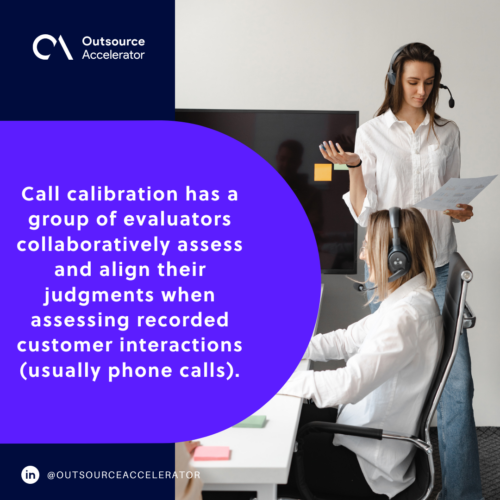
Call calibration has a group of evaluators assess and align their judgments on recorded customer calls. It is a structured process used in service and sales teams. The goal is a shared, consistent way to score calls against set criteria. So it brings together experienced agents, supervisors, and quality assurance staff. As a result, call calibration can:
- Reduce subjectivity and bias
- Improve evaluation accuracy
- Give clear, actionable feedback for steady improvement
Call calibration vs. Call monitoring
Call calibration and call monitoring serve different goals in service and sales. Still, both help improve customer interactions and agent performance. So the table below shows how they differ.
| Call calibration | Call monitoring | |
| Focus and purpose | Focuses on achieving consensus on evaluating customer interactions | Focuses on evaluating agent performance |
| Collaboration/supervision | Collaborative effort among evaluators | Handled by supervisors or quality assurance teams |
| Evaluation criteria | Evaluators collectively agree on predefined criteria | Supervisors focus on adherence to company policies, script usage, and other performance-related criteria |
| Feedback and improvement | Generates insights used to align evaluations | Generates insights for agent coaching and training |
| Frequency | Conducted on a scheduled basis, like monthly or quarterly | An ongoing process, conducted in real-time |
| Impact on agents | Ensures evaluators have a common understanding | Provides individual feedback |
To track the numbers behind both, many teams also watch key call center metrics each month.
Steps of the call calibration process
The call calibration process is a clear, step-by-step approach. It keeps scoring consistent and accurate. So it usually involves the following stages.
Identifying participants
First, pick the people who will join the calibration sessions. They should know your service and sales standards well. They should also give useful, honest feedback.
Preparation
Next, gather a sample of recorded calls. These should cover many scenarios and customer types. Also, anonymize the samples to keep things fair. Then prepare clear guidelines and score sheets to guide each evaluator.
Conducting the calibration session
This step is the heart of the process. First, introduce the purpose and goals to the group. Also, stress why consistent scoring matters for customers and results. So this part includes these stages:
- Playing recorded calls – Each call is played and scored against set criteria. Criteria include professionalism, accuracy, empathy, and script adherence.
- Scoring and discussion – After each call, evaluators share scores and feedback. Then they compare notes and find points of agreement or difference.
- Addressing discrepancies – When opinions differ, the group talks it through. This dialogue aims to reach consensus and better alignment.
Evaluating results and providing feedback
Next, the group compiles and reviews all scores and notes. So they spot common trends, strengths, and weak areas. They also flag strong calls and calls that need work. These insights then guide targeted coaching and training. Good calibration also lifts key outcomes like first call resolution.
Implementing actionable improvements
Now managers use the feedback to coach agents. So they target training to close skill gaps. They also share strong examples with the whole team. As a result, agents adopt proven techniques. Structured call center coaching makes this step stick.
Ongoing calibration and feedback loop
Finally, run calibration sessions on a regular schedule. This keeps scoring consistent over time. Also, refine your criteria as needs change. The industry moves fast, so guidelines must keep up with trends and feedback.
Best practices for effective call calibration
Good practices keep your calls consistent and high quality. So here are some tips for accurate, useful call calibration.
Establish clear calibration guidelines
First, set clear rules for what a good call looks like. Strong guidelines are the base of good calibration. They spell out the exact criteria evaluators use. So include factors like:
- Tone of voice
- Accuracy of information
- Empathy
- Adherence to scripts
- Problem-solving skills
These factors should all be part of your process. As a result, every team member shares the same expectations.
Include diverse participants
The more diverse the group, the better. Diverse teams spot customer needs that one person may miss. So include experienced agents, supervisors, and other departments. A broad range of views reduces bias and lifts quality. A mix of tenured and newer agents also keeps standards fair.
Regularly review and update criteria
Your criteria should not stay static. So review and update them often. Align them with new customer needs, goals, and trends. The same goes for changes in your pricing and policies. Flexible criteria keep the process relevant. As a result, you get more accurate scores and better feedback.
Encourage open dialogue
Foster open dialogue during your sessions. So encourage people to share views and ask questions. Make sure everyone gets a chance to speak. When evaluators share openly, it is easier to spot agreement or difference. As a result, you build better consensus and accuracy.
Provide targeted training and coaching
Use your calibration insights to build targeted training. So design modules that sharpen specific skills. Train all agents the same way to keep quality consistent. Managers should also coach agents during and after each session. Some teams add call center quality assurance software to track progress over time.
Frequently asked questions about call calibration
What is the purpose of call calibration?
The purpose is to align how evaluators score calls. So every agent is judged by the same fair standard. As a result, feedback becomes consistent and useful.
How often should you run call calibration sessions?
Most teams run them monthly or quarterly. The right pace depends on your call volume and goals. Still, a regular schedule keeps scoring consistent over time.
Who should join a call calibration session?
Invite experienced agents, supervisors, and quality assurance staff. You can also add people from other departments. A diverse group reduces bias and lifts quality.
What is the difference between call calibration and call monitoring?
Call calibration aligns how evaluators score calls. Call monitoring checks each agent’s performance. So calibration builds consensus, while monitoring gives individual feedback.
How does call calibration improve customer service?
It gives agents clear, consistent feedback. So they learn the same proven techniques. As a result, service quality and customer satisfaction both improve.
Key takeaways
- Call calibration aligns how evaluators score customer calls.
- It reduces bias and makes feedback fair and consistent.
- Clear guidelines and diverse participants improve accuracy.
- Regular sessions keep scoring in step with changing needs.
- Better calibration leads to stronger coaching and happier customers.






 Independent





