
Here’s everything you need to learn about work-life integration


What is work-life integration?
Work-life integration is a flexible approach that blends work and personal life into one connected experience, instead of splitting them into fixed, separate blocks.
- It lets people choose the best time to handle both work tasks and personal needs.
- It focuses on outcomes and well-being, not just clocked hours.
- It helps reduce burnout, lift morale, and keep good staff on board.
Work-life integration is now one of the most important topics at work. More and more, people see it as a key driver of employee success and output. Because of this, many firms roll out new policies to support health and well-being.
Employees who can plan their own schedules tend to feel more fulfilled. As a result, they enjoy more balance across every part of their lives. Still, that balance is not always easy to reach.
However, in today’s world of remote work, a clean split can be hard to hold. For example, staff may feel tempted to check social media during work hours. So firms need clear programs that help people stay focused while they manage personal matters. A strong culture for distributed teams makes those habits much easier to keep.
Defining work-life integration
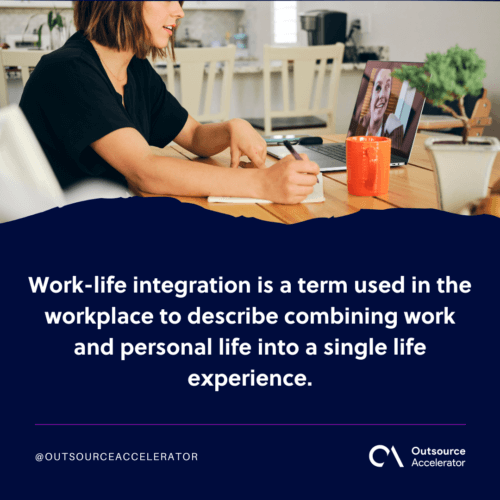
Work-life integration is a workplace term. It describes how we combine work and personal life into one shared experience. In short, the two parts support each other rather than compete.
This approach lets people meet personal duties while they keep strong ties with coworkers and customers. As a result, work feels less like a separate box and more like part of daily life.
Work-life integration vs. work-life balance
Work-life integration and work-life balance both deal with home and work. Still, they do not mean the same thing.
Work-life integration is how we nurture our work, personal, and social lives at once. So a person keeps blending work with the rest of life over time. They worry less about what counts as work time and what counts as personal time. Instead, they focus on the best moment to do each task.
Work-life integration also covers the changes a person makes to their schedule and work ethic. The goal is a better overall life. Some people take this idea even further, and you can read how blended schedules reshape the workday in more detail.
In work-life balance, a person gives clear priority to both job and personal duties. In contrast to integration, fixed work hours set a firm line between work and home life. Because of this, balance leans on boundaries, while integration leans on flexibility.
However, it is worth noting that both methods are valid. Each one helps people manage personal and professional commitments. As a result, firms that support both find it easier to recruit new workers.
Benefits of work-life integration
The more time a person spends working, the less time they have to enjoy life. Over time, that gap can lead to job burnout. So a healthier blend protects both output and morale.
Of course, people work hard for financial freedom and recognition. Yet work-life integration brings other clear benefits too.
Work-life integration can:
- Align personal and professional goals
- Reduce burnout and multitasking
- Improve working relationships
- Increase employee morale
In addition, it helps people stay creative and spot new ways to improve their lives. Many firms pair it with wellness programs that lift daily energy for even better results.
Five essential tips for a rewarding work-life integration
It is not easy to juggle work and personal goals. Still, a few simple tips can help you build a rewarding work-life integration.
1. Be self-conscious
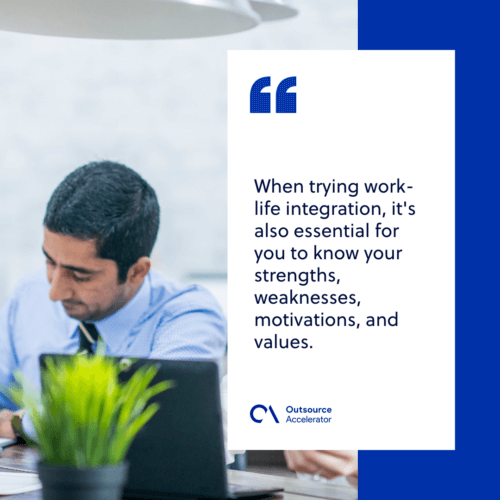
First, it helps to be self-aware. This means you watch yourself often to observe your behavior, habits, and thoughts. As you try work-life integration, get to know your strengths, weaknesses, drives, and values. Remember, you are not a machine. You are a person with goals, and you do not need to manage things 24/7.
2. Measure your productivity
Many people fail at work-life integration for one reason. They do not measure productivity. So you need to know how effective you are at work. Then you can make the changes that help you get more done. If you struggle, find the real cause and look for a fix. Do not just blame everything else.
3. Take short breaks
Short breaks can keep you productive. They also boost focus and lower stress. During a break, do something fun or useful. As a result, you gain a fresh view and make better choices at work and at home.
4. Make better use of technology
In a busy world, you cannot afford to lose output. With today’s tools at your fingertips, you can reach a better work-life integration. For example, the right apps can lift your output and make success easier in both work and personal life. Many teams rely on tools that keep people connected and motivated to make this work.
5. Develop a flexible routine
Learn to adapt your routine, and you can blend work and life much faster. A rigid routine often leads to stress and burnout instead. So a flexible one can bring better job performance and higher job satisfaction. It can also improve staff retention and recruitment. To go further, some firms adopt flexible hours that raise productivity across the whole team.
Encourage the organization to support work-life integration
Work-life integration can become a core part of your work culture. In fact, offering chances to blend work and life is a great way to attract top talent. It also strengthens staff retention.
When a company builds these policies, leaders can set the example. So they show that it is worth blending work with family and personal time. Good training on managing time well gives teams the skills to make that blend stick.
Now is the time to find a way for your organization to support work-life integration. So learn what you can do, and start building inclusive programs today.
Frequently asked questions
Is work-life integration better than work-life balance?
Neither one is best for everyone. Balance suits people who want firm lines between work and home. Integration suits people who prefer flexible hours and blended days. So the right choice depends on your role, your goals, and your personal style.
Does work-life integration mean working all the time?
No. Integration is about choosing when to work, not working more. The goal is to fit tasks around your life in a healthy way. As a result, you can rest, recharge, and still hit your targets.
How can remote workers protect their personal time?
Simple habits help a lot. Set clear start and stop points, and take real breaks. Turn off work alerts after hours when you can. These steps keep work from spilling into every part of the day.
What can managers do to support work-life integration?
Managers can lead by example and respect personal time. They can also offer flexible hours and clear goals. In addition, they can give staff the right tools and trust them to plan their own days.
Can work-life integration reduce burnout?
Yes, when it is done well. A flexible, blended schedule lets people rest before stress builds up. So they stay more focused, more engaged, and less likely to burn out over time.






 Independent





