
Breaking down the stages of the talent lifecycle


What are the stages of the talent lifecycle?
The talent lifecycle has five stages: talent acquisition, onboarding, performance and development, retention and succession, and offboarding.
- It maps the full journey of an employee, from hire to exit.
- Managing it well lifts productivity and cuts turnover.
- Each stage needs its own tools and clear steps.
To build a strong team, you must understand and manage the talent lifecycle well. So every stage counts, from attracting top talent to saying a positive goodbye.
Let’s dive into what the talent lifecycle means, why it matters, and the stages involved. We will also share best practices for managing each employee’s journey.
What is the talent lifecycle?
The talent lifecycle is the journey employees take within a company, from the day they join to the day they leave. So it covers the whole span of their time with you.
It includes the ways you attract, develop, and retain high performers. As a result, it shapes how skilled your workforce stays over time.
By improving each stage of the employee lifecycle, companies keep talent flowing smoothly through their teams. So the whole system runs with less friction.
Importance of the talent lifecycle
Managing the talent lifecycle well matters for many reasons. So let’s break the benefits into specific areas.
Amped-up productivity
When you understand each stage and make it run smoother, talent flows through your teams like a well-oiled machine. As a result, people get better at their jobs. They gain support and growth at every step.
Satisfied employees
A smart strategy cares for people at every point in their career. So this leads to higher job satisfaction, more engagement, and a positive workplace.
A Gallup report showed how the most successful organizations focus on employee engagement in their strategies. As a result, workers with clear expectations and real support do their best work.
Less employee turnover
The talent lifecycle is about keeping people growing and sticking around. So they tend to stay more loyal and leave less often.
By focusing on retention, companies save a lot on hiring and training. For example, teams that study their employee retention problems can fix them before staff walk out.
Snag top talent
A solid talent acquisition process attracts the right people with the right skills. So you fill roles with better candidates.
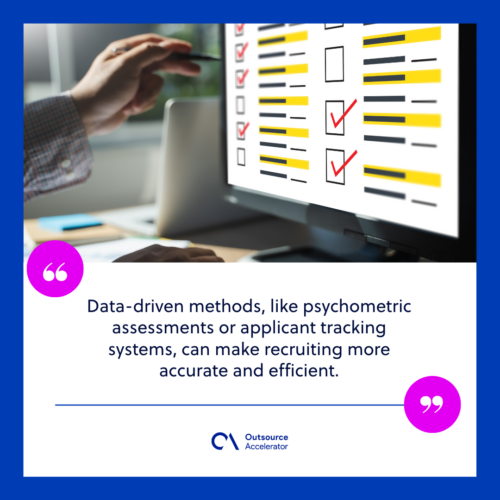
Data-driven methods make recruiting more accurate. For example, psychometric tests and applicant tracking systems speed up the search.
Positive impact on the bottom line
In the end, managing the talent pipeline well can boost the bottom line. So the payoff is real.
By attracting, nurturing, and keeping top performers, companies can:
- Improve productivity
- Cut costs tied to turnover
- Stay ahead of the competition
Development of future leaders
Forbes stressed the value of aligning learning programs to business goals and upskilling employees. So both efforts now top the agenda for learning and development teams.
Linda Jingfang Cai, LinkedIn’s VP of Talent Development, noted this shift in the piece. So by nurturing talent along the way, companies can spot and grow the leaders of tomorrow. As a result, the business stays steady and strong for the long haul.
5 stages of the talent lifecycle
Strategic talent management is about building helpful processes and policies for your team. So think about how each person will feel about the rules and tools you set up.
With that in mind, let’s dive into the five stages of the employee lifecycle.
1. Talent acquisition
This stage covers sourcing, attracting, and selecting candidates for open roles. First, you define job roles and requirements. Next, you post listings, run interviews, and make hiring choices.
Technology can streamline this work. For example, applicant tracking systems and social media platforms help you find the best people fast. In addition, these best practices in talent acquisition keep the process sharp.
2. Onboarding and orientation
Once you hire someone, the onboarding stage begins. This phase sets new staff up for success. So it introduces them to your culture, values, policies, and steps.
Good onboarding helps new hires feel welcome and ready. As a result, they can perform well from day one. For example, structured onboarding programs give them the tools and knowledge they need.
3. Performance management and employee development
Performance management involves:
- Setting expectations
- Providing feedback
- Evaluating performance
- Finding chances to improve
Development efforts also matter. For example, training, coaching, and mentoring help staff grow their skills and knowledge. As a result, they advance in their careers. Many teams run these steps through performance management systems.
4. Employee retention and succession planning
Retention keeps your workforce stable and engaged. So companies can build it by:
- Offering competitive pay and benefits
- Creating a positive work environment
- Providing chances for career growth
- Recognizing and rewarding contributions
Meanwhile, succession planning finds and grows internal talent for key roles later. As a result, it keeps the business steady.
According to Harvard Business Review, poor succession planning can cost dearly. The report found that badly-handled CEO and C-suite changes in the S&P 1500 cost nearly $1 trillion annually.
5. Offboarding and outreach
Offboarding happens when an employee leaves. So it can follow a resignation, retirement, or termination.
At this phase, it helps to:
- Run exit interviews to gather feedback
- Hold knowledge transfer sessions to document key information
- Ease the transition for the leaver and their colleagues
Staying in touch with former staff can pay off later. For example, alumni networks and outreach can bring value down the road.
Talent lifecycle management best practices
To manage the talent lifecycle well, try the following best practices.
1. Develop a comprehensive talent strategy. Align your practices with your company’s goals. So your efforts stay clear and effective.
2. Invest in technology. Use HR software and automation tools to streamline the work. As a result, your data gets cleaner and your choices sharper.
3. Promote a culture of continuous learning. Encourage staff to keep learning and growing. So they stay relevant and adaptable. In addition, upskilling and reskilling keep skills current.
4. Prioritize employee well-being. Support well-being through flexible work, wellness programs, and work-life balance. As a result, staff feel cared for.
5. Foster open communication. Build channels for regular feedback and dialogue. So you grow a culture of trust and engagement.
6. Embrace diversity and inclusion. Create an environment that champions diversity and inclusivity. So every team member feels valued and empowered to contribute.
7. Stay agile and adaptable. Stay flexible as markets, tools, and workforce needs change. As a result, you keep a competitive edge.
Elevate your talent lifecycle strategy
By embracing the talent lifecycle, you can improve your HR practices. So you support the steady growth and success of your workforce. You can also enlist a firm like Booth & Partners to enhance your recruitment efforts.
As a result, companies gain a competitive edge. They attract, develop, and retain high performers. So it helps to reassess and improve your talent lifecycle strategy often. In addition, this keeps you aligned with changing market trends and the needs of your people.
Frequently asked questions
What is the talent lifecycle in HR?
It is the full journey an employee takes with a company. So it runs from talent acquisition through onboarding, development, retention, and offboarding.
Why is the talent lifecycle important?
It lifts productivity, raises job satisfaction, and cuts turnover. As a result, it protects both talent and the bottom line.
How many stages does the talent lifecycle have?
It has five stages. These are acquisition, onboarding, performance and development, retention and succession, and offboarding.
How can technology improve the talent lifecycle?
Tools like HR software and applicant tracking systems streamline each stage. So your data stays clean and your decisions get faster.
Key takeaways
- The talent lifecycle covers an employee’s full journey in five stages.
- Managing it well boosts productivity and cuts turnover costs.
- Each stage, from hiring to exit, needs its own clear steps and tools.
- Retention and succession planning protect both talent and revenue.
- Reassess your strategy often to keep pace with market trends.






 Independent





