
Scrum master vs project manager: An overview


Scrum master vs. project manager: what is the difference?
A scrum master coaches an agile team to follow scrum rules, while a project manager plans, budgets, and leads a project of any type to completion.
- Scrum masters work only on scrum teams, mostly in IT and related fields.
- Project managers can lead any project in any industry.
- Their duties overlap, so one person can fill both roles at different times.
There are many terms for what is really a leadership role. There are also many forms a leadership role can take.
When you manage teams for complex work, you want the right person for the job. Often, that person is either a scrum master or a project manager.
At a glance, these two roles seem almost identical. In fact, many of their daily duties overlap. So one person can serve in both roles, though usually at different times.
Let us take a closer look at scrum master vs. project manager. What does each role handle? And what makes them different?
What is a scrum master?
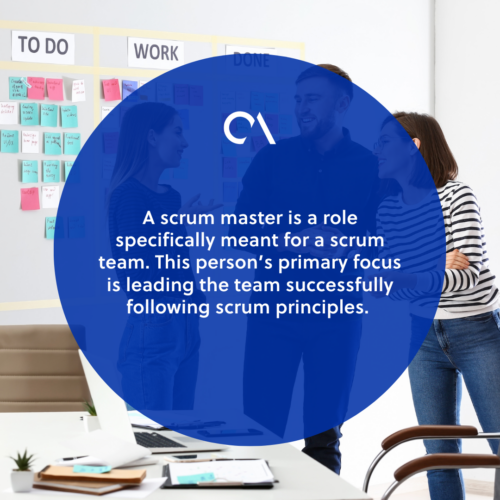
A scrum master is a role built for a scrum team. This person’s main focus is leading the team to follow scrum principles[1].
Scrum is a project framework that helps teams solve complex problems in an agile way. As a result, they deliver high-value products.
The scrum process rewards learning through experience. Teams self-organize while they work on a problem. They also reflect on wins and losses to improve. For teams new to this shift, an agile transformation guide can help.
Scrum works in time-boxed cycles called sprints. The team works during this period. Meanwhile, the scrum master acts as coach and consultant.
?
Roles of a scrum master
The roles of a scrum master are as follows:
- Teaches team members about agility and the scrum framework
- Facilitates meetings, including daily stand-ups, sprint planning, and retrospectives
- Addresses issues that block a team member’s ability to work
- Fosters good communication and teamwork, and promotes regular team discussions
- Helps team efficiency by speeding up work to deliver high-value products
- Works with the product owner to manage backlog items for the next sprint
- Communicates product needs clearly from the product owner to the development team
- Coaches the team when adopting scrum, especially if the team is new to the rules
- Plans the organization’s scrum rollout and helps people step into an agile setup
- Runs scrum events, which involves gathering information, preparing the event, and coaching people during it
What is a project manager?
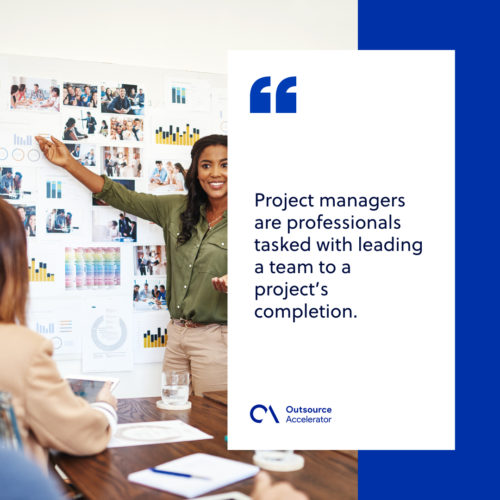
Project managers lead a team to a project’s completion. As a result, they make sure projects finish on time, within budget, and with their goals met.
Project managers also keep the project in line with business needs. Often, they run their own project team. In addition, they get involved in several other project activities.
They focus on the day-to-day tasks of the project. They also use proven, disciplined management methods. So it is up to them to weigh the risks and benefits of each approach. Learning the main types of project management helps here.
Project management is a method that dates back to ancient history. It has evolved throughout human civilization. Today, it still brings programs to completion[2].
monday.com is a key part of this modern evolution. Its Work OS for Enterprise Work Management enables centralized planning, smarter resource utilization, and seamless cross-team collaboration.
At the same time, its CRM solution builds on these strengths by providing a 360-degree client view, streamlining communication, and automating repetitive tasks.
The result? Simplified project management that enhances efficiency, elevates client satisfaction, and drives long-term profitability.
So it is up to the project manager to lead this method in a modern way.
Roles of a project manager
Below are the roles and duties of a project manager:
- Delivers the overall results and makes sure they meet the initial requirements
- Defines the project scope with the team and plans activities to match
- Plans the team’s work schedule and clarifies responsibilities and deadlines
- Sets a communication plan for when roles interact and overlap
- Delegates duties to each member based on their expertise and skill set
- Reports the project status to stakeholders on time, including documentation
- Tracks project performance against baselines and monitors quality control
- Prepares the budget and may also get it approved by management
- Finds and clears any project bottlenecks
- Oversees the project’s risks and handles any unresolved issues
- Prioritizes features tied only to the project and coordinates teams
- Runs change control so the project’s products stay controlled and protected during development
- Delivers results by managing key constraints such as scope, budget, time, and resources
Many teams rely on project manager tools to keep all of this on track.
Scrum master vs. project manager: main differences
As noted earlier, these roles overlap in many duties. This is especially true in more informal settings.
Scrum masters practice a form of project management. They do not need to be a formal project manager. Still, they often are.
At the same time, many project manager job posts value experience leading a scrum team. A related read is our guide on program manager vs. product manager, since these titles cause similar confusion.
When handling a team, it helps to bring out the individual qualities that push people to success. Of course, there are still several key differences.
General roles
Scrum master duties center on the scrum framework. For example, they run daily scrum meetings, coach and motivate members, and boost product value based on user stories.
Project managers handle the day-to-day tasks of their teams. For example, they set work calendars and communication channels, delegate roles, and shape the project scope.
Project and industry exclusivity
Scrum masters work only on scrum projects and scrum teams. In addition, their work focuses on IT and related fields.
Project managers can work on any project. They can also be based in any industry.
Focus
Scrum masters focus on team success and scrum rules. So their style is more people-oriented.
Project managers also aim for success. However, they pay more attention to logistics, such as documentation and resources. For them, the actual content and requirements matter most.
Leadership style
Scrum masters take a more backseat role. In short, they serve as consultants or subtle servant-leaders.
Project managers take a more forefront position. They also manage communication with stakeholders and clients.
Team size
Scrum teams are usually small. As a result, a scrum master often handles a single team for the project’s duration.
Project managers can handle much bigger teams. In addition, they often lead several teams within an organization.
Certification
There are various types of scrum master certification. Here are two of the most common ones.
- Certified scrum master (CSM). This is the most common certification, issued by Scrum Alliance. It requires coursework and a passing exam.
- Professional scrum master (PSM I). This is an alternative to CSM with no required coursework. An applicant just needs to pass a scrum exam.
Project managers, meanwhile, need the Project Management Professional (PMP) certification. Pay can vary a lot, so it helps to review the typical project manager salary before you hire.
Overall mission
Scrum masters have a very focused role because they follow one framework. Through scrum, the organization’s agility grows.
Project managers have a broad job description. Their duties span many industries and companies.
In the end, what matters is that they finish the project as required. So they may use different strategies and frameworks to get there.
Frequently asked questions
Is a scrum master the same as a project manager?
No. A scrum master coaches an agile team to follow scrum rules. Meanwhile, a project manager plans and leads a project of any type. Still, their duties can overlap.
Can one person be both a scrum master and a project manager?
Yes. Because their tasks overlap, one person can fill both roles. However, they usually do so at different times, not at once.
Which role earns more?
Pay depends on industry, location, and experience. In many markets, both roles earn similar rates. So it helps to check current salary data before you hire.
Does a scrum master need certification?
It is not always required, but it helps. Common options include CSM and PSM I. Both show that the person understands scrum.
When should you hire a project manager instead of a scrum master?
For example, hire a project manager for broad projects with budgets, deadlines, and many stakeholders. Meanwhile, hire a scrum master for agile teams that follow the scrum framework.






 Independent





