
Effective strategies for managing an outsourced team, with tips from the expert


How do you manage an outsourced team effectively?
Managing an outsourced team works best when you set clear communication, name a point of contact on each side, agree on performance targets, and build trust across the group.
- Set up clear channels first, so nothing gets lost between teams.
- Track results against simple metrics, so everyone knows the goal.
- Invest in people and culture, so the team stays engaged and loyal.
Managing an outsourced team can be a game-changer for a business. It helps you streamline work, lift output, and tap skills you may not have in-house.
However, to get the full value of outsourcing, you need solid management habits. So in this article, we share key tips and best practices for managing an outsourced team well.
We also include advice from Russell Meiselman, President and Co-Founder of Clarkstaff. Meiselman joined Outsource Accelerator CEO Derek Gallimore on the 441st episode of the Outsource Accelerator Podcast.
Strategies for managing an outsourced team
These best practices help you clear common hurdles. As a result, you can lift output and get strong results, even across a distance. For a quick primer, review these remote team management tips before you start.
Build a solid foundation
A strong foundation is key when managing an outsourced team. So focus on clear communication and well-defined roles first. This gives you a simple framework for success.
Getting the basics right early also pays off later. For that reason, it helps to know how to build the best remote team from day one.
Establish clear lines of communication
Open and honest communication is the backbone of any outsourced team. So make sure your channels are in place. These include email, project tools, and video calls.
Meet on a regular schedule too. In these meetings, review progress, raise challenges, and reset expectations.
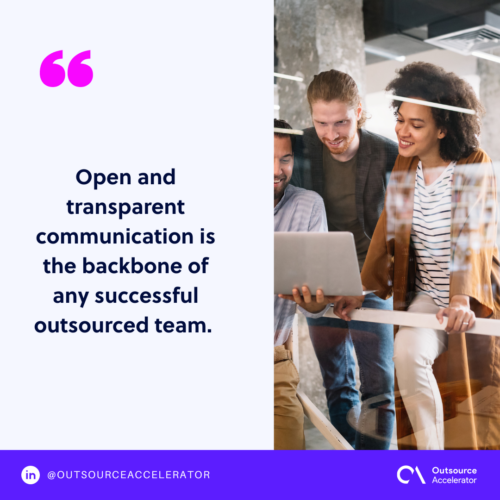
“So the basics would be clear lines of communication and reporting. You really need to identify who’s going to be the main point of contact for both teams,” said Meiselman. “It’s really important to establish the point of contact on both sides upfront.”
Strong habits here matter across the whole company. In fact, the importance of effective communication in the workplace shows up in every project you run.
Designate points of contact
When managing an outsourced team, name a clear point of contact on each side. Pick one on the client side and one on the outsourced side.
These people, such as project managers or team leads, act as the main link between both groups. So updates flow through a known path.
This setup keeps communication tidy. As a result, you cut the risk of mixed messages. It also makes sure key news reaches the right people, with less confusion about who owns what.
Set performance metrics and targets
Measuring results matters for both sides. So clear metrics and targets keep everyone aligned, and they support quality and accountability.
“The point is, clear performance metrics and targets is something that you need to have,” said Russell. He added, “Obviously, training and development programs for both the outsourced and the local teams are important.”
To keep this consistent, lean on a simple system. For example, good performance management systems make targets easy to track over time.
Promote collaboration and team spirit
Unity between your in-house and outsourced teams is vital. So build a space where people share ideas, concerns, and feedback freely. Open talk like this builds trust and better teamwork.
You can also run virtual team-building activities. For example, try online games or casual video chats. These moments create a sense of camaraderie.
Such activities help strengthen ties. As a result, people work together more easily. Strong employee engagement also keeps morale high across both teams.

Provide training and development opportunities
Investing in your outsourced team is a win-win. It boosts their skills, their output, and loyalty to the project.
So offer training sessions or workshops that lift the team’s know-how. These can focus on the project, such as new tools or industry trends.
Next, promote a learning culture. For example, share useful books, courses, and resources. Also encourage the team to pass their learnings to others.
Managing an outsourced team takes care, planning, and clear communication. Still, the payoff is real. When you set a solid base, define roles, track metrics, build teamwork, and invest in training, you get the most from outsourcing.
Frequently asked questions
What is the hardest part of managing an outsourced team?
Communication is often the hardest part. So clear channels and set meeting times help you close the gap fast.
How do you keep an outsourced team accountable?
Use clear metrics and targets. As a result, both sides know the goal, and progress is easy to check.
Who should be the main point of contact?
Name one lead on each side. For example, a project manager can own updates and keep messages tidy.
How often should you meet with an outsourced team?
Meet on a regular rhythm, such as weekly. This keeps work on track and surfaces issues early.
Does training an outsourced team pay off?
Yes. Training lifts skills and loyalty. So the team performs better and stays with your project longer.
Key takeaways
- Set clear communication channels before the work begins.
- Name one point of contact on each side to keep messages tidy.
- Agree on simple performance metrics, so everyone shares the goal.
- Build team spirit and invest in training to boost loyalty and output.






 Independent





