
How to choose the right LMS development partner for your organization

This article is a submission by Sayone Technologies Pvt Ltd. Sayone Technologies Pvt Ltd. is an IT and digital services company from India, focusing on new technologies for clients globally. They have completed 300+ projects for startups and SMEs, with a team of 100+ employees.
How do you choose the right LMS development partner?
You choose the right LMS development partner by matching their technical skill, industry experience, and support model to your own learning goals.
- Start with a clear view of your training needs before you shortlist anyone.
- Weigh technical depth, security, and customization as much as price.
- Pick a partner you can grow with, not just one who builds and leaves.
Learning Management Systems (LMS) are now vital in the digital age. Companies use them to lift employee performance, boost training, and build a culture of constant learning. However, the right LMS development partner is what makes the project succeed.
This article explores 10 important factors that help you choose the right LMS development partner. The best partner will deliver a custom solution that fits the needs and goals of your company.
10 steps to choose the right LMS development partner for your business
1. Conduct an internal assessment of your business needs
Before you search for an LMS development partner, run an internal assessment. It helps you pin down your learning and development needs. Start by asking these questions:
- What are your training goals?
- Do you want to improve onboarding, compliance training, or upskill your team? A clear link to upskilling and reskilling goals keeps the project focused.
- Who is your target audience?
- First, think about the number of users, their roles, and the content they need.
- What features are essential?
- Next, decide if you need mobile learning, gamification, social learning, or advanced analytics.
- What integrations are required?
- Finally, list existing tools like HR software, CRM, or ERP that the LMS must connect with.
A clear view of these factors guides your choice. As a result, you can pick a partner who meets your unique needs.

2. Evaluate technical expertise
Technical skill is key. Your partner should know modern LMS technologies well. They should also be fluent in the platforms and languages your project needs. Here is what to look for:
- Technology stack. For example, check for experience with platforms like Moodle and Totara, or frameworks like Django or Node.js.
- Integration capabilities. In addition, they should link the LMS with systems such as HR, CRM, or content tools.
- Scalability and security. The partner should build an LMS that scales for growth and protects your data.
Ask for detail about the tools they use and their approach to managing data security. This matters most if you handle sensitive or regulated information.
3. Assess industry experience and knowledge
Experience counts in LMS development, especially in your sector. A partner who knows your field grasps its challenges and rules. Because of this, they can cut project risk.
Industry-specific solutions
Look for a partner who has built LMS solutions for others in your industry. This shows they understand your needs and can plan for likely hurdles.
Compliance and standards
Make sure they know relevant standards and rules, such as SCORM, xAPI, GDPR, and HIPAA. They should build these into the LMS from the start.
Case studies and references
Ask for case studies or client references. These confirm their experience and the results of past projects.
4. Look for customization and flexibility
A one-size-fits-all LMS rarely fits a real organization. So your partner should offer strong customization. They should tailor the interface, workflows, reporting, and integrations to you.
In addition, the LMS should use a modular design. This lets you add features as your needs grow. Make sure it also works on desktops, tablets, and smartphones, so a mobile workforce stays covered.
5. Ensure efficient communication and project management
Good communication and a solid project management framework drive success. Together they keep the work on track, on budget, and on target.
- Communication channels. First, set clear lines with regular updates and feedback loops.
- Project management methodology. Learn whether they use Agile, Waterfall, or a hybrid, and how it fits your workflow.
- Milestones and deliverables. Finally, agree on clear milestones so the project moves as planned.
6. Check ongoing support and maintenance plans
The work does not end at launch. Ongoing support keeps the system useful over time. For many teams, this is where strong LMS administration support pays off.
- Post-launch support. First, check the support on offer, including bug fixes, updates, and user training.
- Maintenance plans. Look for plans that cover updates, performance monitoring, and security audits.
- Service Level Agreements (SLAs). Finally, confirm clear SLAs for response time, uptime, and resolution.
7. Evaluate costs
A cost-effective solution matters, yet cost must balance with quality. Here is how to weigh the money side of the choice.
Transparent pricing
First, make sure the partner gives a clear price structure. It should name any extra costs for customization, integrations, or support.
Value for money
Next, judge the long-term value. A cheap upfront price can cost more later through poor scale or weak support.
Return on Investment (ROI)
In addition, think about the ROI of the LMS. A well-built system saves money by lifting efficiency and cutting training time.
8. Prioritize data security and compliance
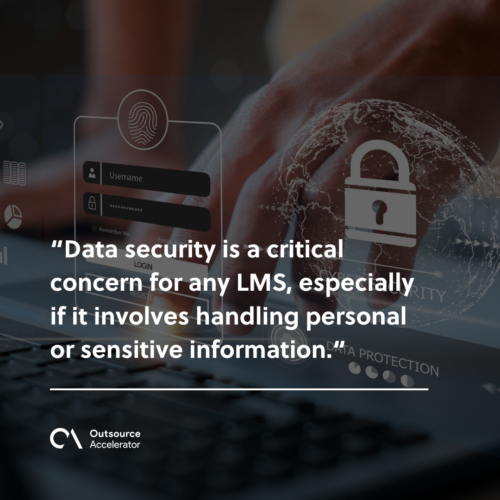
Data security is a top concern for any LMS. This is doubly true when the system holds personal or sensitive data. So your partner must put data protection first. Here are steps to take:
- First, ask about security protocols, including encryption, access controls, and regular audits.
- Next, make sure the LMS meets rules such as GDPR, HIPAA, or your industry standards, to avoid legal trouble.
- Check that the partner offers strong backup and disaster recovery, so your data stays safe.
9. Check client feedback
Reputation is a good sign of reliability and quality. So look for feedback from past clients. First, seek testimonials and reviews to learn the partner’s strengths and weaknesses.
Next, research their standing through awards, recognitions, or partnerships. You can also check their retention rate. In the end, a high retention rate signals happy clients and steady performance.
10. Make the final decision
After thorough research, narrow your list to a few top candidates. Then consider these points before you decide:
- Trial projects. So if you can, run a small trial to test their skill and style first.
- Contract terms. Next, review the terms with care, so timelines, costs, deliverables, and support are clear.
- Long-term partnership potential. Choose a partner you can work with for years, since future upgrades will need them.
Choosing the right LMS development partner is a critical decision. It shapes how well your learning and development efforts work.
The right partner helps you build a strong platform. It fosters continuous learning, lifts employee performance, and drives success. By weighing technical skill, industry experience, customization, and support, you pick a partner who fits your goals.
Some firms choose to outsource software development for the build, then keep an internal owner for content. Either way, time spent on this choice pays off. Your LMS will meet today’s needs and grow with your organization.
Frequently asked questions about choosing an LMS development partner
What is an LMS development partner?
An LMS development partner is a firm that builds, customizes, and supports your learning platform. They handle the technical work, from design to integration, so your team can focus on training content. You can compare specialist learning management system companies before you shortlist.
Should I build a custom LMS or buy an existing platform?
It depends on your needs. A custom build fits complex or unique workflows, while off-the-shelf online learning platforms suit standard training fast. A good partner helps you weigh both paths.
How long does LMS development take?
A simple setup can take a few weeks. A full custom platform may take several months. The scope, features, and integrations all shape the timeline, so agree on milestones early.
How much does it cost to build an LMS?
Cost ranges widely with scope and features. Ask for a clear price structure that names extras for customization, integrations, and support. This keeps the budget predictable.
What security standards should an LMS meet?
Look for encryption, strong access controls, and regular audits. The platform should also meet rules like GDPR and HIPAA where they apply, plus solid backup and disaster recovery.






 Independent






