
The pros and cons of homeshoring


What is homeshoring and is it right for your business?
Homeshoring is the practice of hiring employees who work from home instead of a central office, using technology to stay connected and productive.
In short, homeshoring reshapes where and how people work. Here is what it offers at a glance:
- It opens access to a wider talent pool.
- It cuts commuting stress and office costs.
- It needs strong communication and the right tools.
Modern work trends have reshaped how people build their careers. So remote work, flexible schedules, and diverse setups now free workers from location limits. Still, these new arrangements take time and effort. So in this article, we cover the pros and cons of homeshoring. We also share tips to manage your remote team well.
What is homeshoring?
Homeshoring is another term for its close variants: telecommuting or teleworking, and remote working. In short, it uses technology so people can work without being in a traditional office.
So homeshoring lets remote workers do their jobs from home. They rely on communication tools, digital platforms, and internet access to get work done. For a fuller primer, see what remote work involves.
Pros and cons of homeshoring
Homeshoring gives companies access to a broader talent pool. So they can recruit skilled people from many places. Yet there are other benefits and drawbacks too. So let us explain the main pros and cons below.
| Pros | Cons |
| Reduced commuting stress | Isolation and lack of communication |
| Customized work environment | Potential technology challenges |
| Access to global opportunities | Blurred work-life boundaries |
| Adaptability in crises | Difficulty in monitoring and management |
Pros of homeshoring
Here are strong reasons a company might choose homeshoring.
Reduced commuting stress
One big benefit of homeshoring is the end of the daily commute. So employees skip traffic, long travel, and crowded transport. As a result, they gain productivity and better work-life balance.
Customized work environment
Homeshoring lets people shape their own workspace. So they can set it up to fit their needs. For example, they can choose their lighting, seating, and decor. They can also add ergonomic tools. As a result, a tailored space boosts focus and comfort.
Access to global opportunities
Geographic limits fade with homeshoring. So employers reach a global talent pool. As a result, they gain diverse skills and views. In turn, this fuels innovation and creativity.
Adaptability in crises
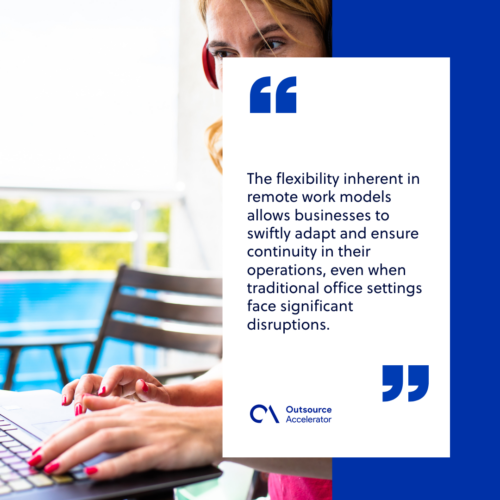
Homeshoring shows real resilience in tough times. For example, it helps during natural disasters or other emergencies. So the flexibility of remote work lets businesses adapt fast. As a result, work continues even when offices close.
In an emergency, such as a regional lockdown or a natural calamity, homeshoring works as a strong contingency plan. So companies can shift staff to remote setups with ease. In turn, they use technology to keep workflow and output steady.
Cons of homeshoring
Now let us look at the possible hurdles of homeshoring.
Isolation and lack of communication
Homeshoring cuts down face-to-face contact. So some employees can feel isolated. As a result, communication gaps may form. In turn, these gaps can hurt teamwork and the flow of new ideas.
Potential technology challenges
Homeshoring leans heavily on technology. So tech acts as its backbone. Still, it can also pose problems. For example, weak connections, software faults, or cyber threats can disrupt work.
Unstable internet or system crashes can stall tasks. Meanwhile, cyber risks call for strict security. So teams need constant care to protect sensitive data. Good remote team management helps keep these risks in check.
Blurred work-life boundaries
Without office structure, work and home can blur. So people may find it hard to switch off. As a result, work hours stretch, and eventual burnout can follow. A clear view of work-life integration versus balance can help teams set limits.
Difficulty in monitoring and management
Managing remote teams brings its own challenges. Distance is the main one. So managers find it harder to gauge output and engagement. As a result, timely support can slip. For dispersed teams, tips on managing an offshore team apply here too.
Tips to manage homeshoring teams
Even with these challenges, you can still manage homeshoring well. So try these steps.
- Effective communication channels – Use varied platforms to keep in touch and spark interaction.
- Establish clear expectations – Define roles, duties, and goals to cut confusion.
- Implement reliable technology – Invest in strong tools and training to tackle tech issues.
- Encourage work-life balance – Set clear limits between work and home to prevent burnout.
- Regular check-ins and feedback – Schedule frequent check-ins to give support and praise good work.
- Prioritize in-person meetups – To ease the isolation remote workers feel, host periodic retreats or project intensives. These gatherings help build team culture and close the gap that digital tools alone cannot fill.
Managing travel logistics for a large group can be daunting. However, Engine Groups takes the coordination off your plate.
Their dedicated trip managers source hotels and negotiate rates for groups of nine or more rooms. So they handle everything from contracts to consolidated billing.
As a result, you can focus on the event itself. Meanwhile, they manage the room blocks and 24/7 support, making team travel “less work.”
The future of homeshoring
Homeshoring marks a real shift in how we work. So it brings many benefits and some clear challenges. To manage teams well, you need strong communication, good technology, and a keen focus on employee well-being.
Looking ahead, homeshoring is set to shape a new era of work. So it will keep redefining how companies run and how people engage with their jobs. For the upside in full, explore the benefits of remote work.
Frequently asked questions about homeshoring
Is homeshoring the same as outsourcing?
No. Homeshoring means your own staff work from home. Outsourcing means another firm handles the work. So the key difference is who employs the worker.
What jobs work best for homeshoring?
Many roles fit well. For example, customer service, admin, writing, and IT support work from home with ease. So any task done on a computer is a good match.
How do you keep homeshoring teams secure?
Start with strong passwords, encryption, and secure networks. In addition, train staff on cyber safety. As a result, sensitive data stays protected.
Does homeshoring save companies money?
Often, yes. Firms save on office space, utilities, and equipment. Still, they should invest some of that saving in good tools and support.
How do you prevent isolation in homeshoring?
Keep communication frequent and warm. Also plan periodic in-person meetups. As a result, team culture stays strong.






 Independent





