
How tech firms use help desk outsourcing to scale efficiently


This article is a submission by Select Voicecom, a Philippines-based call center and BPO company providing inbound, outbound, back-office, and AI-powered outsourcing solutions to businesses across the U.S., Australia, and other global markets
- As technology companies grow, customer support demands often increase alongside their user base.
- Help desk outsourcing enables businesses to scale technical support without significantly expanding internal teams.
- Outsourced help desk teams can provide 24/7 support, manage high ticket volumes, and improve operational efficiency.
- With the right processes and collaboration, outsourcing helps technology firms deliver a consistent customer experience while supporting long-term growth.
For technology companies, delivering a great product is only part of the customer experience. Reliable technical support is equally important in helping users adopt new features, resolve issues quickly, and continue using products with confidence.
As software platforms, SaaS businesses, and technology services expand, support requests naturally increase. Hiring and training internal help desk teams can be time-consuming and expensive, particularly during periods of rapid growth.
To address these challenges, many technology firms use help desk outsourcing to strengthen customer support while maintaining operational flexibility.
What is help desk outsourcing?
Help desk outsourcing is the practice of partnering with an external service provider to manage technical support and user assistance.
Depending on business requirements, outsourced teams may handle a variety of first-line and technical support functions, including:
- Technical troubleshooting
- Password resets and account access
- Software and SaaS application support
- Hardware support
- Remote troubleshooting
- Ticket management
- User onboarding assistance
- Email, chat, and phone support
By outsourcing routine support activities, businesses can improve service responsiveness while allowing internal engineering and product teams to focus on innovation and product development.
5 ways technology companies use help desk outsourcing
Technology organizations adopt help desk outsourcing in different ways depending on their products, customers, and operational goals.
1. Scaling support during growth
As customer bases expand, support volumes often increase rapidly.
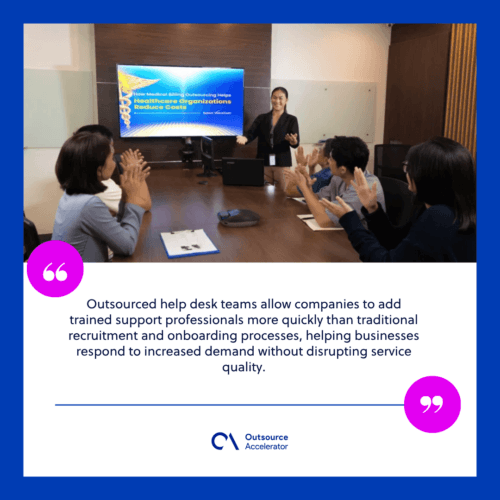
Outsourced help desk teams allow companies to add trained support professionals more quickly than traditional recruitment and onboarding processes, helping businesses respond to increased demand without disrupting service quality.
2. Providing around-the-clock support
Many technology companies serve customers across multiple countries and time zones.
Outsourcing enables organizations to offer extended business hours or 24/7 customer support, ensuring users receive timely assistance regardless of their location.
3. Managing high ticket volumes
Software updates, product launches, and service disruptions can generate sudden increases in support requests.
Dedicated outsourced teams help businesses manage ticket surges while maintaining service levels and reducing response delays.
4. Supporting internal technical teams
By handling routine troubleshooting and frequently asked questions, outsourced help desk specialists allow engineers and senior technical staff to concentrate on product development, infrastructure, cybersecurity, and complex technical issues.
5. Delivering consistent customer experiences
Established outsourcing providers typically use standardized workflows, quality assurance programs, and performance monitoring to help maintain consistent service across customer interactions.
5 best practices for successful help desk outsourcing
A successful outsourcing partnership depends on effective planning, communication, and continuous performance management.
Businesses should consider the following best practices:
1. Establish clear service level agreements (SLAs)
Define measurable expectations for response times, resolution times, escalation procedures, and customer satisfaction.
2. Monitor performance metrics
Track key indicators such as first response time, average resolution time, first-contact resolution, customer satisfaction scores, ticket backlog, and service quality.
3. Integrate internal and external teams
Shared documentation, communication platforms, and regular collaboration help outsourced representatives operate as an extension of the internal support organization.
4. Maintain ongoing quality assurance
Regular coaching, call reviews, ticket audits, and customer feedback help maintain consistent service quality while identifying opportunities for improvement.
5. Continuously optimize support operations
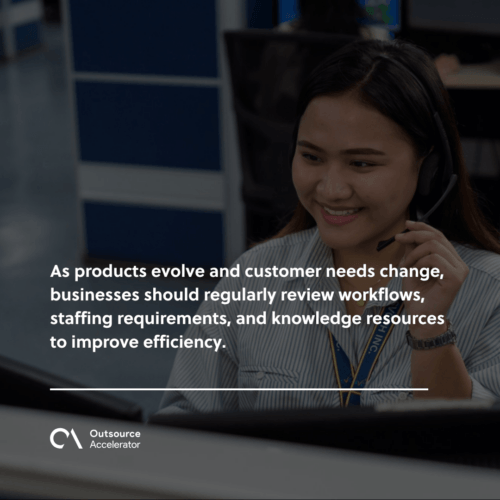
As products evolve and customer needs change, businesses should regularly review workflows, staffing requirements, and knowledge resources to improve efficiency.
Common challenges and how companies address them
Like any operational strategy, outsourcing requires thoughtful management to achieve the best results.
Knowledge transfer
Support representatives need detailed product knowledge to resolve customer issues effectively.
Comprehensive onboarding, well-maintained knowledge bases, and continuous training help outsourced teams remain up to date.
Communication and collaboration
Businesses can reduce communication challenges through regular meetings, clearly documented processes, and shared collaboration tools.
Information security
Organizations should partner with providers that implement strong access controls, confidentiality policies, security frameworks, and data protection practices appropriate for the systems being supported.
Maintaining brand consistency
Detailed customer service guidelines, standardized workflows, and ongoing quality monitoring help ensure outsourced representatives consistently reflect the company’s service standards.
When these areas are carefully managed, outsourced help desk teams can become a valuable extension of internal customer support operations.
Frequently Asked Questions
Can outsourced help desk teams support specialized technology products?
Yes. Many outsourcing providers train dedicated teams on specific software platforms, applications, operating systems, and technical environments through structured onboarding and ongoing education.
Is help desk outsourcing suitable for startups and small technology companies?
Yes. Businesses of all sizes use outsourced help desk services to access experienced support professionals while avoiding the costs associated with building large internal support departments.
What services are commonly included in help desk outsourcing?
Typical services include technical troubleshooting, ticket management, account support, password resets, software assistance, remote troubleshooting, user onboarding support, and multichannel customer service.
Will outsourced agents learn our products?
Yes. Reputable providers typically develop customized onboarding programs, documentation, knowledge bases, and ongoing training to ensure representatives understand the products and customer experience they support.
Is outsourced help desk support secure?
Many outsourcing providers implement security controls, access management procedures, confidentiality policies, and compliance frameworks designed to protect customer information and business systems. Organizations should evaluate providers carefully to ensure their security practices align with business requirements.
The case for help desk outsourcing
As technology companies continue to grow, scalable customer support becomes increasingly important to maintaining user satisfaction and long-term success.
Help desk outsourcing provides organizations with the flexibility to expand technical support operations, improve response times, and manage growing ticket volumes without continuously increasing internal headcount.
By combining skilled support professionals with effective processes, strong collaboration, and ongoing performance management, outsourcing can help technology firms deliver reliable customer support while allowing internal teams to focus on innovation and product development.






 Independent





