
Healthcare project management 101


The healthcare industry changes fast. Every day brings new tools, new rules, and new challenges. In this setting, effective project management keeps healthcare projects on track. This guide covers healthcare project management from the ground up: its methods, stages, benefits, and best practices.
What is healthcare project management?
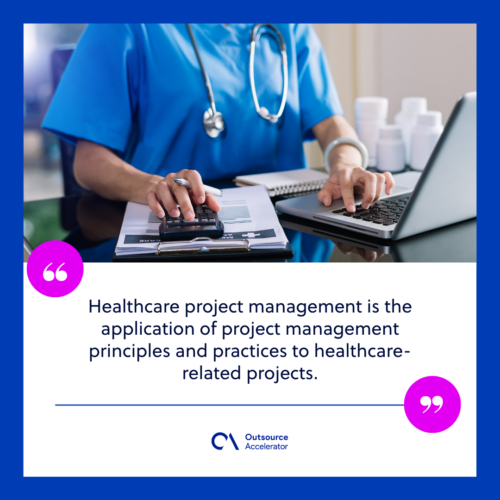
Healthcare project management is the practice of planning, running, and finishing healthcare projects on time, on budget, and in line with what stakeholders need.
- It applies proven project management steps to healthcare work.
- It covers projects like new systems, facilities, and treatment plans.
- It keeps doctors, staff, and leaders aligned on one goal.
In short, it brings order to complex healthcare work. It aims to run projects well, stay within budget, and meet the needs of everyone involved.
Healthcare project managers guide projects that shape health systems. For example, they roll out electronic health record systems. They also build medical facilities, shape new treatment protocols, or launch health campaigns. Many teams now pair this work with healthcare outsourcing to add skills and cut costs.
Methodologies for healthcare project management
Different methods fit different projects. Your choice depends on the project’s size, scope, and needs. So let’s look at three common methods. For a wider view, see these types of project management your team can explore.
Agile methodology
Agile project management puts a premium on speed and teamwork. It breaks work into small tasks. As a result, teams can adjust as feedback comes in.
Agile suits software projects in healthcare well. There, changes and updates happen often. Because of this, healthcare teams can respond fast to new patient needs and market shifts.
Waterfall methodology
Waterfall follows a straight line. Each phase flows into the next in order:
- Initiation
- Planning
- Execution
- Monitoring
- Closure
This method fits projects with clear, fixed goals. It offers less flexibility than Agile. Still, it gives healthcare teams a structured, step-by-step path.
Hybrid methodology
Hybrid project management blends Agile and Waterfall. So it offers flexibility while it keeps a firm structure.
Teams often pick hybrid when needs may change mid-project. As a result, managers can balance freedom and order. It also works well for collaborative project management across large teams.
Stages of healthcare project management
Let’s walk through the key stages of healthcare project management.
Initiation
The initiation stage lays the foundation. Here, the team sets project goals and lists stakeholder expectations. Managers also spot risks and run a feasibility study. As a result, the project starts with a clear direction that fits company goals.
During this stage, managers talk with key people. For example, they meet doctors, administrators, and executives early on.
Planning
Planning is a critical stage. Here, managers build a roadmap for project execution.
They set the scope and write a detailed plan. In addition, they assign resources, estimate timelines, and set milestones. They also gather needs, study data, and map out tasks and dependencies. Because of this, resources go where they matter most.
Execution and monitoring
Next, the plan goes into action. Managers oversee the work, line up tasks, and track progress. They also make sure deadlines are met and quality holds up.
Regular checks keep the project on course. As a result, managers can adjust fast and reduce risk.
Conclusion
The conclusion stage closes the project. Still, the work is not fully done. The team wraps up tasks, reviews results, and records lessons learned. Finally, managers run a full review to find ways to improve and to celebrate the team’s wins.
Benefits of healthcare project management
Strong project management practices bring many benefits to healthcare projects.
Organize processes
Healthcare project management brings order to complex work. A well-run project makes each role clear. As a result, everyone can work together toward one goal.
Clear goals and defined roles help teams move faster. So workflows get smoother and overall efficiency improves.
Learn better project planning
Good project management leads to better planning. It helps managers spot bottlenecks early. In addition, it helps them place resources well and plan for challenges.
With better planning, projects run more smoothly. As a result, outcomes improve and delays drop. Teams also use resources wisely, which helps cut costs.
Save costs
Healthcare projects often cost a lot. So managers look for ways to control spending. They find cost-controlling opportunities, cut waste, and make the most of limited resources.
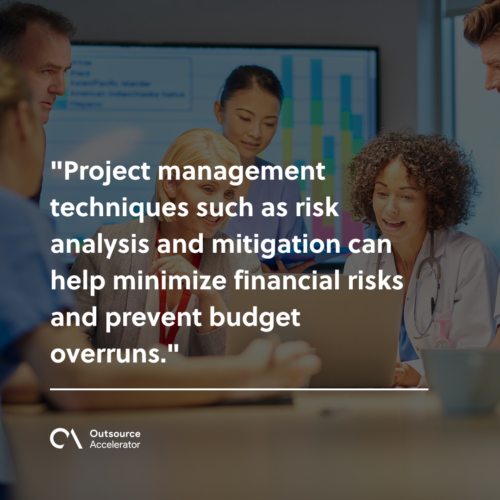
Risk analysis helps too. Because of this, teams can lower financial risk and avoid budget overruns. Sound enterprise risk management supports this at every stage.
Maintain stakeholder relations
Healthcare projects involve many parties. For example, they include providers, patients, regulators, and community groups. So stakeholder management matters a lot.
Good project management keeps communication clear. It also aligns expectations and keeps people engaged. As a result, relationships grow stronger and outcomes improve.
Healthcare project management best practices
Follow these best practices to boost the success of healthcare projects.
- Invest in a secure tool. Use a strong project management tool with solid security. It should protect sensitive health data and help the team work together.
- Plan carefully. Give planning enough time. Define all needs and deliverables up front. A clear plan sets a strong base for the work.
- Learn effective workload management. Rank tasks by priority. Then assign resources with care and track progress often.
- Enable collaboration within teams. Build an open, team-first culture. Encourage clear talk so people can share skills and ideas.
- Continuously monitor and evaluate. Track progress and milestones. Also reassess risks often and review the work to learn and improve.
Remote and distributed teams are now common in this field. So it helps to understand virtual project management before you scale.
Frequently asked questions
What is healthcare project management?
It is the use of project management steps on healthcare projects. The goal is to finish work on time, on budget, and in line with stakeholder needs.
Which methodology is best for healthcare projects?
It depends on the project. Agile suits fast-changing software work. Waterfall fits projects with fixed goals. Hybrid blends both.
What are the main stages of a healthcare project?
The four core stages are initiation, planning, execution and monitoring, and conclusion. Each stage builds on the one before it.
Why is project management important in healthcare?
It brings order to complex work. As a result, it saves costs, cuts delays, and improves patient outcomes.
What tools do healthcare project managers use?
They use secure project management software to plan tasks and protect data. The right tool also helps teams work together in real time.
Key takeaways
- Healthcare project management keeps complex health projects on time and on budget.
- Agile, Waterfall, and Hybrid are the three main methods to choose from.
- The four core stages are initiation, planning, execution, and conclusion.
- Good practices include secure tools, careful planning, and constant monitoring.
- Strong project management saves costs and improves patient outcomes.
Healthcare project management is a vital discipline. It drives efficiency, saves costs, and improves outcomes across the healthcare industry.






 Independent





