
Importance of healthcare consulting in the healthcare industry


What is healthcare consulting and why does it matter?
Healthcare consulting is expert guidance that helps medical organizations make smart choices, cut waste, manage risk, and improve patient care.
- It gives hospitals and clinics clear, research-based advice.
- It improves patient outcomes, efficiency, and cost control.
- It also strengthens risk management and daily decisions.
In healthcare, change never stops. For example, new technology, laws, and patient needs keep the field moving. So healthcare organizations must adopt smart strategies to keep up with this complex, shifting landscape.
But to do this well, they need expert guidance. This is where healthcare consulting comes in.
Definition of healthcare consulting
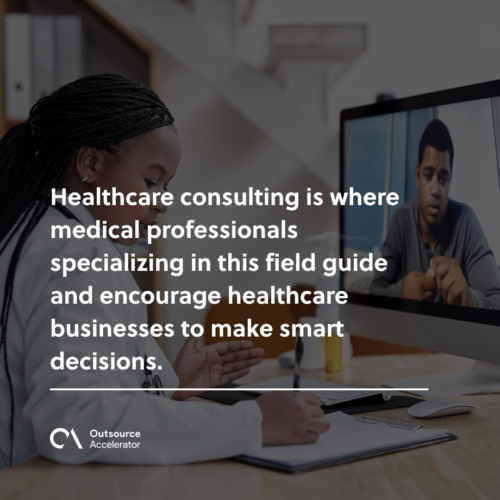
Healthcare consulting is where trained experts guide medical businesses toward smart decisions. In short, a healthcare consulting service gives firms clear methods and advice to move forward.
These consultants also support patients with advice, care, and empathy to aid full recovery. For instance, proactive healthcare consultants suggest better resources to lift operations and hit strategic goals.
Further, part of the job is to help medical teams improve processes. As a result, every method performs the way it should.
Benefits of healthcare consulting
Here are the main benefits of healthcare consulting.
Improved patient outcomes
Healthcare consulting helps hospitals and clinics lift patient outcomes and satisfaction. For example, a consultant may improve a hospital’s appointment scheduling so patients get seen faster. As a result, the clinic sees fewer cancellations. Many firms also pair this work with patient care management to keep care consistent.
Increased efficiency and productivity
Healthcare consulting can lift efficiency and output. It does this by finding areas of the business that lag. For instance, say a hospital struggles to meet its patient satisfaction goals. A consultant can find the cause and suggest clear fixes.
Cost savings
Healthcare costs have kept climbing for years. The good news is that there are ways to cut them and run a leaner practice. So one option is a healthcare consulting service.
Cost control usually starts with a staff review. Still, cutting expenses does not always mean layoffs. Because many hospitals face a nursing shortage, layoffs may not be an option. Instead, consultants may advise on nurse retention, training, and less overtime. In addition, they can help with associate retention. Outsourcing some support work through healthcare outsourcing can trim costs further.
Better risk management
Healthcare providers always keep efficient risk management methods in place. After all, patient safety and compliance need attention at all times.
That is why most healthcare consultants stay available around the clock. In addition, a consulting firm can spot and manage hidden hazards. So when risk management is strong, the odds of illegal activity drop. As a result, the business runs in a safer space.
Enhanced decision-making
Healthcare consulting is a great way to help providers make better calls. For example, consultants can share analysis and forecasts. So you can use these insights when you weigh a new hospital product. In turn, you can judge whether that product is worth the cost. Strong healthcare data analytics makes these decisions even clearer.
Roles of healthcare consulting in the healthcare industry
As noted, healthcare is a broad sector. So consulting firms can serve medical groups with many specialties and practices. Here are the most common roles.
Business strategy and planning
The main role of a healthcare consultant is to help with strategy. In addition, they help shape company goals. So those goals line up with the mission and vision.
Process improvement and operations management
Process and operations work sit at the heart of healthcare consulting. In short, this means better department and system efficiency.
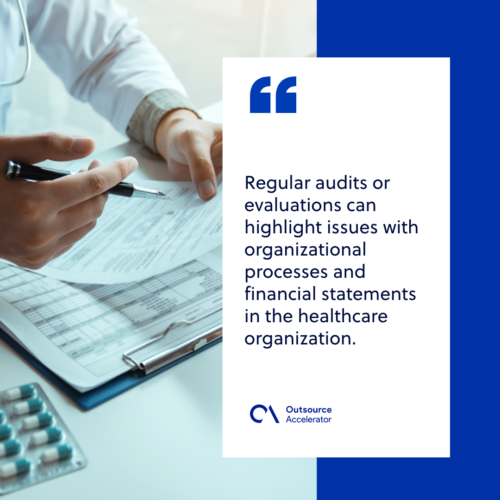
For example, regular audits can flag issues in processes and financial statements. Once the review is done, consultants work with clients on fixes. As a result, the organization runs more smoothly.
IT and data management
Healthcare consultants also manage and build new database systems. In addition, they keep existing healthcare databases running. Many teams extend this work into full healthcare IT solutions for better data security.
Regulatory compliance and risk management
The healthcare field follows strict compliance and regulatory standards. So consulting firms can help you build policies and procedures for the following:
- Patient complaints
- Disaster plans
- Risk analysis
Many providers also lean on healthcare back office services to keep records and claims in order.
Healthcare consulting balances medical business operations
Healthcare consulting services are vital to the industry and related fields. They guide new methods that raise the quality of care. In addition, they improve decisions and lift productivity.
Further, if you plan to reach out to a healthcare consulting firm, choose one with a strong track record. Also make sure it can back its solutions with research and clear analysis.
Frequently asked questions about healthcare consulting
What does a healthcare consultant do?
A healthcare consultant guides medical firms on strategy, operations, and risk. In addition, they help improve patient care and cut waste.
Who needs healthcare consulting?
Hospitals, clinics, and health systems all benefit. So do smaller practices that want to run leaner and serve patients better.
How does healthcare consulting save money?
It finds areas that lag and suggests fixes. For example, it may improve staff retention, cut overtime, and streamline daily processes.
Is healthcare consulting only about finances?
No. It also covers strategy, IT, compliance, and patient outcomes. As a result, it supports the whole organization, not just the budget.
How do I choose a healthcare consulting firm?
Look for prior expertise and clear results. In addition, make sure the firm backs its advice with research and data.
Key takeaways
- Healthcare consulting gives medical firms expert, research-based guidance.
- It improves patient outcomes, efficiency, and cost control.
- It also strengthens risk management and compliance.
- Common roles cover strategy, operations, IT, and data.
- Choose a firm with a strong track record and data-backed advice.






 Independent





