
How to identify and handle bad customers


The customer is the most critical aspect of your company’s success. Many businesses aim to satisfy customers, but no one can please everyone.
If attracting and delighting consumers is your primary goal, it is vital to know how to identify and handle angry customers.
Below, we will delve into the different types of bad customers you may encounter in business and ways you can effectively deal with them.
What is a bad customer?
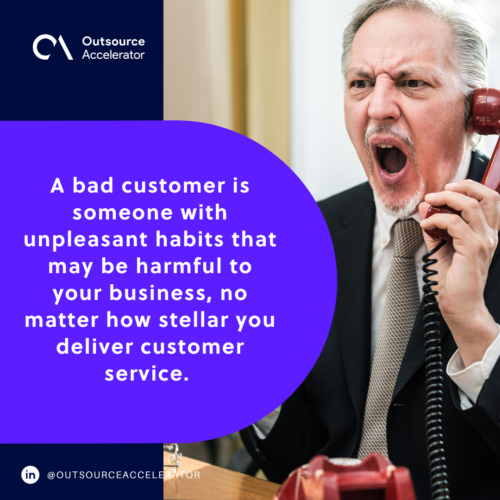
A bad customer is someone with unpleasant habits that may be harmful to your business, no matter how stellar you deliver customer service.
A difficult customer’s characteristic is incorporated with being impolite, rude, and frequently abusive to you or your team.
Types of bad customers
Every customer is different. Some people are easy to deal with, and some are difficult. Here are some of the typical qualities of bad customers you may encounter.
Customer who is aggressive
This bad customer is easily irritated, very aggressive, harsh, arrogant, and frequently verbally abusive. They believe that their needs and demands are superior to those of others.
To obtain what they want, they scream, complain, abuse, and sometimes get physical.
Aggressive customers are often unreasonable and unpredictable. They can make unreasonable expectations, refuse to recognize deadlines, or reject your method.
They may argue, use personal insults or improper statements to convey their point, or shout or use threatening gestures to get their point across.
Customer who is a know-it-all
A know-it-all customer is someone who acts as if they know everything and dismisses other people’s thoughts, remarks, or suggestions.
Know-it-alls believe they have all the answers. They think they are superior, ignore others’ viewpoints, and refuse to listen to others.
They also have a habit of telling people how to accomplish their jobs. Know-it-alls enjoy listening to themselves speak.
Customer who is irritable
Every business has to cope with impatient clients. These customers are challenging to deal with since they appear to want everything right away and refuse to accept no for an answer.
Impatient customers may feel as if they are in control of your customer service wait. They put agents under strain and make you feel as if everything is essential.
Customer who is undecided
Customers are undecided about using a service or purchasing a product you offer for various reasons that are difficult to pinpoint.
Indecisive customers can drive you crazy, whether they look around, ask questions, exhibit curiosity, or can’t decide for various reasons.
Before they buy, indecisive people want to know that they’re receiving the best deal, quality, price, and features.
This is rooted in their fear of making a mistake and feeling regret later.
Being indecisive is natural for customers. However, they’ll use up all of your energy and time and still refuse to buy.
This type of consumer can be highly draining on your productivity, despite being harmless.
Customer who is always complaining
Satisfying everyone is a near-impossible task. Consumers can occasionally be more than customers, straying beyond the boundaries of their connection with you.
You’re there, after all, to keep these lines obvious and straight without being inflexible, hostile, or unhelpful.
How to identify bad customers?
You may already know how tough it is to deal with bad customers. Good customers are a source of revenue and referrals, which contributes a lot to the success of your business.
In comparison, toxic customers limit your capacity to serve lucrative clients.
That is why it is essential to recognize this type of consumer. Here’s how to identify them and what to do next.
Abusive to employees
A consumer who does not respect your employees is not deserving of your time and effort. You may want to consider letting the customer go if they are rude and abusive to your staff.
When faced with an angry customer, it is important to remain calm and composed. The well-being and safety of the employees should be prioritized.
Unsure of what they want
Some consumers refuse to be specific about what they want, requiring you to constantly respond to their changing demands.
Dealing with these difficulties consumes time that could be better spent on other clients.
Does not follow rules
Bad customers frequently request exceptions to your processes. Making exceptions for your tried-and-true practices that have served consumers well may not only waste time and money but may also compromise the quality of the product or service you provide.
How to deal with bad customers?
Dealing with bad customers is not that hard. It can be as simple as smiling, being polite, kind, and listening without interrupting.
Here are some of the best practices to handle rude customers.
Listen and empathize
When the customer is speaking, do not interrupt them. Allow them to talk, even if you already know what they’re going to say next.
Take it as an opportunity to build a relationship with the consumer by being open and honest.
This doesn’t mean just silently listening as they speak. Practice active listening by mentally noting their key concerns and repeating them back to your customer. This makes them feel that you sincerely care.
Active listening plays a key role in diffusing tense situations and addressing concerns effectively.
Maintain the proper mindset
Before communicating with the consumer, take a few moments to think and get yourself in the correct mindset.
Remind yourself that the customer is not angry with you personally but rather with the scenario.
When you have the right mental attitude, you can deal with tense situations calmly and professionally.
Don’t take anything too seriously
Even if the customer seems to take the conversation personally, always speak to the topic at hand and avoid getting personal.
Remember that the client doesn’t know you and only vents their frustrations to you as a company representative.
Carefully guide the conversation back to the main concern and explain how you plan to fix it.
Explain the next steps
If the incident happens through a phone conversation, let the consumers understand exactly what to expect at the end of the call, and then make sure to keep your promises.
You can also take note of the conversation to be prepared if similar cases happen in the future.
After all, bad customers are still customers, and if you can turn the situation around, they can soon be converted into your most loyal patrons.
Be discreet
When dealing with sensitive situations like handling angry customers or addressing customer churn, it is essential to be discreet in your approach.
This last tip is crucial because of the technology we have today. Almost everyone shares videos and pictures online, and you don’t want the incident to go viral on social media.
When dealing with difficult customers, caution and sensitivity are necessary. Remember that others are watching, and some may even be using their smartphones to record the confrontation.
How bad can customers affect your business?
Businesses rely on the customers’ actions. And not all who come to your store or avail your services will be satisfied.
Here is the possible impact that unpleasant customers can have on your business.
Damage to business reputation
Your company’s brand reputation is highly precious, and you don’t want to let it slip away. When you have a long string of terrible customer service, your reputation is the first to suffer, especially on the internet.
Damage to a business reputation can have detrimental effects, especially in retail businesses where customer perception is key.
When irate customers are dissatisfied with a product or service, they have the power to shape public perception through reviews and word-of-mouth.
If you own an internet business, a terrible customer care experience may be highly damaging to your brand.
Angry customers frequently take to their keyboards to air their grievances online, whether through a bad review, an indignant message on Twitter, or anything else.
Customer loss
Gaining new clients is more expensive than maintaining existing ones. This is one of the important reasons you want to deal with rude customers early on.
You don’t want them to be posting an angry tweet or an unreasonably negative review for potential customers to see.
Invest in call analytics if you don’t want to lose clients. You’ll be able to track your calls and make improvements based on how your workers handle unsatisfied consumers.
Building customer loyalty is crucial to mitigate customer loss and foster long-term relationships with clients.
Profit loss
You lose sales when you lose customers. The lower the sales, the lower your earnings.
Depending on the severity of your client loss, the amount of money you lose as a result might have a long-term influence on your company’s financial health.
Bad customers are still customers
If you spend enough time dealing with bad customers, you can discover that they’re simply looking for a solution.
That said, any customer issues should be addressed as soon as possible. The most excellent way to cope with bad customer service is to avoid it in the first place.
The best thing you can do is to correct it before it gets out of control.
Utilizing active listening skills and maintaining a sense of calmness during interactions with difficult customers can significantly impact customer satisfaction.
Prioritizing customer satisfaction through effective communication and problem-solving leads to a more positive customer experience, fostering loyalty and trust in the brand.






 Independent





