
Matt Mullenweg: The five levels of autonomy in a distributed work

What are the five levels of autonomy in distributed work?
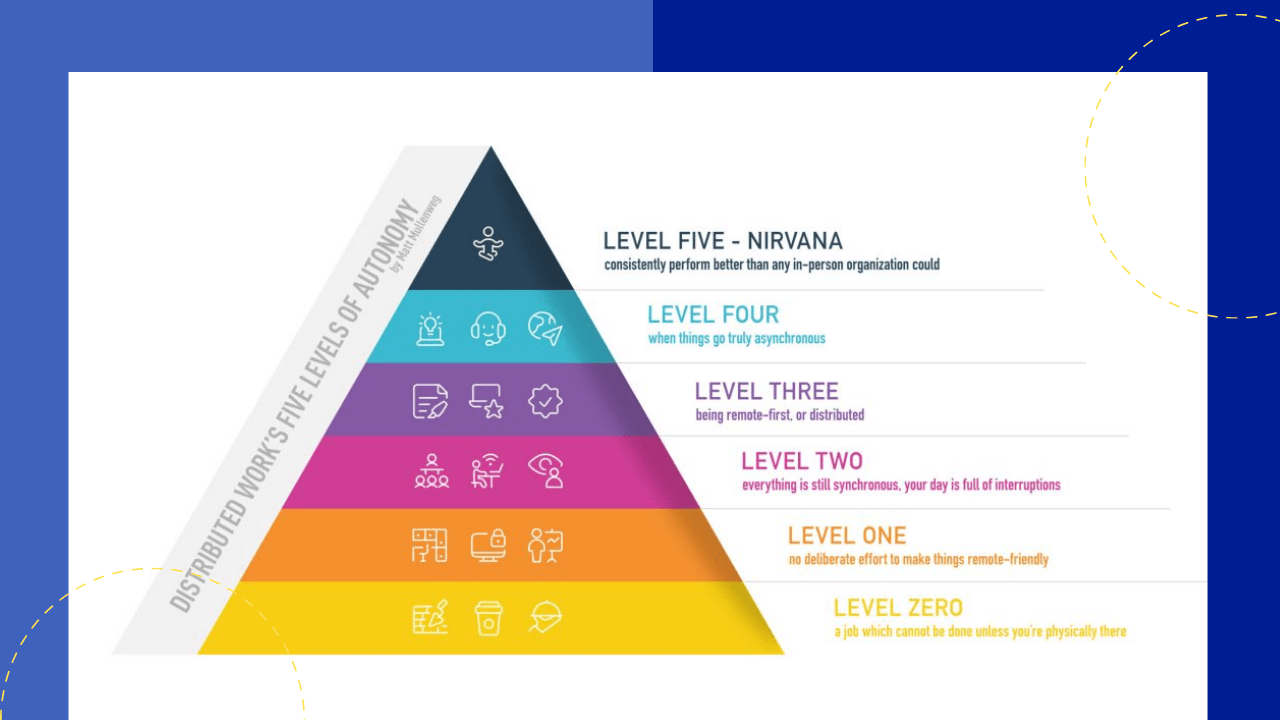
The five levels of autonomy in distributed work, defined by Matt Mullenweg, map a company’s path from no remote plan at all to a fully distributed team that works better than any office.
- Level 1 and 2 just copy the office setup online.
- Level 3 and 4 use the medium and add async trust.
- Level 5 is “Nirvana,” where distributed teams thrive.
The shift to distributed work caught many firms off guard. When the global crisis hit, most had to change their whole setup fast. This topic came up in an episode of the Making Sense Podcast. Host Sam Harris spoke with his guest, Matt Mullenweg. Together they mapped the five levels of autonomy in distributed work.
Matt is the creator of Automattic and a founding developer of WordPress. His company runs as a fully distributed team, with staff spread across many countries. He prefers the word “distributed” over “remote.” After all, “remote” implies there is still one main place for work.
5 Levels of autonomous organizations
Matt built these five levels of remote work as a clear path. First, a firm gains basic remote tools. Then it grows into a fully distributed team. Each level builds on the one before.
Level 1: The company hasn’t done anything deliberate, yet
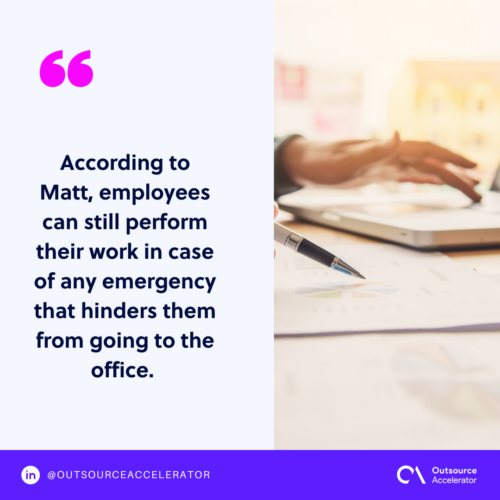
This is where most firms still sit, according to Matt. These companies have no real remote plan. So they are not ready for a sudden shift. Still, staff can work in an emergency if needed. For example, they can use phones and home internet to check email or join a call. However, most work stalls fast. After all, the real tools and files live only in the office.
Level 2: When you try to recreate what you do in the office, but online
Many companies sit at this stage. Level 2 is when firms must work from home in a hurry. So they download tools like Zoom or Slack to stay in sync. In addition, some firms install monitoring software on staff computers. However, Matt says this is counterproductive. So his advice for Level 2 is to “tough it out and talk about how you can move to levels three to five.”
Level 3: Start to take advantage of the medium
At Level 3, firms start to see the perks of distributed work. For example, on a video call, one person takes notes in a shared doc. As a result, everyone sees the same notes in real time. Meanwhile, teams invest in better gear, like noise-cancelling audio. So staff no longer keep hitting mute in meetings. In fact, this is where firms lean hard into written skills. After all, clear writing drives good remote work culture across a distributed team.
Level 4: When you become asynchronous
At Level 4, remote workers gain more freedom. Async work starts once trust is built. So staff are judged on what they produce, not how or when. In addition, asynchronous work makes room for introverts. As a result, more people share their voice and ideas. Decisions may take longer this way. Still, the outcome is often better, since everyone can weigh in. Firms also tap the global talent pool and run on a 24-hour cycle.
Level 5: Nirvana
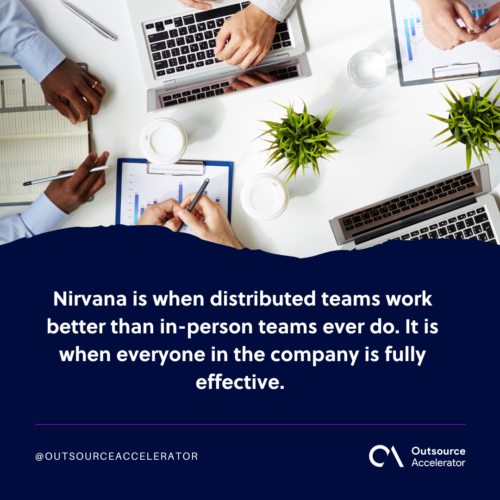
Nirvana is the top level. Here, distributed teams beat in-person teams outright. In fact, everyone in the company works at full strength. What drives this? People shape their own work setting each day. So they add things an office rarely allows. For example, they blend in health, wellness, or a few squats between meetings. As a result, staff show up as better, more creative versions of themselves. This kind of freedom lifts remote employee productivity over time.
The new future of distributed work podcast – in a nutshell
Sam Harris and Matt Mullenweg had a rich talk on this shift. They traced how firms moved from the office to distributed work. They also covered the hurdles leaders face and key security concerns. In addition, they discussed the importance of innovation in the COVID-19 outbreak. This move toward a wider distributed workforce keeps growing today. In the podcast, Matt also shared how Daniel Pink’s book Drive shaped Automattic.
Three things that matter in motivating people
The book makes a clear point. Money and bonuses do not make people happy at work. Instead, three things matter most. As a result, they drive real motivation.
Mastery
Mastery is the drive to get better at a job. So people want to grow their skills over time.
Purpose
Purpose means working for more than a paycheck. As a result, staff feel a deeper tie to their work. In turn, they act on intrinsic motivators.
Autonomy
Autonomy means a self-directed work setting. So people gain the freedom to do their best work. As Pink writes, when these three come together, “people achieve more and live richer lives.” These same ideas explain many of the benefits of remote work that firms report today.
Frequently asked questions about the five levels of autonomy
Who created the five levels of autonomy in distributed work?
Matt Mullenweg created the model. He is the founder of Automattic and a WordPress developer. He shared it on the Making Sense Podcast with Sam Harris.
Why does Matt prefer “distributed” over “remote”?
Matt says “remote” implies one main place for work. So “distributed” fits better. After all, a true distributed team has no central office.
What is Level 5 or “Nirvana”?
Level 5 is the top stage of the model. Here, distributed teams work better than in-person ones. In fact, staff shape their own day and work at full strength.
What makes asynchronous work valuable?
Async work judges staff on results, not hours. So it builds trust and gives room to introverts. In addition, it lets firms use global talent around the clock.
Key takeaways
- The five levels of autonomy map the path to fully distributed work.
- Levels 1 and 2 only copy the office online.
- Levels 3 and 4 use the medium and build async trust.
- Level 5 is “Nirvana,” where distributed teams thrive.
- Mastery, purpose, and autonomy drive real motivation at work.






 Independent





