
7 ways to boost remote employee productivity

How do you boost remote employee productivity?
You boost remote employee productivity by setting clear goals, giving the right tools, keeping communication strong, and recognizing good work, so offsite staff stay focused and engaged.
- Clear goals and the right tools keep remote staff on track.
- Regular check-ins and praise drive focus and morale.
- A trusted partner can help you build a productive remote team.
As more companies rely on remote work, remote employee productivity has become a key challenge. IT and recruitment agency Apollo Technical found that people who work remotely can be 47% more productive. For example, they face fewer office distractions, like water cooler chats and noise from co-workers.
However, it still takes effort to keep remote workers productive. In this article, we share seven simple ways to boost remote employee productivity and set up your offsite team for success. We will also show how a trusted firm like Remote Employee can help you build a productive remote team.
What does remote employee productivity mean?
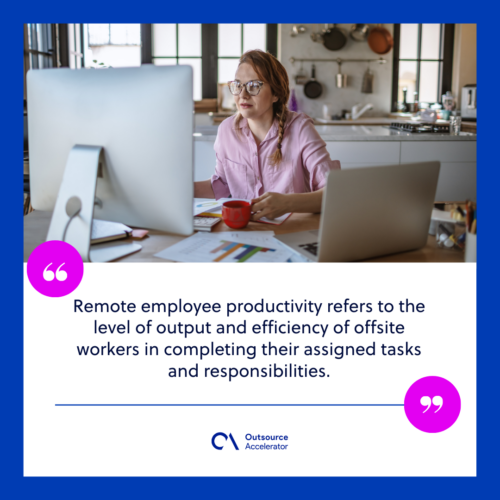
Remote employee productivity is the level of output and efficiency of offsite workers as they finish their tasks. It measures how well they manage time, stay focused, and deliver quality work. Unlike office work, it leans heavily on self-discipline and the ability to work alone. So good habits and clear goals matter even more.
Importance of remote employee productivity
The importance of remote employee productivity touches many parts of a business. Here are three clear examples.
Cost savings
Efficient remote work can cut the overhead of running a physical office. For example, research by TheStreet found firms can save up to $11,000 per employee in overhead with a remote setup. So the savings add up fast. You can see more upside in these benefits of remote work.
Talent retention
High remote productivity can lift job satisfaction. As a result, it lowers turnover and the need to hire often. In fact, a Tracking Happiness study found worker happiness rose by as much as 20% when people could work remotely.
Global talent pool
Remote work lets you hire from a worldwide talent pool. So you gain access to a wide range of skills and fresh perspectives. In turn, your team grows stronger and more diverse.
7 tips to increase remote employee productivity
Boosting remote employee productivity is vital for any team that works offsite. Here are seven reliable tips to keep in mind.
1. Set clear expectations and goals
First, define clear goals for your remote workers. Also, make the targets realistic. So people know what is expected and can plan their work around it.
2. Foster effective communication
Next, set up regular channels to keep remote staff connected and informed. For example, use video calls, team chat, and project tools. These make day-to-day work smooth. Remote Employee-recommended tools for communication include Slack and Microsoft Teams.

3. Provide the right tools and technology
Give your remote staff the tools they need to work well. For instance, this means reliable internet, project software, and chat tools. Remote Employee suggests apps like Toggl and Basecamp for time tracking and project work. The right employee productivity apps can make a big difference.
4. Encourage breaks and time management
Encourage offsite staff to take regular breaks and manage time well. For example, the Pomodoro Technique helps many people stay on task. Short breaks refresh focus and lift output. A little time management training goes a long way here.
5. Encourage regular physical activity
Ask remote staff to add movement to their day. In fact, studies link activity to better focus and performance. So a short walk, a quick workout, or a virtual fitness class can help.
6. Recognize and reward achievements
Also, acknowledge and reward your remote team for their wins. This can be as simple as a thank-you email or a public shout-out in a meeting. As a result, people feel valued and perform better.
7. Invest in professional development
Finally, support ongoing learning and growth. For example, give access to online courses and resources. This builds new skills and keeps people driven. Clear professional development goals make this even more effective.
How to monitor remote employee productivity
Monitoring remote productivity needs a fair, balanced approach that respects privacy and builds trust. So use these simple strategies to track efficiency.
- Use time-tracking or monitoring tools. Remote productivity monitoring software helps track hours and tasks.
- Regular check-ins. Hold regular one-on-ones to talk about progress, blockers, and goals.
- Performance reviews. Run periodic reviews to assess output and give feedback.
- Employee surveys. Gather feedback to learn your team’s needs and challenges.
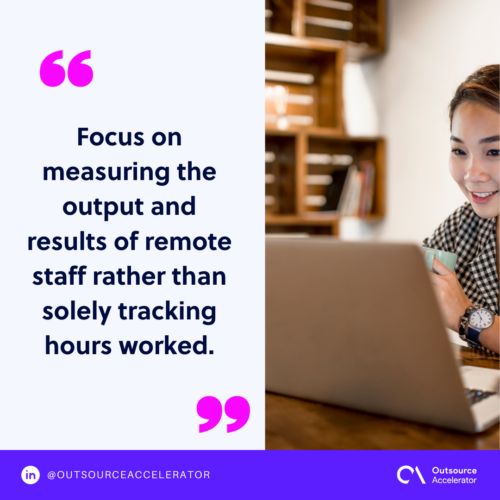
- Measure output and results. Focus on results, not just hours logged.
- Trust and empower remote employees. Give people autonomy to manage their work while they meet clear goals.
Ensure the productivity of your workers with Remote Employee
Boosting remote employee productivity is key to the success of any team that works offsite. By following these tips, you can keep your staff engaged, driven, and productive. Strong workplace productivity habits support this goal every day.
Another sure way to lift output is to tap into business process outsourcing (BPO). This is easy to do with a trusted BPO firm like Remote Employee. The company unlocks and speeds up the growth of your business through outsourcing. For example, partnering with them to build an offshore team can help you save up to 70% on costs.
Remote Employee also offers modern tools, flexible team members, and client-focused service. So building a productive remote workforce with them is a worry-free move. Learn more about Remote Employee and its solutions by visiting its website. There you will find its services, insights, and resources to get you started.
Frequently asked questions
How do you measure remote employee productivity?
Instead, focus on output, not hours. For example, track completed tasks, quality, and goals met. Time-tracking tools and regular reviews help too. Together, these give a fair picture of productivity.
Does remote work really improve productivity?
For many teams, yes. Fewer office distractions and flexible hours can lift focus. Still, results vary by role and setup. So clear goals and good tools remain key.
What tools help with remote employee productivity?
For example, common picks include Slack or Microsoft Teams for chat. Many teams also use Toggl for time tracking and Basecamp for projects. The best tools match your team’s workflow.
How can managers track remote staff without micromanaging?
Measure results instead of watching every minute. So set clear targets, hold regular check-ins, and trust people to deliver. This builds both accountability and trust.
How does outsourcing support remote employee productivity?
A BPO partner brings skilled staff, proven systems, and support. As a result, you get a productive remote team without heavy setup. It also frees you to focus on core work.






 Independent






