
The power of digital thread in business processes


A digital thread is a new way to deliver your message and track how people use it. It is not just one message. Instead, it is a steady flow of information that stays relevant to each person.
The idea sits at the heart of digital transformation. In practice, it ties many tools together to move your company forward. But what is a digital thread, and what can it do? Read on to find out.
What is a digital thread?
A digital thread is a seamless flow of digital information that follows a product or process across its full lifecycle, from first idea to ongoing service.
- It captures and links data so the right people can reach it at the right time.
- It connects separate systems, so information no longer sits in silos.
- It gives teams one shared view, which supports faster and smarter choices.
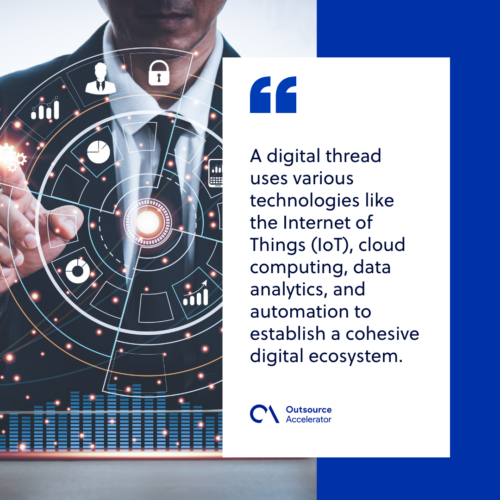
A digital thread uses tools like the Internet of Things, cloud computing, data analytics, and automation. Together, these build a cohesive digital ecosystem. As a result, a business can streamline work, lift efficiency, and gain an edge in a fast, data-driven market.
Here are some common examples of a digital thread:
- A customer buys a product or service and later returns it.
- A customer works with a technical support agent.
- Two employees in a service team share a customer case.
- An employee’s status changes, such as a promotion or a departure.
- The data needed to finish a sale, like shipping and billing details.
Digital thread and digital twin
A digital twin takes the idea one step further. It builds an exact virtual copy of a physical object or product. The goal is to model a real system so teams can test and simulate it. In turn, they can do this both before and after it is built.
To create a digital twin, you first gather all relevant data from your products and systems. Next, you store it in one central place. Then you use that data to build virtual versions you can study, predict, and improve.
4 key components of a digital thread
A digital thread is not complete without these core parts. Each one keeps the flow of data clear and useful.
Data-driven architecture
A digital thread uses technology to collect and study data. It then turns that data into the basis for business choices. In short, it relies on real-time facts about what customers do and want. That is hard to manage when data is scattered or missing.
A data-driven setup gives real-time access to data from all your systems. This includes network analytics, CRM tools, point-of-sale software, and e-commerce platforms. As a result, teams see the full picture instead of a few parts.
Links of significant information
A digital thread must stay well organized to work. Otherwise, people feel buried in information overload. So the links between data points need to be clear and simple to follow.
Significant information is anything that matters to your business or its customers. For example, it could be a product listing, a shipping label, or a sales quote. In each case, it changes how things work once you add it to your system.
System of record
A system of record, or SOR, is the main database for customer information. It holds core customer data, such as:
- Name
- Address
- Credit card details
- Purchase history
All of this sits in one place for easy access across teams. As a result, staff can see every step of the customer journey. In turn, they make better choices as a product moves through its life.
Reflection of the product development process
A digital thread centers on what customers want from their products. First, it starts with a clear view of their needs and goals. Next, you find ways to meet those needs in your products. Then you test the options, confirm them with customers, and fold feedback into the next version.
Your digital thread should mirror this whole path. In this way, it covers every part of product development, from technical details to business strategy.
Benefits of implementing a digital thread
A digital thread can be a strong tool for any growing business. Here are the main benefits you can expect.
Engineering excellence
The digital thread acts as a single source of truth. It covers design, manufacturing, and supply chain work in one view. As a result, teams can work together and focus on better design.
This company-wide approach also keeps software work consistent across product lines. Because quality is built in from the start, teams ship fewer bugs. In turn, new features reach the market faster.
Manufacturing efficiency
The main goal of the digital thread is higher productivity. With it, manufacturers can remove bottlenecks caused by manual steps. So they meet customer demand at a faster pace, which lifts revenue. They also spend less time on error checks, which boosts output even more.

Product and service innovation
A digital thread supports a more agile way to build products. At the same time, it keeps every channel consistent. As a result, teams can innovate faster together. Their new ideas also stay true to the brand and to customer expectations.
Service optimization
In a connected world, the customer experience is no longer one moment. Customers now reach brands on multiple channels. So brands can tune each channel to work well. This lifts service quality across every touchpoint.
A digital thread also helps teams personalize each journey. Because it uses real-time data, it adapts to what a customer needs right now. This is a core part of a strong digital customer experience.
Sales and marketing experience
A digital thread also improves sales and marketing. With it, you can tailor offers and lift conversion rates. As a result, customers engage more because they feel heard. In the end, that trust leads to stronger, longer relationships.
Frequently asked questions about digital thread
What is the difference between a digital thread and a digital twin?
A digital thread is the flow of data across a product’s life. A digital twin is a virtual copy of the product itself. In short, the thread connects the data, while the twin models the object.
Which technologies power a digital thread?
It relies on the Internet of Things, cloud computing, and data analytics. Automation and connected systems also play a part. Together, these keep data flowing in real time.
Which industries benefit most from a digital thread?
Manufacturing gains the most clear value today. Still, retail, logistics, and service firms benefit too. Any business with complex products or long lifecycles can use it.
How does a company start building a digital thread?
Start by connecting your core data sources into one view. Next, set a single source of truth for key records. Then expand the thread step by step as teams adjust.






 Independent






