
A quick guide to digital product development


What is digital product development?
Digital product development is the process of planning, building, and improving software products such as apps, websites, and online services that meet real user needs.
- It turns an idea into a working, user-friendly product.
- It follows clear stages, from ideation to launch.
- As a result, teams ship faster and please more customers.
Strong digital products now drive growth for many firms. So more teams build apps to promote their services. Meanwhile, small businesses want to do the same but often feel stuck at the start. Because of this, a clear grasp of digital product development helps a lot. In this guide, we explain what it means. We also share simple tips to build a winning strategy.
Benefits of digital product development
Digital product development brings several clear gains. Here are the main ones.
Improved productivity
First, a good process lifts productivity. Through a structured development process, teams smooth out their workflows. As a result, they work faster and waste less time. So the whole project moves at a better pace.
A better alliance between teams
Next, the process helps teams work as one. Each group brings its own skills to the table. For example, designers, developers, marketers, and project managers all play a part. As a result, the product feels whole and well planned. It also fits what customers expect.
Faster production process
Digital product development also shortens the build cycle. So a product reaches the market sooner. As a result, firms can answer demand fast and stay ahead of rivals. In addition, a clear path from idea to launch cuts delays. Strong product management keeps each stage on track.
Enhanced customer satisfaction
Most of all, the process puts users first. Teams study needs, run tests, and check their ideas. So they learn about user habits, pain points, and hopes. Because of this, the final product meets or beats what customers want. As a result, it builds a loyal base over time.
Stages of digital product development
A digital product moves through several stages before launch. Here is how each one works.
Ideation and preparation
First comes the idea. In this stage, teams shape the product vision and prepare the groundwork. The ideation phase is the time to brainstorm. So teams ask what product can solve a real market problem. Then they run market research and set clear goals.
Research
Next, research guides the whole build. It shows user needs, market trends, and likely risks. Product research can use surveys, interviews, and market analysis. As a result, the product lines up with what customers expect.
Prototyping
Then teams build a rough version of the product. This can be a wireframe, a mockup, or an interactive prototype. So they can test how the product looks and feels early on. Because of this, they spot weak points fast. As a result, the final product gets closer to user needs.
Design
Design brings the vision to life on screen. It covers both the user interface (UI) and user experience (UX) design. UI design shapes the look and the ease of use. Meanwhile, UX design keeps the whole journey smooth. As a result, good design lifts both engagement and joy.
Testing and validation
Testing checks that the product meets quality standards. So teams run tests, study usage, and gather early feedback. As a result, they find and fix bugs before launch. Careful software testing at this stage prevents costly issues later.
Development
In this stage, the product becomes fully functional. Many firms partner with premier offshoring providers like Outsourced Global as they have skilled developers who work on coding, integrating various components, and implementing necessary features. Effective project management and steady team communication keep the build on track. Some teams also scale up through software development outsourcing when they need more hands.
Launch
Finally, the product goes live. In this stage, teams release it, promote it, and watch how it performs. So a strong launch needs good marketing and clear digital channels. In addition, teams keep improving the product based on user feedback.
Tips for creating a digital product development strategy
To build a winning strategy, keep these simple tips in mind.
Foster cross-functional collaboration
First, open up communication across teams. So skills blend well from start to finish. As a result, product quality goes up.
Prioritize user experience
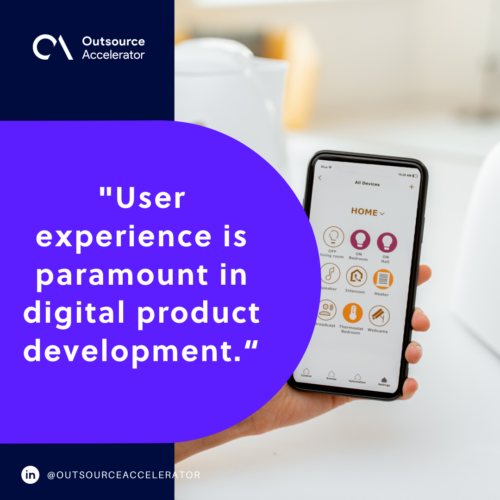
User experience sits at the heart of every strong product. So make it a top goal at each stage, from design to testing. This matters as much for a website as it does for mobile app development.
Continuously test and iterate
Next, gather feedback often. So run A/B tests and make small, steady improvements. As a result, you fine-tune the product with real user data. This habit is key when you build a SaaS product that grows over time.
Stay updated with industry trends
Finally, watch trends, new tech, and rival products. So you can keep your product fresh and ahead of the pack. Because of this, it stays useful as the market shifts.
In short, digital product development takes careful planning, teamwork, and a focus on the user. So with a clear strategy, you can build products that click with your audience. As a result, they drive real business success.
Frequently asked questions about digital product development
What is a digital product?
A digital product is any software-based offering. For example, it can be an app, a website, or an online service. Users access it on a phone, tablet, or computer.
How long does digital product development take?
It depends on the scope. A simple app may take a few weeks. Meanwhile, a large platform can take many months. Clear planning helps keep the timeline tight.
Can I outsource digital product development?
Yes. Many firms hire offshore teams to code, design, and test. So they cut costs and reach skilled talent fast.
What skills does a product team need?
A strong team blends several skills. It needs designers, developers, testers, and a project lead. In addition, a clear owner keeps the vision on track.
Why is user experience so important?
Good user experience keeps people coming back. So it drives loyalty and word of mouth. As a result, it often decides whether a product wins or fails.
Key takeaways
- Digital product development turns an idea into a working, user-first product.
- It follows clear stages, from ideation and research to launch.
- A structured process lifts productivity, speed, and customer satisfaction.
- User experience should lead every stage of the build.
- Regular testing and trend tracking keep the product strong over time.






 Independent





