
5 Customer service myths that could be costing you customers


What are the most common customer service myths?
The biggest customer service myths are that the customer is always right, that people prefer self-service, that complaints are bad, that more channels mean better service, and that support is just a cost.
- These false beliefs slow response times and hurt loyalty.
- They push teams to make choices that frustrate customers.
- Fixing them lifts satisfaction and protects revenue.
Customer expectations keep shifting, so businesses must keep their service current to stay ahead. Outdated methods can lead to frustration, missed chances, and lost loyalty.
More so, many teams still follow old beliefs that no longer match how customers act. As a result, these customer service myths create gaps, slow replies, and poor experiences. In this article, we break down five common myths that lead teams the wrong way. We also explain what to do instead.
Traditional vs. modern customer service
Customer service has changed a lot over the years. Firms that once leaned on phone calls and in-person chats now support many digital channels.
Both old and new methods aim to help customers. However, the tools and expectations are very different. So knowing these changes helps teams stay relevant and respond well.

Here is a quick look at the key differences between traditional and modern customer service.
| Traditional customer service | Modern customer service |
| Phone and in-person support | Live chat, email, and social media |
| Limited service hours | 24/7 support options |
| Reactive problem-solving | Proactive customer engagement |
| One-size-fits-all solutions | Personalized experiences |
| Manual tracking and logging | Data-driven tools and automation |
| Longer response times | Real-time or near-instant replies |
Modern customer service is about speed, flexibility, and personal touch. It values feedback, uses tech to improve chats, and adapts to each customer. So firms that stick with old methods may struggle to meet today’s needs. As a result, they can lose their edge. To see the risks, review these examples of bad customer service and how to avoid them.
This shift also shows the danger of old beliefs. Many teams still work from ideas that no longer apply. So in the next section, we explore five customer service myths that hold businesses back.
5 customer service myths that can be harming your business
Customer service is key to business success. However, many firms work under myths that hurt satisfaction and loyalty.
According to the Institute of Customer Service, consumer satisfaction in the UK has declined. Many sectors face rising complaints due to old service models and cost pressures. So here are five customer service myths that may be cutting into your income.
1. The customer is always right
This old belief can push staff to agree with unfair demands. As a result, it can bend company rules and hurt morale. Still, it is vital to value feedback and set fair limits that protect your team.
What to do instead: Empower your team to handle hard moments with confidence. Provide training on conflict resolution and set clear rules for customer conduct. So staff can manage chats firmly while staying kind and professional.
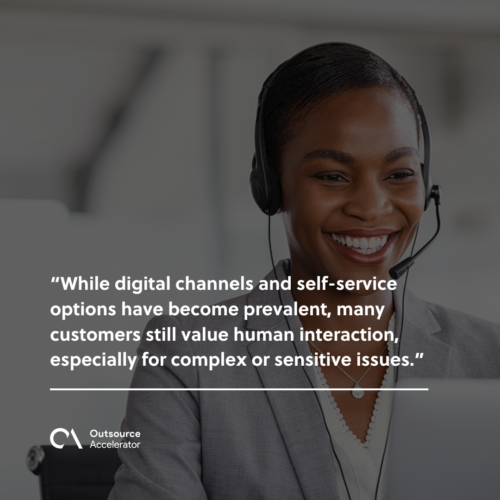
2. Customers prefer self-service over human interaction
Self-service tools are now common. However, many customers still want a real person, especially for tricky or sensitive issues. For example, a recent survey of 4,000 people found three-quarters prefer speaking to a live agent for help.
What to do instead: Offer a balanced mix of self-service and ready human support. Also make sure customers can switch channels without repeating themselves. Strong customer service skills help agents pick up where a chatbot leaves off.
3. Customer complaints are a bad sign
Many firms see complaints as bad news to avoid. However, complaints can point to areas that need work. So ignoring them means missed chances to improve.
What to do instead: Invite customers to share concerns and treat complaints as useful input. In addition, set up systems to track and study feedback. As a result, you can drive steady improvement. Many of these issues also appear in common customer service challenges that teams can plan for.
4. More channels mean better service
More channels can boost access. However, they do not always mean better service. Without proper links between them, channels can lead to broken, frustrating experiences.
What to do instead: Focus on quality over quantity. So make sure each channel is well-staffed. Also keep interactions smooth and consistent across every platform.
5. Customer service is a cost center
Some firms see service as an expense, not an investment. As a result, they underfund it, which can hurt quality and satisfaction.
What to do instead: Treat customer service as a strategic asset that drives retention and loyalty. So put resources into training, tools, and support. In fact, many brands lean on outsourcing customer service to scale quality without heavy overhead.
Knowing and fixing these customer service myths is key for firms that want stronger service and better client ties.
Frequently asked questions
Why do customer service myths matter?
Myths shape how teams act each day. So a false belief can push staff to make choices that frustrate customers. As a result, the business can lose loyalty and revenue.
Is the customer always right?
No, not always. It is vital to value feedback. However, you must also set fair limits that protect staff and uphold your standards.
Do customers still want human support?
Yes. Self-service is handy for simple tasks. However, most people still want a real agent for complex or sensitive issues. A blend of both works best.
How can outsourcing help customer service?
A good partner brings trained agents and proven systems. So you can scale quality fast and keep costs in check. This also frees your core team for other work.
Key takeaways
- Five common customer service myths still steer many teams the wrong way.
- The customer is not always right, and firm, fair limits protect your staff.
- Most customers still want human support for hard issues.
- Complaints are useful input, not just bad news.
- Treat service as an investment, not a cost, to boost loyalty and revenue.
Hire top-tier customer service representatives with SixEleven
Gain an edge by working with pros who know your brand and put customers first. So act now to connect with skilled reps ready to lift your support and strengthen loyalty.
Connect with SixEleven and see how the right team can make all the difference. Your customers deserve nothing less.






 Independent





