
Collaborative workspace: Improving teamwork and employee experience


Collaborative workspace is a term that has become increasingly popular in the modern workplace. It refers to a work environment designed to promote collaboration, communication, and teamwork among employees.
The idea behind collaborative workspace is to foster an environment that encourages creativity and innovation. While most businesses have rough starts at managing these workspaces, it can further boost productivity and performance once done well.
In this blog post, we will explore the elements of a collaborative workspace and its impact on employee experience.
What is a collaborative workspace?
A collaborative workspace is a dynamic environment designed to promote collaboration among employees. It traverses beyond the traditional office cubicle layout by arming all teams with the tools, space, and strategies to work smoothly.
Its concept has gained significant traction recently as organizations recognize the value of breaking down silos. This, in turn, has become an arm to boost engagement and motivation.
Firms like Offshore MVP make sure to do this to effectively integrate their offshore employees with their clients’ onsite teams.

Elements of a collaborative workspace
A successful workspace comprises several key elements that work together to create an environment conducive to collaboration.
These elements include:
Physical space
The physical layout of a collaborative workspace is designed to facilitate communication and interaction. It usually features an open office layout with shared desks, comfortable seating arrangements, and designated spaces for team meetings and brainstorming sessions.
In other cases, open office spaces also include areas for rest and recreation. Some organizations set up pool tables, game and breakout rooms, and wellness areas where teams can take a break and destress.
Technology
Technology plays a crucial role in forming a modern workspace. From video conferencing tools to project management software, collaborative workspaces leverage technology to connect teams and streamline communication.
The necessary tools and equipment also make performance monitoring easier in real-time.
Comfort
A comfortable workspace is essential for employee well-being and productivity. Collaborative workspaces often include ergonomic furniture, adjustable lighting, and pleasant aesthetics to create a welcoming and inspiring atmosphere.
For instance, coworking areas usually have natural lighting, aesthetic design, and furniture to match their ambiance. This focus on comfort helps to improve employee satisfaction.
Flexibility
Collaborative workspaces offer flexibility in terms of space utilization. They often include versatile furniture and movable partitions that can be easily rearranged according to a firm’s team size and work dynamics.
This adaptability allows teams to customize their workspace to suit their needs, fostering a sense of ownership and empowerment.
Plenty of providers, like Booth & Partners, provide readied workspace solutions that promote flexibility among workers.
Branding
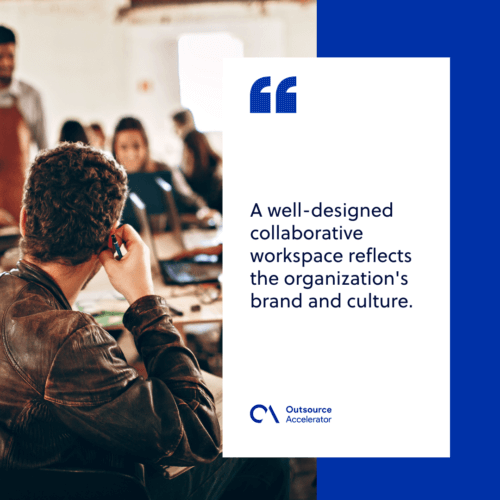
A well-designed collaborative workspace reflects the organization’s brand and culture. It incorporates the company’s values, mission, and visual identity to create a sense of belonging and pride among employees.
Organizations can reinforce their corporate culture by aligning the workspace with their brand while enhancing employee engagement.
Google is a perfect example of companies incorporating corporate branding into their workspace. In an article by the Architectural Digest, their office spaces reflect their founding principle: creating user-friendly products.
Advantages of having a collaborative workspace
Adapting a collaborative workspace can benefit the entire organization of all sizes, from core teams to their bottom line.
Promoting agility
Nowadays, agility in real estate is a must in keeping up with the tight competition. A company’s workspace should be able to keep up with its fast pace, regardless of size, to make it in today’s market.
Collaborative workspaces promote this agility by making their offices open for collaboration, innovation, and brainstorming, no matter where the staff is.
Enhanced creativity
According to studies, team collaboration increases product quality by 34% and product development by 31%.
By fostering collaboration and knowledge sharing, collaborative workspaces create an environment that allows innovation and creativity to move freely.
Improved productivity
Collaborative workspaces provide easy access to resources, enabling employees to work more efficiently. This increases their productivity and efficiency at work, with their collaboration more seamless through the cloud.
Employee retention
As mentioned earlier, collaboration creates better products and development processes. It also develops satisfaction among customers and employees.
Collaborative workspaces contribute to a positive employee experience, closely linked to satisfaction and retention.
Collaborative workspaces impact employee experience
Collaborative workspaces have a profound impact on employee experience. They foster a sense of belonging, encourage teamwork, and create opportunities for professional growth.
Organizations show commitment to employee well-being and development by providing a collaborative environment. This, in turn, results in higher job satisfaction, higher levels of engagement, and improved overall performance.
Furthermore, collaborative workspaces contribute to attracting and retaining top talent. A 2022 study by Ernest and Young indicates that work flexibility is the second most sought-out quality by employees nowadays, next to career advancement.

Having a collaborative workspace is a great stepping stone for this.
In today’s competitive job market, having a collaborative workspace can give organizations a significant advantage in attracting and retaining skilled employees.
As companies continue to prioritize collaboration and recognize its importance, the adoption of collaborative workspaces is expected to grow steadily in the coming years.






 Independent





