
A quick guide to remote employee termination

What is remote employee termination?
Remote employee termination is the formal process of ending a remote worker’s employment in a fair, documented, and legally compliant way, usually over a recorded video call.
- Common reasons include poor performance, misconduct, and insubordination.
- The core steps are gathering documentation, checking local laws, setting up the meeting, and explaining the reasons clearly.
- Good offboarding follows the call, so you cut access, recover equipment, and send the final pay on time.
The digital workplace has grown fast. Today, employees can be hired from almost anywhere, which opens a new pool of talent for companies to access.
However, part of managing that talent includes remote employee termination. Sometimes a remote worker is no longer a good fit. Other times, they break company policy. Either way, you need to know the proper steps to take when ending the role.
Reasons for remote employee termination
Here are a few of the most common reasons for ending a remote worker’s role.
Poor performance
Poor performance is the most common reason for remote employee termination. For example, it can stem from many factors, such as a lack of work ethic or ambition.
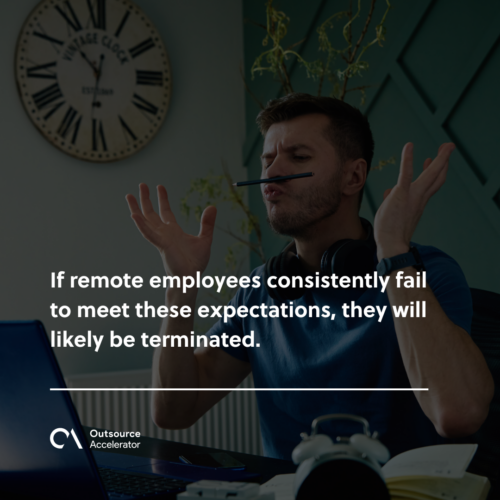
Most companies set clear expectations for their staff. These cover work hours and productivity. So if remote employees keep missing these targets, termination often follows. Regular reviews and feedback can catch problems early, which is why managing a remote employee well matters so much.
Misconduct
In some cases, an employer may have good reason to end a role for misconduct. If you do, first make sure you can document the actions. Also confirm there is no other fair way to handle the situation.
Misconduct includes theft, fraud, dishonesty, criminal convictions, and policy violations. So if it happens during business hours, termination is usually fair.
Insubordination
Remote workers who ignore instructions can cause real problems. For example, insubordination can lead to errors, lost time, and frustration across the team.
No workplace tolerates insubordination. So if a remote employee refuses to follow orders or speak professionally with management, termination may be the result.
Steps of a remote employee termination
Consider these steps if you need to end a remote worker’s role.
Gather all relevant documentation
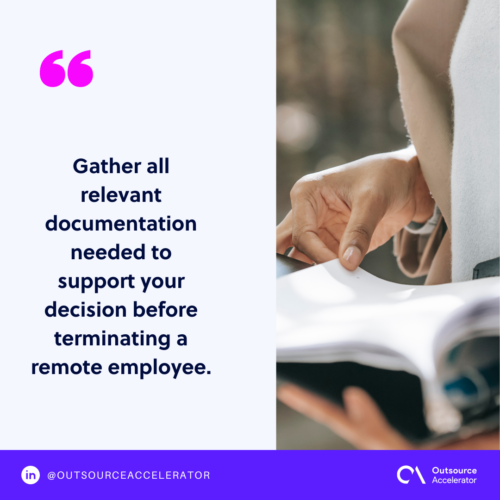
First, gather all the documents that support your decision. You want to show evidence if needed. In addition, you want proof that you took every proper legal step.
So collect any records tied to the remote employee’s contract. This includes:
- Employment contracts
- Wage slips
- Performance reviews
- Any other documentation that proves they were hired or promoted within the company
Next, send a termination letter. Write it as professionally as possible, and include the reason for termination. A clear contract termination letter template keeps the wording consistent. If the worker is being let go for cause, also keep copies of any supporting evidence.
Ensure compliance with local laws
When ending a remote role, you should be aware of the laws that apply. Rules vary by location. For example, different regions set different notice periods before termination.
In some cases, these laws are stricter than many American companies follow. So longer notice and severance pay may be required. Because of this, contact your HR department or legal counsel before you issue the letter. If needed, update your employment agreements and handbooks to cover future terminations.
Determine who will be present for the meeting
If several people share the decision, it helps to include them all. You should also include any HR staff or managers who may handle paperwork.
Still, who attends can vary by company policy. For instance, if you are ending several roles, one HR or legal representative can follow up with each person afterward. In extreme cases, a third party like an attorney or union representative may join the meeting.
Choose a reliable video conferencing platform
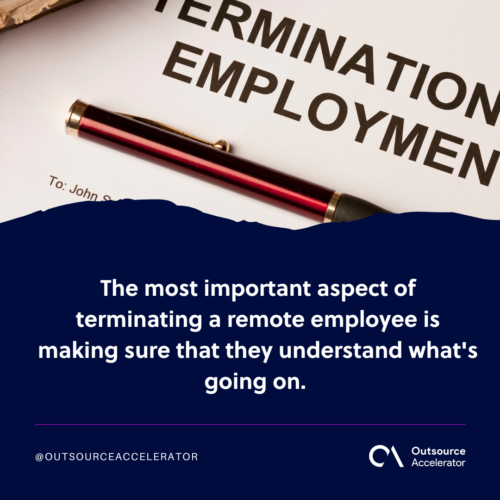
Above all, the most important part of a remote termination is making sure the worker understands what is happening. So stick with a platform that allows clear communication. The platform should have the following features:
- HD video quality
- A reliable connection
- An intuitive interface
- The ability to record the call
Explain clearly the reasons for termination
First, explain how the worker’s performance affected your business. If other factors played a part, address those too. Above all, be direct and honest.
Also include specific examples, not vague lines like “you weren’t meeting our expectations.” If there are legal points, add those details in your explanation.
What to do after a remote employee termination
Just like with an onsite worker, proper offboarding matters. So this checklist can help. For a deeper walkthrough, see this guide to employee offboarding.
- Have the IT department disconnect all the remote employee’s company access
- Coordinate with the remote employee for the return of any company equipment
- Notify administrators for any benefits plan
- Give the remote employee their final paycheck
- Instruct your HR team to answer any questions or concerns
Handling these steps in-house can stretch a small team. So many companies lean on an HR outsourcing partner to manage the paperwork and stay compliant.
Build a solid offshore team with Remote Employee
It can be intimidating to outsource remote employees. But if you’re looking to build a capable offshore team, look no further than Remote Employee.
You can find workers fast and affordably with Remote Employee’s outsourcing solutions. Their hires are selected from the skilled talent pool offered by the Philippines, which has an educated workforce with an aptitude for English.
And if you do need termination services, their HR assistance can handle it as well. Contact Remote Employee today.
Frequently asked questions about remote employee termination
Here are quick answers to common questions about ending a remote worker’s role.
Can you legally terminate a remote employee over video call?
Yes, in most regions. Still, you should follow local notice and documentation rules first. A recorded video call also gives both sides a clear record of the meeting.
What laws apply when terminating a remote worker in another country?
The laws of the worker’s location usually apply, not just your own. So check notice periods, severance rules, and final-pay timing there. When in doubt, ask local legal counsel before you act.
How much notice should you give a remote employee?
Notice depends on the contract and local law. Some regions require several weeks, while others allow less. Always confirm the minimum for the worker’s country before you set a date.
Should HR be present during a remote termination?
Yes, whenever possible. An HR representative keeps the meeting fair and well documented. In addition, they can answer benefits and final-pay questions on the spot.
What should you do right after the termination call?
First, have IT cut all system access. Next, arrange the return of company equipment. Finally, send the final paycheck and close out any benefits on time.






 Independent






