
Beating the (sometimes) inevitable: Your quick checklist to employee offboarding


What is employee offboarding?
Employee offboarding is the structured process of managing a staff member’s exit so the handover stays smooth, compliant, and respectful.
Done the right way, employee offboarding protects your business and your brand. In short, a good process covers three things:
- Return of company assets and system access
- Knowledge transfer to the next person
- Final pay, benefits, and a clear exit interview
Turnover is sometimes hard to avoid. Whether through resignation or termination, staff leave a company for many reasons. Some go for good, and some only for a while.
A few years back, the “great resignation” pushed quit levels past four million a month. As a result, many teams had to rethink how people join and how they leave.
Onboarding sets the tone for a good work experience. Offboarding, on the other hand, makes sure the switch from a former staff member to their replacement stays smooth. So both matter just as much.
You can run your offboarding the right way and still leave a great impression on a departing employee. Below, Booth shares a simple checklist for compliant employee offboarding. First, though, here is why it matters.
Why employee offboarding is necessary
Employee offboarding is the departing staff member’s move away from the organization. In practice, it hands back their access to company assets, systems, and benefits.
Still, it is more than a formal step. It is also a chance to leave a lasting impression and keep a positive employer brand. For context, it helps to know common employee turnover reasons before someone walks out the door.
With a well-planned offboarding process, your organization can gain a lot. Here are the main wins:
- Preserve relationships. Offboarding lets you part ways on good terms. As a result, you can keep a positive link with the departing employee and stop any leftover employee conflict with former teammates.
- Protect company assets. Get back company property, cut off system access, and guard sensitive data. Because of this, you keep your assets and information safe.
- Facilitate knowledge transfer. Offboarding lets people share what they know with the next hire. So you lose far less useful know-how.
- Comply with certain rules. When you hire offshore staff, you and your provider must follow the rules that cover resignations and terminations.
Your checklist for employee offboarding
A clear checklist keeps employee offboarding on track. In addition, it makes sure key steps are never missed.
Here are the main parts to include in your checklist.
1. Thank your employee
First, take time to thank the departing employee for their work. A warm note of thanks marks their effort. As a result, they leave with a good final memory.
2. Conduct an exit interview
Next, run an exit interview. This lets the leaver share honest feedback about their time with you.
That feedback often points to real fixes. For example, it can flag a broken process or a gap you can close for the team.
3. Ensure knowledge transfer
Then ask the leaver to write down their projects, steps, and key contacts. Because of this, the next person starts faster and the work does not stall.
4. Recover company property
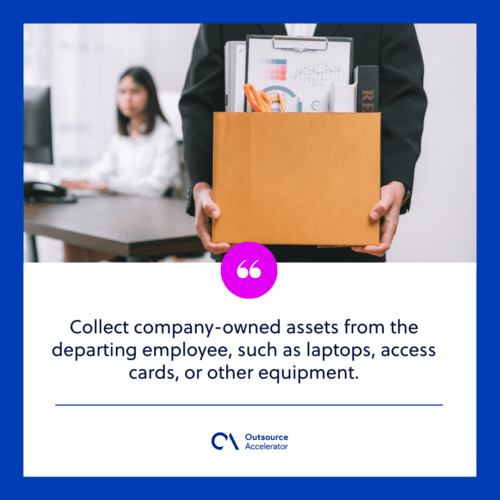
After that, collect company gear from the leaver. This can include laptops, access cards, or other kit. Also, share clear steps and dates for return.
Sometimes staff forget or refuse to hand things back. In that case, you may send a notice for the return of company property. It can state that you may hold their clearance until the items come back.
5. Revoke systems access
Cut off the leaver’s access to your systems and networks right away. As a result, your data stays safe from unwanted use.
6. Arrange final pay and benefits
Make sure the leaver gets their final paycheck. This includes any earned benefits or costs you owe them.
Labor laws matter a lot here. So follow the rules in each location with care.
7. Keep in touch
Finally, stay in touch after they leave. A good bond can lead to referrals, partnerships, or a return hire later. Meanwhile, stay linked through networks or alumni groups.
Avoid constant employee offboarding and turnover with Booth
Offboarding can take real time and care. A few exits are normal. However, constant turnover is a warning sign that something inside the company needs to change.
The numbers back this up. Work Institute research found that first-year employee turnover can be very costly. It brings little to no return on your hiring spend. On top of that, you pay again to replace each person. The wider employee turnover statistics show the same trend across many teams.
So how do you stop the churn? A strong start is to build a positive work culture with a reliable provider. It also helps to track employee retention metrics and lift day-to-day employee engagement across the team.
Booth is a leading HR consulting firm. It offers tailored plans to cut turnover and boost retention.
With Booth’s help, your organization can:
- Find the root causes of turnover
- Put in place effective retention strategies
- Build a positive work culture that drives engagement and loyalty
A better employee experience keeps good people longer. So visit Booth’s website to see how they can lift engagement and reduce turnover.
Frequently asked questions
What is the difference between offboarding and onboarding?
Onboarding welcomes a new hire and helps them settle in. Offboarding, on the other hand, manages a person’s exit. Both shape how staff feel about your brand, so both deserve care.
How long should the employee offboarding process take?
It depends on the role and access involved. Most exits run over the person’s notice period, often two to four weeks. Still, system access should be cut on the last working day itself.
Who is responsible for employee offboarding?
HR usually leads the process. However, IT, finance, and the direct manager all play a part. For example, IT revokes access while finance clears final pay.
Can offboarding help reduce future turnover?
Yes. A good exit interview shows why people leave. As a result, you can fix real issues and keep more of your team next time.
Should offboarding be different for remote or offshore staff?
The core steps stay the same. However, remote and offshore exits need extra care with device return and local labor rules. So plan those details early.






 Independent





