
Why offshoring IT services to the Philippines is an excellent business strategy


Why is offshoring IT services to the Philippines a smart strategy?
Offshoring IT services to the Philippines gives businesses skilled tech talent, big cost savings, and access to modern infrastructure.
- Filipino IT pros cost far less than local hires.
- Providers bring deep skills and better technology.
- Strong government support keeps the BPO sector stable.
The Philippines is known worldwide as the outsourcing capital. It is home to many trusted firms, such as Booth.
The country’s business process outsourcing (BPO) industry also enjoys support from the national government. As a result, the sector stays strong and stable. Our overview of the Philippines BPO industry covers this in depth.
Many firms worldwide now trust their work to Philippine providers. So it is no surprise that well-known brands offshore IT services to the country.
What does offshoring mean?
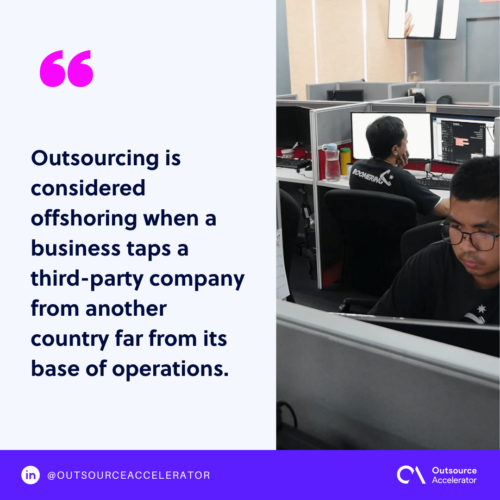
Offshoring means handing certain business tasks to an offshore third-party provider.
For example, a US firm may send its customer support services to a Philippine firm. That is offshoring.
Offshoring differs from onshoring and nearshoring by distance. It happens when a firm taps a provider in a far-off country. Otherwise, it is onshoring (the same country) or nearshoring (a nearby country). For a clear comparison, see offshore vs onshore.
Commonly offshored IT services
IT services are among the most outsourced business functions worldwide. Offshoring IT covers many areas, such as the following.
Software development
For example, software development spans custom builds and commercial products. In addition, it can focus on writing code for an existing system. Many firms scale this through software development outsourcing.
For example, teams often build web apps, mobile apps, and APIs. In addition, they maintain legacy systems that keep a business running.
Network and data security
Firms that handle sensitive data can turn to cyber security providers. These teams manage IT infrastructure to block unauthorized access and breaches. They use tools that range from simple firewalls to complex AI systems. For instance, they run regular audits and patch updates. So risks stay low.
IT helpdesk services
IT help desks are the contact point for clients with IT questions or issues. They help customers fix problems or get support through different channels, such as email, live chat, and calls. Many firms opt for help desk outsourcing to cover this.
Web hosting services
Web hosting is like renting space so a website stays live online. Host firms supply the technology and resources to run a site well. In addition, they handle server upkeep, network security, and performance.
Uptime is key here. So good hosts back their service with clear service-level agreements. As a result, your site stays fast and reliable.
IT operations management (ITOM)
ITOM is a broad service that often includes the tasks above. It takes a holistic view of a firm’s whole IT setup. So it covers servers, software installs, equipment upkeep, and network security. Some providers bundle this as managed IT services.
Advantages of offshoring IT services
Outsourcing IT services brings many competitive gains. Here are a few of them.
Cost-efficiency
Skilled IT pros hired through offshore firms like Booth can cost up to 70% less than US staff.
In addition, the provider covers their training and equipment. As a result, you save even more. It is cheaper to outsource IT than to build an IT setup from scratch. A wider view of IT outsourcing services shows the full range.
Access to industry experts
Also, outsourcing opens the door to skilled IT talent. These experts often bring years of experience. So there is a good chance they have already solved the issue you face.
Many hold industry certifications too. For example, they may be certified in cloud platforms or security. So you gain proven skills without long training.
Access to better technology
Similarly, outsourcing firms invest in leading tools to serve clients well. As a result, they often have better software and infrastructure than most firms. Handing IT to them lets you use that technology and work more efficiently.
Partner with Booth when offshoring IT services
Overall, offshoring IT services to Booth brings solutions that fit your organization. Its tailored recruitment and “one size does not fit all” approach make the talent feel like part of your team.
With this leading Philippine firm as your partner, you just share your IT needs. Then they handle the rest.
FAQs about offshoring IT services
What IT services can you offshore?
You can offshore software development, cybersecurity, and help desk support. In addition, firms offshore web hosting and full IT operations management. The right mix depends on your needs.
Why do firms offshore IT to the Philippines?
The Philippines offers skilled, English-speaking IT talent at lower cost. In addition, it has strong government support and modern infrastructure. So it remains a top choice for IT offshoring.
How much can you save by offshoring IT?
Savings vary by role and provider. Skilled IT pros can cost far less than local hires. The provider also covers training and equipment, which adds to the savings.
Is offshored IT secure?
It can be very secure with the right partner. Good providers run strong security tools and clear compliance rules. As a result, they often match or beat in-house setups.
What is the difference between offshoring and nearshoring?
Offshoring sends work to a far-off country. Nearshoring sends it to a nearby country instead. Onshoring keeps the work within your own country.






 Independent






