
Everything you need to know about proof of concept


What is a proof of concept?
A proof of concept (POC) is a small test that shows whether an idea or product is feasible before a company commits full time and money to it.
- It checks if an idea can work in practice, not just on paper.
- It helps teams spot risks and challenges early.
- It gives investors and stakeholders real evidence before they back a project.
Fresh ideas set the base for a company’s future goals. But before you put an idea to work, it should go through a well-built quality assurance strategy.
It is not easy to get people to embrace an idea or a project. Investors want proof that a new product and its business plan can succeed. So a proof of concept helps a lot here. It acts as a test you can review before real work begins. It also helps you fine-tune the idea by showing how the concept fits the wider market.
What does proof of concept (POC) mean?
A proof of concept (POC) is a representation of a product concept and whether it is feasible. People also call it a proof of principle. It pairs a vision of a product or service with a demonstration of its business potential.
A proof of concept aims to verify that an idea has real potential by putting it into practice. A POC does not produce finished outputs. Instead, its main concern is whether the project is feasible.
Proof of concept in the software development process
In software development, a proof of concept is a common practice. It serves as an early demonstration or prototype. First, it validates whether the following are feasible before a team commits to full-scale development:
- Specific ideas
- Technologies
- Solutions
A POC in software development is an early step in the process. It checks whether a given approach, technology, or design will work for a problem or a set of requirements. The main purpose of a proof of concept is to reduce risk. So it gives tangible evidence that a proposed solution is technically and practically doable from the start.
During the proof of concept phase, developers build a simple version of the software or a single feature. This is also known as a minimum viable product or MVP. They use it to test key functions and spot potential challenges. As a result, stakeholders can make informed calls about whether to proceed, based on real-world insights from the MVP. To see where this fits, review the five stages of the software development life cycle.
Ultimately, a successful proof of concept acts as a foundation for larger development work. It guides the direction of the project idea. It also makes sure the chosen approach aligns with the project’s goals and requirements.
Purpose of proof of concept
A proof of concept is a procedure that checks whether an idea can be implemented in the market. In fact, it is a necessary practice to attract potential investors and customers in the early stages of product development. Here are the advantages you can gain from a POC.
Setting up for commercial success
It takes a long time and a lot of money to create a new product. A POC lays out the full process in advance. As a result, it prepares the company ahead of launch and opens up chances for commercial success.
Identifying challenges before they arise
A proof of concept lets project managers spot risks before they move ahead with product implementation. So instead of learning about issues during or after launch, managers can plan for them early. Because of this, they can organize their initiatives in good time.
Ensuring a successful business pitch
Project managers pitch their ideas to investors to raise funds. To build a strong pitch, they must show the investment will pay off. In this case, a POC acts as solid proof that the new product can compete in the market. As a result, a clear business plan and risk strategy can win over stakeholders. If you lack in-house skills, outsourcing for startups can help you build the POC faster.
How to establish proof of concept for consumer products
A proof of concept is essential in the development process. In fact, it is a decisive point before you develop and launch a product. Here are some tips on how to run your proof of concept well.
Involve customers in product development
It is normal to seek customer feedback once a product is on the market. However, their insights matter just as much during development. The end-user, rather than the developer, can often foresee how a product will be used.
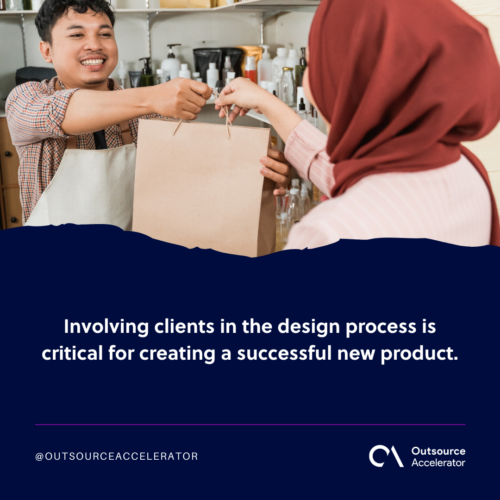
Involving clients in the design and concept process is critical for a successful new product. As a result, it supports a design that meets consumer needs. It also builds customer relationships and boosts loyalty. For a wider view, see these steps to create a strong product development plan.
Show why you need the product
The main goal of any new product is to benefit the consumer. Keep in mind that even impulse buys offer value for the consumer. So instead of stressing the product’s features, focus on the benefits it brings.
When you present a proof of concept, describe the target market and their concerns. The POC must reveal whether the product can meet consumer needs.
Come up with creative solutions
Once you know the customer’s pain points, come up with creative solutions. These solutions should be viable and within the company’s reach. The team should weigh the pros and cons of each option. For example, consider costs, timelines, required technologies, operational capacity, and competition.
Develop and evaluate a prototype
A key part of a strong proof of concept is prototyping. Built on set features and requirements, a prototype puts the idea into action. It also tests the idea’s viability further. A small group of users can then test the prototype. As a result, you can refine your designs and deliver the right product with confidence. For a deeper look, see this guide to product prototyping.
Present your finalized proof of concept for approval
Finalize your idea with a finished prototype. It should show your product’s functions, features, and advantages. The plan should also include specifics, such as a time frame, cost, success criteria, and required resources. As a result, stakeholders are more likely to approve the product’s development after they review the proof of concept. A clear product management process helps you carry that momentum into the next phase.
Frequently asked questions about proof of concept
What is the difference between a proof of concept and a prototype?
A proof of concept checks whether an idea can work at all. A prototype shows how it would look and function. So the POC comes first, and the prototype builds on what it proves.
What is the difference between a POC and an MVP?
A POC tests feasibility in a small, internal way. An MVP is a basic working product that real users can try. In short, a POC answers “can we build it?” while an MVP answers “will people use it?”
How long should a proof of concept take?
Most POCs run from a few days to a few weeks. The goal is a quick, focused test, not a finished product. So keep the scope tight and the timeline short.
Who is involved in a proof of concept?
Usually a small team leads the POC. This often includes developers, project managers, and a few test users. Stakeholders then review the results before the project moves ahead.
What makes a proof of concept successful?
A clear goal and set success criteria matter most. The POC should prove the idea works and flag the main risks. As a result, stakeholders can make a confident go or no-go call.






 Independent






