
Doable tips in managing remote staff

How do you manage remote staff effectively?
You manage remote staff well by giving clear instructions, setting deadlines, and leading with trust rather than control.
- Set clear tasks, owners, and due dates so everyone knows what to do.
- Walk people through the work instead of sending long emails.
- Stay humane and avoid micromanaging, even when things slip.
Managing remote staff has become a core skill for modern business. Remote work has come a long way, and more companies now see the value of a remote team. As technology keeps advancing, that shift only grows. However, some managers still struggle to adjust.
For example, some leaders are having trust issues with their staff. Others are simply used to the direct, in-office approach. As a result, they find the switch to offshore teams hard. Still, a few simple habits can make the change much smoother.
Chris Jankulovski, CEO and founder of Remote Staff, shared his views on this with Derek Gallimore, CEO of Outsource Accelerator, in episode 358 of the OA podcast. Below are his tips, plus the common hurdles to watch for.
Challenges that companies face in managing remote staff
One big hurdle is strategy. Many firms are not yet set up to work with an offshore team. As a result, they face friction when they try to make remote staffing work. For example, a business may lack the tools or systems to track output from afar.
The home office setup is another factor. One Motley Fool survey of more than 1,000 employees found that many work from less than ideal spots. In fact, a large share work from their beds, and some even work from their closets. So, physical comfort can suffer for both managers and staff.
Other common challenges include the following:
- Lack of direct supervision, since everything happens online.
- Less access to information that would flow easily in a face-to-face setting.
- Social isolation. On the bright side, Chris explained that people can still socialize online.
Still, each of these hurdles has a fix. For example, clear task tracking can replace over-the-shoulder supervision. Many teams use remote employee tracking tools to stay aligned without hovering. Meanwhile, regular check-ins help cut isolation and keep information flowing.

Tips in managing remote staff, according to Chris Jankulovski of Remote Staff
Throughout the talk, Chris stressed the value of compassion. He reminds leaders to stay human with their teams. In addition, he shares a few easy tips for managing remote staff. These same habits also help when managing an outsourced team of any size.
Give instructions and deadlines
Chris says there is no need to overcomplicate things with a new remote hire. Instead, you can set aside heavy processes at first. So, give clear instructions with deadlines. As a result, staff build accountability and learn to set their own priorities. For example, a simple brief with a due date often works better than a long policy.
Assign clear responsibilities
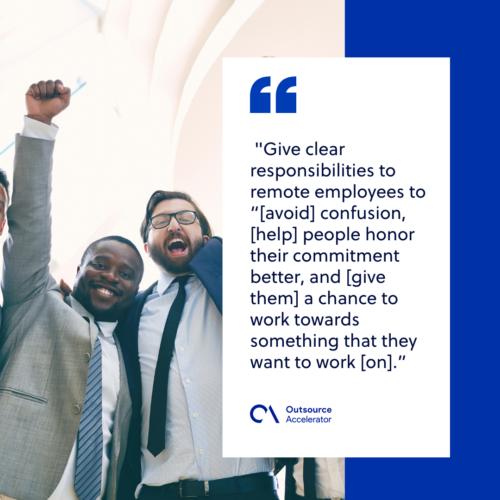
It also helps to give clear duties to your remote employees. Clear roles reduce confusion. In addition, they help people honor their commitments. Because of this, staff get a real chance to work toward goals they care about. Many high-performing offshore teams run on this kind of clarity.
Explain the task
Chris advises being clear when you explain a task. So, share the outcome you expect and the timeframe. As much as possible, walk people through the work. For example, a short screen share beats a long email. As a result, your staff gain a clear view of what good looks like.
Be compassionate
Finally, Chris reminds clients that remote work has downtimes. For example, a poor connection or a home distraction can come and go. However, that is no reason to micromanage your staff. Chris explains that Remote Staff builds output in a humane way, since driving too hard hurts both trust and productivity. In addition, good time management habits help staff pace themselves and avoid burnout.
Remote Staff and Chris Jankulovski’s contribution to the remote work movement
Founded in 2007, Remote Staff grew from a simple idea. Businesses could tap emerging markets for their staffing. Today, the company offers support and professional services to the Australia and New Zealand markets. As a result, many firms there now run leaner teams.
Chris Jankulovski, its founder, chose to base the company in the Philippines. He hired a Filipino workforce for its mix of low cost and high quality. In addition, he wrote a book for fellow entrepreneurs titled Just Keep Going. For firms weighing the same move, smooth remote work adoption often starts with the habits above.
So, check out their website at remotestaff.com to learn more.
Frequently asked questions about managing remote staff
What is the biggest challenge in managing remote staff?
The biggest challenge is often the loss of direct oversight. Managers cannot watch work in person. As a result, they must rely on clear goals and trust. Meanwhile, isolation and patchy communication can also slow a team down.
How do you keep remote staff accountable without micromanaging?
Set clear tasks, owners, and deadlines. Then review the output, not every minute of the day. For example, short weekly check-ins keep people on track. As a result, staff stay responsible while still feeling trusted.
How often should you check in with remote staff?
A short daily or weekly check-in works well for most teams. In addition, a longer one-on-one each month helps with growth and morale. Still, the right rhythm depends on the role and the project.
What tools help with managing remote staff?
Useful tools include chat apps, shared task boards, and video calls. In addition, time and output trackers help you see progress. For example, a simple project board keeps everyone aligned on priorities.
How do you prevent burnout in a remote team?
Encourage clear work hours and regular breaks. In addition, keep workloads realistic and check them often. So, staff can stay fresh and productive over the long run.






 Independent






