
The strategic advantage of an Employer of Record for remote global teams

Why use an Employer of Record for remote global teams?
An Employer of Record (EOR) lets you hire remote global teams in new countries fast and stay compliant, without setting up a legal entity in each one.
- The EOR legally employs your workers abroad and handles payroll, tax, and local labor law.
- You still own the day-to-day work, performance, and team culture.
- You can enter new markets in weeks, not months, with far less risk.
Building remote global teams used to feel like assembling furniture with no manual. Different labor laws, payroll rules, tax systems, and compliance standards made global hiring slow, risky, and costly.
Today, smart companies want to scale abroad without the pain. So many now turn to the Employer of Record (EOR) model.
An Employer of Record removes the legal and admin friction from global hiring. As a result, businesses can focus on growth instead of red tape.
Remote work is now the norm, not the exception. So the EOR model is fast becoming a strategic edge for firms that compete in a borderless talent market. To see how it fits beside related options, compare the Employer of Record model with other setups.
What is the Employer of Record (EOR) model?
An Employer of Record is a third-party firm that legally employs workers for you in a specific country. You still manage each employee’s daily work, performance, and deliverables. Meanwhile, the EOR handles employment compliance.
This covers local labor contracts, payroll, tax withholding, statutory benefits, and labor law. So for remote global teams, an EOR removes the need to open a legal entity in every country you hire from. It also keeps you aligned with global compliance in outsourcing.
Think of the EOR as the legal backbone of your global workforce. It quietly handles the complex parts. So your business can move faster and hire smarter.
5 advantages of using an EOR for remote global teams
Moving to a global workforce is a big strategic step. An EOR gives you the setup to manage global talent without building local entities. The main gains appear below.
1. Faster global hiring
Traditional expansion can take months. An EOR lets you hire talent in new countries in weeks, or even days. This speed matters when you compete for high-demand global talent.
2. Built-in compliance expertise
Employment laws change often, and mistakes cost money. An EOR tracks local rules for you. So your remote global teams stay compliant without constant legal oversight on your end.
3. Cost-efficient market entry
Setting up local entities takes real money. You need legal, accounting, and admin support. By contrast, an EOR offers a lower-cost, lower-risk path. So it works well for testing new markets or scaling step by step.
4. Consistent employee experience
From contracts and payroll to benefits and leave, an EOR keeps packages compliant and fair. In turn, this consistency builds satisfaction, retention, and trust across remote global teams.
5. Reduced operational burden
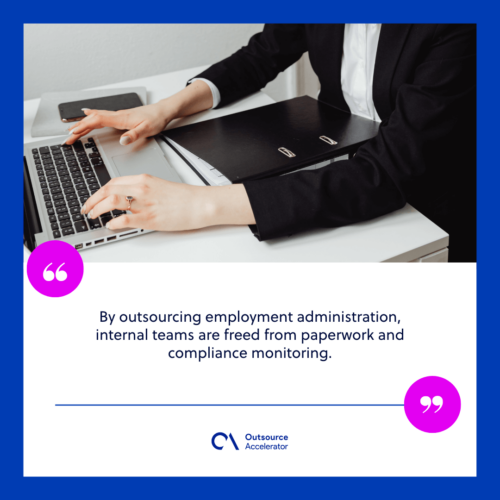
Outsourcing employment admin frees your internal teams from paperwork and compliance checks. As a result, HR and leaders can focus on strategy, culture, and performance instead of process.
Best practices for leveraging EOR for remote global teams
To get the most from an EOR, look past the admin setup. Instead, fold your global talent into the wider way your company runs. A few best practices follow. They also pair well with proven remote team management best practices.
Align EOR strategy with business goals
An EOR should support long-term growth, not just quick hiring. So choose a partner that can scale with your remote global teams as they move into new regions.
Maintain clear role ownership
The EOR handles employment matters. Still, your company owns performance, communication, and team culture. So set clear boundaries. In turn, this keeps collaboration smooth and accountability clear.
Standardize onboarding and engagement
Even across many countries, onboarding should feel unified. So use shared tools, consistent documents, and regular check-ins. As a result, remote global teams feel connected from day one. When you first build a remote team, these habits set the tone.
Plan for workforce transitions
Some companies later move staff from an EOR to direct employment. This happens once they set up local entities. So work with your EOR early. In turn, you can plan these transitions without disruption.
The future of remote global teams and the role of EORs
Fully remote listings receive 35% of applications, even though they make up just 8% of all job postings. This shows how strongly talent wants remote roles.
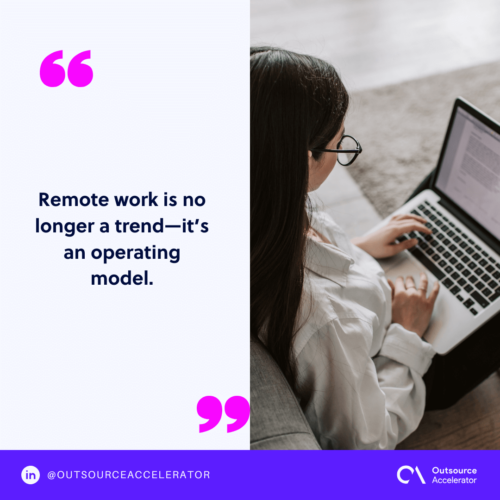
Remote work is no longer a trend. In fact, it is an operating model. As firms hire across borders, the EOR will shift from a tactical fix to a strategic pillar of workforce planning.
Future-focused EORs will go beyond payroll and compliance. For example, they will offer deeper insight into labor markets, talent supply, and workforce planning. Many will also help teams weigh EOR and PEO services side by side.
For remote global teams, this means faster scaling, better risk control, and more flexibility in how and where you hire.
Rules keep tightening, and the race for skills keeps heating up. So companies that use EOR services will hold a clear edge. They can adapt fast while staying compliant in a shifting landscape. To shortlist a partner, review the top EOR and PEO providers.
Scale seamlessly with Catalyst BPX: Your trusted Employer of Record partner
Catalyst BPX helps businesses build and manage remote global teams with confidence. As a trusted Employer of Record, Catalyst BPX simplifies global hiring. It handles compliance, payroll, and employment admin. So you can focus on growth.
Maybe you are entering new markets. Or maybe you want to strengthen existing remote global teams. Either way, Catalyst BPX brings the expertise, flexibility, and support you need to scale smoothly. Learn more about how Catalyst BPX can power your global workforce.
Frequently asked questions about Employer of Record services
What is the difference between an EOR and a PEO?
An EOR legally employs your workers in another country, so you need no local entity. A PEO co-employs staff where you already have an entity. So the EOR fits global hiring, while the PEO suits domestic growth.
How fast can an EOR hire someone abroad?
Most EORs can onboard a new hire in days or a few weeks. They already hold the local entity and contracts. So you skip the long setup that direct expansion needs.
Who manages the employee’s daily work under an EOR?
You do. The EOR handles payroll, tax, and compliance. Meanwhile, your managers still own tasks, goals, and performance. So the working relationship feels normal to your team.
Is an EOR cost-effective for small teams?
Yes, an EOR often suits small teams well. You avoid the cost of a local entity. So you can test one or two hires in a market before you commit.
Can you move employees off an EOR later?
Yes, many firms do. Once they open a local entity, they shift staff to direct employment. So plan the move early with your EOR to keep it smooth.






 Independent






