
Top 10 CRM for recruitment software in 2026


What is the best CRM for recruitment?
A CRM for recruitment is software that helps you source, engage, and nurture candidates in one place, and top options include Greenhouse, Recruiterflow, RecruitCRM, and Manatal.
- It builds long-term talent pipelines, not just one-time job applications.
- It automates outreach, so your team saves time on manual tasks.
- It improves the candidate experience at every hiring stage.
Top CRM for recruitment 2026
Human resources sits at the core of every business. It shapes how ready a company is to run its daily work. Because of this, most firms now hunt for the best-fit people to fill key roles.
A great candidate experience keeps people close, even those you do not hire. As a result, they may line up for future roles. So HR teams and recruitment firms now use smart tools to speed up hiring.
One of these tools is the Candidate Relationship Management (CRM) system for recruitment. It builds trust and connection between the company and each candidate. Next, let us look at how a CRM for recruitment works and why it matters.
Understanding the work of CRM for recruitment
A recruitment CRM works across many parts of HR. Still, its main focus is clear: it streamlines your workflow, drives proactive outreach, and grows a long-term talent pipeline. In short, it changes how teams handle daily hiring tasks.
It uses technology to build smarter ways to reach candidates. For example, it goes beyond a simple Applicant Tracking System (ATS). Instead, it adds pipeline features for your current and future workforce needs.
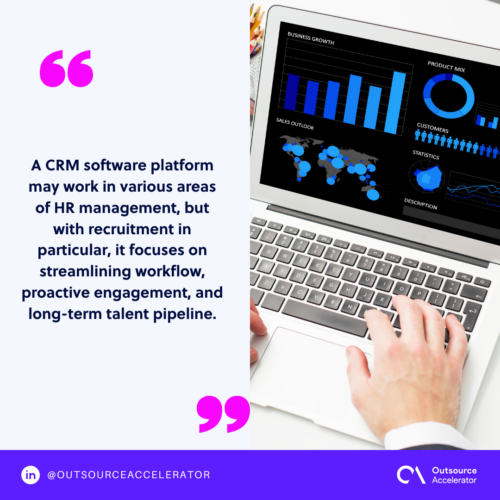
The software also digitizes candidate data and automates routine steps. As a result, HR teams can sort people by skill and potential with ease. Here are the main jobs a recruitment CRM handles:
- Client and candidate management
- Applicant tracking
- Artificial intelligence automation
- Reporting and analytics
- Integration and collaboration
Many teams pair a CRM with strong candidate sourcing strategies to fill their pipeline faster.
Top 10 CRM software for recruitment
Do you want a more organized and engaging hiring process? Then this list of CRM for recruitment software can help. Each tool below suits a different team size and goal.
1. Greenhouse
Greenhouse is a leading recruitment CRM built on a “people first” approach. It helps clients design and grow strong talent pipelines. On top of its well-known ATS, it now bundles a full CRM. Its main features include:
- AI-powered candidate matching
- Automated communication campaigns
- Customizable workflows
- Analytics for data-driven hiring
2. Recruiterflow
Recruiterflow is an AI-first Recruitment Operations (RecOps) tool. It serves staffing agencies, recruitment firms, and executive search teams. It leans on process automation and a simple design. As a result, it smooths the flow from sourcing to pipeline and client tracking. Its CRM features include:
- AI-powered candidate matching
- ATS and robust analytics
- Chrome extension for sourcing
3. RecruitCRM
RecruitCRM blends CRM and ATS in one platform. It serves recruitment and executive search firms around the world. Powered by AI, it speeds up hiring and boosts placements. So teams make better and faster decisions. Its core CRM tools cover:
- Advanced candidate sourcing
- AI-driven matching and resume parsing
- Automated communication workflows
- Comprehensive client management
- 24/7 client support services
4. Hubspot CRM
Hubspot offers a flexible and easy-to-use CRM for recruitment. It fits teams that use inbound recruiting. As a result, it helps firms attract, engage, and nurture top candidates worldwide. It also unifies messages and turns the candidate journey into clear data. Its main tools include:
- Contact management and marketing automation
- Sales pipeline management
- Automation and integration capabilities
- Unified communication and data-driven insights
5. SmartRecruiters
SmartRecruiters pairs CRM and ATS in one platform. It mainly serves mid-sized and large firms with high-volume hiring. It brings smart, automated tools to talent acquisition. So teams can act on current trends with less effort. Its features include:
- AI-powered candidate matching (“Winston AI”)
- Automated workflows
- Specialized tools for hiring teams
- Advanced analytics
- Marketplace of integrations
6. Manatal
Manatal is a one-stop CRM for recruitment. It uses AI for sourcing, social media, and resume parsing. Its tools are highly flexible. As a result, clients can add automated workflows to their current setup with ease. Manatal also helps HR teams speed up hiring through these features:
- Automated workflows and communication tools
- Career page builders
- Comprehensive analytics
- Candidate sourcing and resume parsing
- Social media management
7. Loxo
Loxo is an all-in-one recruitment CRM. It joins outbound recruiting, sourcing tools, and an ATS in one AI platform. Its focus is simple: cut time-to-hire, lower costs, and lift hiring results. Its main tools include:
- Extensive talent directory (Loxo Source)
- AI-driven candidate matching
- Multi-channel outreach tools (email, SMS, VoIP calling)
8. Humanly
Humanly is an AI-powered CRM partner for many industries. It supports every stage, from attracting talent to sourcing. Its smart applicant tracking keeps the candidate experience steady. So it works well for high-volume roles. Humanly uses conversational AI for a warmer, human feel, plus these services:
- AI-powered chatbot for recruiters
- Smart screening and automated scheduling
- 24/7 customer support services
- Simplified recruiting workflows
- Outreach targeting and built-in referrals
9. Pipedrive CRM
Pipedrive stands out for its sales-first design. It offers a simple drag-and-drop interface and clear visual pipelines. It also shines at automating follow-ups and candidate messages. In addition, it turns detailed reports into useful insights. It fits in-house teams and firms that want to refresh their hiring process. Its main products include:
- Sales software
- Email software
- Integration solutions
- Pipedrive AI-powered solutions
10. Crelate
Staffing and recruiting firms know Crelate well. Its CRM helps them connect and manage candidate relationships. It offers tools to track leads, log messages, and build strong ties. So firms stay close to candidates through the whole journey. This provider offers these products:
- Crelate Omni (full-service suite)
- Crelate Recruit (sales and recruiting platform)
- Crelate Hire (hiring and onboarding platform)
- Integrations (marketplace interface)
If you want to compare more options, our roundup of the best recruitment software is a helpful next stop. You can also explore the latest AI recruitment tools that speed up screening.
Key considerations when choosing recruitment CRM software
Choosing the right CRM for recruitment matters a lot. Providers offer many services, so you must know which ones fit your needs. Let us look at the main things to check.
1. Candidate management and recruitment functionality
A recruitment CRM should pull data straight from resumes. It should also sort, enrich, and group candidates into talent pools. So you can build pools by role, skill, or industry. As a result, you fill open roles fast and keep others on hand for later.
2. Talent sourcing and outreach
Strong sourcing is key. A good CRM helps you reach many candidates at once. For example, job board and social media links let it pull candidate data from trusted networks. So your pipeline stays full and fresh.
3. Hiring pipeline and workflow
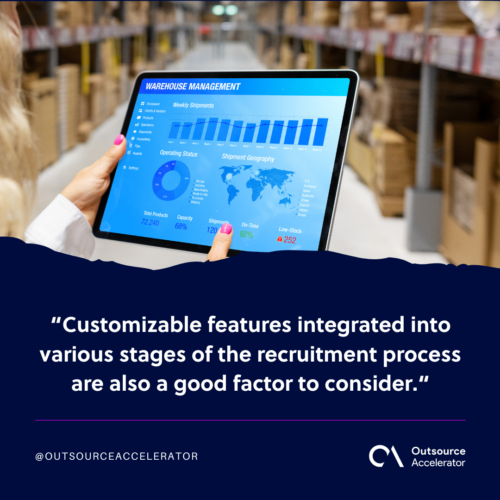
Look for tools you can shape to each hiring stage. A clear workflow gives candidates a smooth experience. Many providers now add artificial intelligence to automate the full cycle. As a result, tasks like emails, scheduling, and reminders take just a few clicks.
4. Data security features
Data security is vital in any recruitment CRM. Your tool holds sensitive candidate details, so it must guard them well. Look for strong protection, quick troubleshooting, and a solid data recovery plan.
5. Vendor reputation and service cost
Always research a provider before you buy. Check its market standing and past client reviews. Pick a vendor with a strong record and happy clients. Cost matters too. So look for good value, especially if you run a small business or a startup. Reliable applicant tracking systems for small business often bundle these features at a fair price.
Advantages of using CRM in business
A CRM for recruitment brings many gains. It also saves time that old hiring methods often waste. Here are the main benefits for your growth and efficiency.
1. Enhanced employer branding and candidate experience
A recruitment CRM lifts your employer brand. It gives every candidate a strong hiring experience at each stage. With proactive outreach and smart tools, you build a solid brand. As a result, you attract more candidates and referrals in a tight job market.
2. Increased productivity through process automation
CRMs keep adding automation, so they meet future demands with ease. Automation handles repeat tasks and frees HR teams for bigger work. In-house or outsourced software developers now build features that suit both employers and candidates. So the process feels quick and smart, with just a few clicks.
3. Improved hiring and pooling strategy
AI-based matching makes your hiring smarter. A CRM for recruitment helps you build and grow talent pools. As a result, you cut time-to-hire and lower costs. You also draw more applications, even beyond active job seekers. Strong talent acquisition best practices make these gains even bigger.
Frequently asked questions
What is a CRM for recruitment?
A CRM for recruitment is software that manages your ties with candidates. It stores candidate data, automates outreach, and builds talent pools. So you can engage people now and in the future.
How is a recruitment CRM different from an ATS?
An ATS tracks applicants through open roles. A CRM goes further. It nurtures candidates over time and keeps a warm pipeline. Many tools now bundle both in one platform.
Which CRM for recruitment is best for small teams?
Small teams often like simple, low-cost tools. For example, Recruiterflow, Pipedrive, and Manatal are easy to use. Still, the best pick depends on your budget and goals.
Does a recruitment CRM use AI?
Yes, most modern tools use AI. They match candidates, parse resumes, and automate messages. As a result, your team saves time and makes better decisions.
How much does a CRM for recruitment cost?
Prices vary by features and team size. Many vendors charge per user each month. So compare plans and use free trials before you buy.
Key takeaways
- A CRM for recruitment builds long-term talent pools, not just one-time applications.
- Top tools include Greenhouse, Recruiterflow, RecruitCRM, Manatal, and Loxo.
- The best fit depends on your team size, budget, and hiring goals.
- Strong data security and vendor reputation should guide your choice.
- AI and automation cut time-to-hire and lift the candidate experience.
Honing a technology-driven recruitment process through CRM
A CRM for recruitment is no longer optional. It is a smart way to stay ahead in a tech-driven job market. With flexible, custom tools, you build stronger ties with every candidate. So you can tap their skills now and later. In the end, a CRM lifts your employer brand and drives steady growth.






 Independent






